Finland’s first licence to mine a Natura 2000 site would set a deadly precedent for EU nature protection
The Viiankiaapa peat bog in Finland faces permanent destruction for a short-term mining project. Even more worryingly, this could be a dangerous test case for the interests of mining for minerals overriding the public interest to preserve nature.
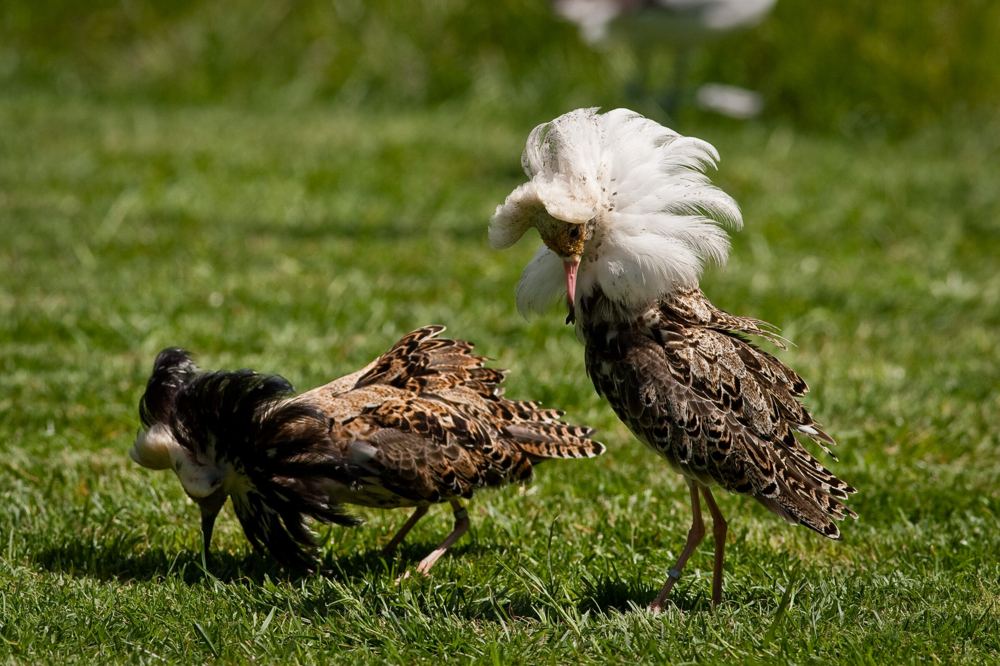
Home to the bean goose, the smew and the whooping swan, and one of the last refuges in Finland for the ruff (pictured above), the Viiankiaapa mire in Finland is sadly under threat.
One of the last pristine “aapa mire”[string bog, or nutrient-rich peat land] ecosystems in Europe, Viiankiaapa faces permanent destruction for a short-term mining project.
Even more worryingly, this could be a dangerous test case for the interests of mining for minerals overriding the public interest to preserve nature.
In May, AA Sakatti Mining Oy applied for a permit to circumvent the EU Natura 2000 protections Viiankiaapa currently enjoys, in order to start mining in the mire.
The Finnish ministry of the environment is working on its decision on the exemption permit, with the EU Commission expected to give its opinion on the mining plan by the end of September.
Viiankiaapa is unique, and its ecosystem has taken thousands of years to develop, ordinarily, it is double-protected, under the EU Habitats Directive since 1998 and the Finnish Mire Conservation Act since 1988.
This protection could be undone, as a project to mine nickel and copper deposits under the mire has been labelled as of “overriding public interest” in the EU’s Critical Raw Materials Act , allowing for fast-track permits.
Any direct economic benefits of the mine are likely to be short-lived, with the company’s own estimates putting the lifespan at 20-25 years.
But the destruction of the peatland will be permanent and irreversible, leaking the huge amount of climate-wrecking carbon stored in the bog, and ruining its potential to sequester more into the future.
The planned mine could significantly lower the groundwater levels in Viiankiaapa, permanently drying out and destroying this irreplaceable ecosystem.
The mining company claims that it can compensate for this destruction, offsetting it by protecting other areas nearby.
From an ecological standpoint, an ancient, complex aapa mire cannot be "compensated" or recreated somewhere else, its very location and geography is essential to its value.
On top of that, a plan to buy and “protect” another existing mire would not create new ecological value to offset the loss of Viiankiaapa, and would plainly result in a net loss of European biodiversity.
Promises to restore areas around Viiankiaapa would be pointless if the mine drains the ecosystem. Drawing new lines on the map is useless if the biodiversity-rich parts of the peatland are bled dry.
This could be a dangerous precedent, never before in Finland has a mining company received an exemption permit to operate in a Natura 2000 area.
If AA Sakatti Mining Oy is successful in securing a permit to destroy a nature reserve, other mining companies will be lining up for the same treatment.
What gives us, and the Viiankiaapa mire, hope, is that Finns understand the value of protecting natural ecosystems like this.
A recent survey by the research company Verian, commissioned by the Finnish Association for Nature Conservation, found that 79 percent of Finns do not approve of mining in nature reserves. When asked specifically about the project to mine under Viiankiaapa, it does not receive majority support from the voters of any political party represented in parliament.
The European Commission and the Finnish government have a grave responsibility here. A decision to allow the permanent erasure of a pristine ecosystem, in the face of public opposition to this harmful project, will have dreadful consequences.
Viiankiaapa is a test case for the EU’s Critical Raw Materials Act , and whether it will be used to deliver the green transition that people need and want, or whether it will be used to rip up decades of hard-won protections for vulnerable and valuable ecosystems.
We call on the European Commission to side with the bean goose, the ruff and the whooping swan, and the people of Finland, and to protect Viiankiaapa.
Hanna Halmeenpää is the chair of the board of the Finnish Association for Nature Conservation that has followed the mining plans of Viiankiaapa for two decades.
Touko Sipiläinen is the country director of Greenpeace Nordic in Finland.