Cultural treasures are being destroyed by war, and people want justice
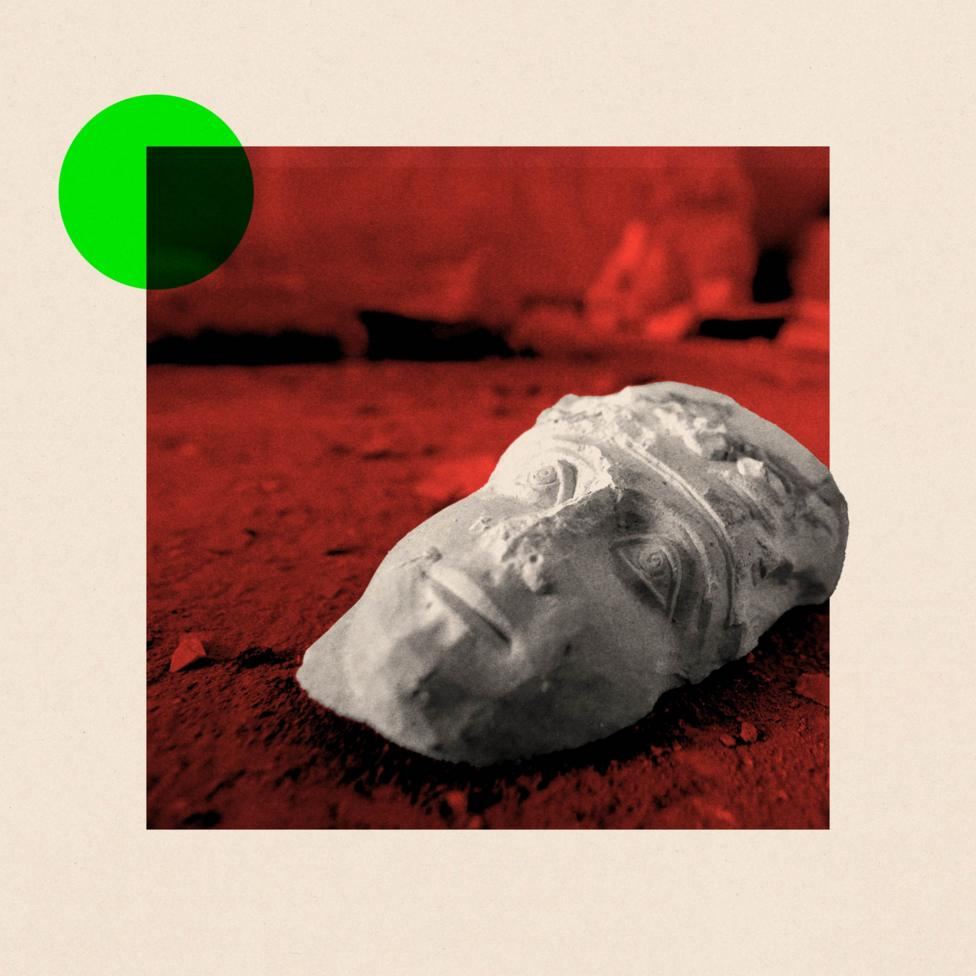
A cauldron of conflicts is bubbling across the world, with cultural monuments being destroyed. These people are fighting against it.
August was a brutal month for Ukraine. Russian aerial attacks increased significantly, launching thousands of drones. Kyiv was intensely bombarded, as were the southern cities of Mykolaiv and Odesa. Amid the destruction and loss of life, Odesa reported damage to six Unesco-protected sites, including the salmon-pink 19th Century Alexandru Sturdza House.
It raised again the question of why it is so hard to hold actors accountable for the destruction of buildings and objects with real cultural significance.
In the last month alone, Ukraine's Ministry of Culture reported that 148 cultural heritage sites were recorded as damaged or destroyed, including in Odesa.
Several Ukrainian activist groups have tried to get accountability by lodging complaints with the International Criminal Court (ICC) against Russia over cultural destruction and looting, but no indictments have been issued.
Bijan Rouhani, a senior researcher at the Endangered Archaeology in the Middle East and North Africa project, says that the legal framework may be strong on paper but in practice it almost inevitably falls short. "No state actor has ever been tried for this offence. The obstacle is no longer evidence. We have satellite imagery, remote sensing and monitoring teams. The obstacle is jurisdiction and political will."
Looking at the cauldron of conflicts convulsing the world, the question is ever more pressing as to whether effective action is possible to stop the damage being done or ensure accountability when it does.
The conflict in Ukraine is just one of the panoply of wars in recent years that have revealed once again the disastrous impact of conflict on cultural heritage.
Tareq Abu Dayyeh sells craftwork, souvenirs and antiquities in Gaza. The Great Omari Mosque features on many of the items he sells. It represents the very identity of Gaza - charting its history through the building's many manifestations from ancient pagan temple to Byzantine church to Seventh Century mosque to Crusader Cathedral and then back to being a mosque.
The Great Omari Mosque was all but destroyed in an Israeli strike in 2023. The Israeli military said the strike was targeting Hamas.
Now Dayyeh says his heart is broken every time he sees the ruins. "When your past is destroyed, you have no present."
The war in Gaza has claimed tens of thousands of lives and an estimated 200,000 buildings have been damaged or destroyed by Israeli bombardment. But despite the overwhelming death and devastation, such cultural losses run deep.
This is a sentiment expressed throughout history by people living through war.
In Sudan, Lebanon, Yemen and Iran, the alarm has been raised time and time again.
More than 100 sites in Iran are reported to have been damaged during the aerial war launched by the US and Israel back in February. They include the Unesco-listed Golestan Palace in the capital, Tehran, and Naqsh-e Jahan Square in Isfahan.
The civil war in Sudan has further imperilled one of the ancient wonders of the world - the Meroe Pyramids, built during the flourishing civilisation of the Kingdom of Kush.
Unesco, which designated Meroe as a World Heritage Site in 2011, has warned that the fighting has halted all preservation work there, leaving the fragile ancient structures prey to erosion from the encroaching sand and vegetation.
In response to the massive destruction of World War Two, the first-ever international treaty exclusively dedicated to protecting cultural heritage during armed conflict was adopted in The Hague in 1954.
It applies to monuments and architecture, but also works of art and books, requiring states to safeguard and respect cultural property and refrain from any actions that might endanger it.
Since the Hague Convention, there have been several additional moves to strengthen protective measures for cultural heritage.
A Second Protocol to the Convention in 1999 said that any site that has been placed under enhanced protection due to its immense cultural significance must not be made a military target even if it is being used in such a way as to have become a 'military objective' - unless there is no other feasible way of ending its use in that way.
When the International Criminal Court was established in The Hague in 2002, part of its remit was to bring accountability for deliberate attacks in war against buildings of religious, artistic and educational value as well as historical monuments, which had been defined as war crimes.
So far, only one case has been successfully brought at the ICC. Ahmad al-Faqi al-Mahdi was a jihadist militant leader in Mali who was found guilty of directing attacks that destroyed mausoleums and a mosque in Timbuktu. He was sentenced to nine years in prison.
Rouhani says that without the full backing of the major powers and a genuine commitment to international law and its enforcement, the world will simply keep watching the same devastating pattern repeat itself.
"For most governments, heritage is a secondary concern, unless it becomes useful for propaganda," Rouhani says. "The Hague Convention requires states to build protection into their military rules and to respect cultural property abroad as well as at home. Looking at the scale of damage in recent conflicts, it is difficult to conclude that these obligations are taken seriously."
In conflicts from Ukraine to Iran to Gaza, where schools and hospitals are seen as permissible military targets by combatants, how likely is it that a museum or pile of ancient stones, however freighted with beauty and history and memory, will be spared?
In an isolated position in open countryside, a museum dedicated to the 18th Century Ukrainian philosopher and poet Hryhoriy Skovoroda was destroyed by Russian shelling during an overnight attack in 2022. Ukrainian President Volodymyr Zelensky said it had left him speechless: "Targeted strikes against museums - not even terrorists would think of this. But this is the kind of army we are fighting against."
The building was set ablaze and a caretaker was injured, but much of the collection had already been removed.
Joe Biden, then the US president, said that Russian President Vladimir Putin was not only trying to take over Ukraine, but "literally trying to wipe out the culture and identity of the Ukrainian people".
That pattern has been repeated across much of the frontline in Ukraine where local organisations have worked with international groups to try to safeguard their national heritage from Russian attack.
One international group that's played a big role is the Aliph Foundation, which was set up in Geneva in 2017 to protect and repair cultural heritage.
Alexandra Fiebig, a project manager with Aliph, says that her group provided millions of dollars in funds to Ukrainian museums scrambling to move their most valuable items to safety.
This has involved the use of what she describes as 'heritage ambulances': "These vehicles that have specialised equipment and space with specialised teams and equipment, they were in the beginning travelling a lot to affected museums that were damaged through military action."
Now, she says the teams also check on the artefacts that were transported in great haste to safer places to make sure they remain in good condition.
Blue Shield International is a group that operates in multiple war zones, working with armed forces and local heritage officials to such an extent that it's come to be known as the Red Cross for culture.
Dr Emma Cunliffe, the head of operations for the group, says Ukrainians are risking their lives to protect their heritage.
"They are taking great measures to document the damage even when they are risking their own lives to do it. In fact one of the things we really see is that the government is taking huge steps despite the many many competing priorities and the struggles they are facing."
Other conflicts have seen civilians take similar measures to protect their culture.
In February 2015, Isis turned its attention from hacking down ancient statues and artefacts in Mosul in northern Iraq to ransacking its written heritage as its fighters laid waste to the city's much treasured public libraries. They burned the Central Library and destroyed or stole many thousands of books - many of them rare manuscripts that told the story of the city.
"These were not simply books or shelves, they represented decades of knowledge and research and formed an important part of the intellectual heritage of Mosul University and the wider community⦠Within days, everything was gone," Dr Mohammed Jasim Mohammed al-Hamdani says. The main library in Mosul has played a key role in his life - to such an extent that he is now the director there.
"Seeing it destroyed felt like losing a part of myself. Many people in the city had a story connected to the University of Mosul and therefore the loss felt very close to home. And this is why when that part of Mosul was liberated from Isis, young people, old people rushed to the library to save what they could."