Control Resonant review, save New York from paranormal phenomena
PlayStation 5, Xbox, PC; Remedy A surprisingly conventional game from a famously weird developer, this sequel to 2019’s Control is accomplished but safe This is an arthouse action game from Finnish developer Remedy, masters of exactly this type of thing. It’s a sequel, however, so not only must it clear the high bar that its strikingly distinctive predecessor has set – it must also ideally arrive with a bushel of new ideas. There are clear and valuable strengths here in character progression and the lustrous presentation of its paranormal world, but Resonant doesn’t feel as enjoyably recondite
PlayStation 5, Xbox, PC; Remedy A surprisingly conventional game from a famously weird developer, this sequel to 2019’s Control is accomplished but safe
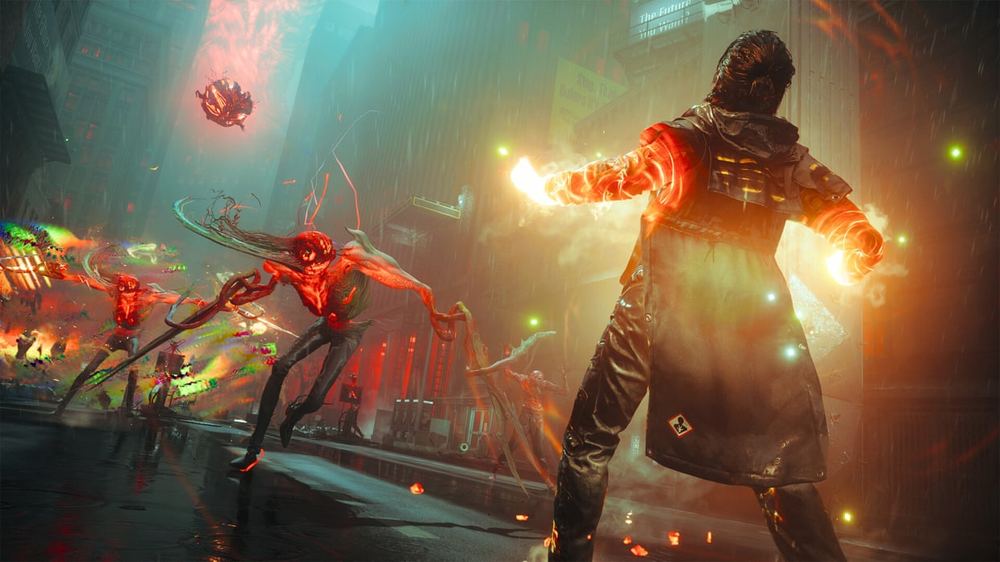
T his is an arthouse action game from Finnish developer Remedy, masters of exactly this type of thing. It’s a sequel, however, so not only must it clear the high bar that its strikingly distinctive predecessor has set, it must also ideally arrive with a bushel of new ideas. There are clear and valuable strengths here in character progression and the lustrous presentation of its paranormal world, but Resonant doesn’t feel as enjoyably recondite or expansive in its influences as 2019’s Control did. As you wander New York brandishing supernatural abilities against glowing orange foes, the sad sense creeps in that you might be playing any number of games.
As paranormal event survivor Jesse Faden, your journey through the original Control was like a sequence of playable Twilight Zone episodes, battling prosaic household objects with supernatural properties that teased and twisted reality inside an endlessly fascinating supernatural government bureau called the Oldest House. You’d navigate architecturally impossible spaces bridging the subconscious and the bricks-and-mortar world, in order to defeat a malevolent fridge. That’s broadly true again in Resonant, albeit with diminishing returns. This time you’re playing as Jesse’s brother Dylan, waking up after years of containment in the Oldest House to find its contents have escaped into downtown Manhattan. So you head out of the interesting place, and into a setting you’ve explored before in Marvel’s Spider-Man , The Division , Max Payne , and others ad infinitum.
It’s disappointing because being bewitchingly strange has historically been Remedy’s great strength. It’s not unusual for games to give a reverent nod to Twin Peaks now and then, but this studio is the alpha and omega of interactive Lynchian nightmares. It’s been refining that skill since 2001’s Max Payne, and at this point there’s really nobody better at nonlinear storytelling or unnerving dream sequences.
Remedy’s take on New York has an exhilaratingly free-form structure that lets you take on enemies, missions and places in roughly the order you want. The main missions are fairly rigid, but you can engage with the rest however and whenever you want. You fight a malevolent paranormal force with an imaginative collection of supernatural kung fu moves, whose power and combo potential level up satisfyingly. Your shapeshifting weapon can take many forms, from a dagger-like blade to a scythe or a hammer. Secondary attacks, ranged weapons and passive abilities lend more interest to fights against paranormal entity the Hiss as time goes on, but compared to something like the surgically precise swordplay of Onimusha: Way of the Sword, battles feel a bit blunt here.
Your ultimate tests come in the form of the Resonants themselves, a series of bosses lying in wait throughout Manhattan. Remedy’s knack for otherworldly horror comes to the fore in their visual design, which I won’t spoil, and like so much of the game they can be hunted down in any order. Beware, though, beating them changes other enemies’ presence, strength and behaviour afterwards.
Dylan’s movement is more imaginative and enjoyable than his arsenal. Here, trading off a fascinating indoor setting for more outdoor space starts to make sense, as you triple-jump your way across rooftops and shift your gravitational grounding to walk on streets that have been bent upwards vertically à la Inception . It’s playful about it, too, soon after gaining that latter ability, your bureau handler pumps some EDM down the radio to soundtrack your run through a multistorey car park whose levels fold and distort at impossible angles.
It is the little moments like this, not the grand story beats, that prove the most memorable and gratifying. Where Control evoked an oppressive feeling of distorted reality, here there’s a more conventional tale about a man on a mission of redemption, and there’s even the odd moment of human warmth in Dylan’s interactions with his bureau colleagues and his elusive sister. Just like the gameplay, the story has made a tonal shift towards easily digestible mainstream convention, and while there’s nothing inherently wrong with that, I’m left craving the original’s more hallucinogenic vision of the action-RPG.