OpenAI cuts GPT-6 prices in half with Sol and Luna
They are also half the price per token, and even less per task. Sam Altman wrote that on X on Tuesday, about GPT-6 Sol and GPT-6 Luna. OpenAI released both models the same afternoon. They extend the GPT-6 family below GPT-6 Astra, which arrived on 3 September. The prices are the headline. In its announcement, […] This story continues at The Next Web
They are also half the price per token, and even less per task.
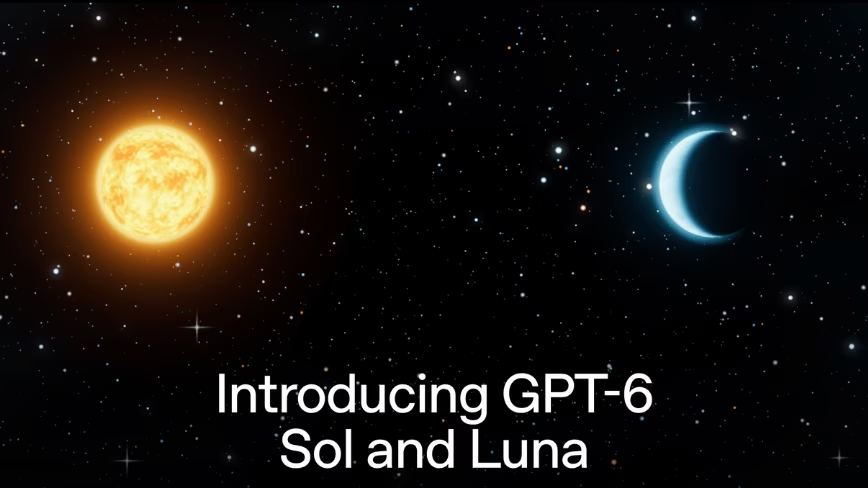
Sam Altman wrote that on X on Tuesday, about GPT-6 Sol and GPT-6 Luna. OpenAI released both models the same afternoon. They extend the GPT-6 family below GPT-6 Astra , which arrived on 3 September.
The prices are the headline. In its announcement , OpenAI put GPT-6 Sol at $2 per million input tokens and $10 per million output. That is down from $4 and $20. GPT-6 Luna costs $0.10 and $0.50, down from $0.20 and $1.20. Both are 50% below what the GPT-5.6 versions charge under current promotional pricing.
Sol is the tier below Astra. It is built for complex work, including coding. Luna is the small one. It is meant for high-volume jobs with a clear goal, such as summarising documents or answering short questions.
Both are in ChatGPT Work and Codex from Tuesday. That covers Plus, Pro, Business, Enterprise and Edu accounts. Free and Go users get Luna in the desktop app. Neither is in Chat yet. In the API they are called gpt-6-sol and gpt-6-luna. OpenAI said it would roll them out gradually through the day, to keep the service stable.
The company trained both with the methods behind Astra. It says Astra remains its best model when the job warrants it.
OpenAI also raised its default cache hit rates. Cached input-token reads now carry a 90% discount.
Developers can set explicit breakpoints to choose where a cached prompt prefix ends. They can also change reasoning effort, or switch tools on and off, without losing the cached context.
GitHub told OpenAI that these changes cut the share of prompt tokens needing fresh processing by more than half. That was measured over recent months, across billions of requests, and it is what makes Copilot answer faster.
Most of the comparisons in the announcement are cost per task rather than cost per token. Most of them also name Anthropic.
AutomationBench tests business workflows across 47 tools. GPT-6 Sol at extra-high effort scored 33.2% there, at $0.27 per task. OpenAI puts Claude Opus 5 at maximum effort on 26.9%, at 11.1 times that cost. It puts GPT-6 Astra at low effort on 30.3%, at 3.9 times. On Agents’ Last Exam, Sol at maximum effort scored 56.4%. OpenAI says that beats Opus 5’s best result in the same evaluation, at 60% lower cost per task.
On the DeepSWE software engineering test, Sol scored 68.8% against Claude Fable 5’s 69.9%. It did so at roughly 80% less per task. Luna scored 66.6% there. OpenAI calls that comparable to Opus 5 and Fable 5 at medium effort, while costing 93% and 96% less. On OSWorld computer use, Sol at extra-high effort scored 60.5% against Opus 5 at medium on 60.3%, again at about 80% lower cost.
OpenAI attaches its own caveats. Competitor scores came from published reports rather than in-house runs. Fable 5 results stood in where Fable 5.1 numbers were unavailable. The Fable 5.1 point on its chart understates the real cost, because it leaves out the Opus 5 fallbacks that fired on about 40% of tasks.
OpenAI also claims better factual reliability. Its internal factuality test uses de-identified ChatGPT conversations where users flagged an error from an earlier model. On that set, Sol makes about half as many mistakes as GPT-5.6 Sol. Luna at higher effort levels matches GPT-5.6 Sol, at roughly a hundredth of the cost.
The company notes those conversations are chosen for being error-prone. They do not represent ordinary use.
On alignment, both models score better than their GPT-5.6 counterparts across OpenAI’s internal tests. That includes a lower rate of misleading claims about their own coding work. The full results are in the system card. On Monday, OpenAI said it would let outside groups run technical safety evaluations during training rather than only before release.
Anthropic launched Claude Opus 5.5 the same afternoon. It went out about 90 minutes before OpenAI published, according to TechCrunch . It costs around 40% less to run than Opus 5. Anthropic says it performs close to Fable 5.1 on most work. Sonnet 5.5 and Haiku 5.5 are due in the coming weeks.
Dianne Penn heads product management, research and labs at Anthropic. She told CNBC the company keeps working on making the model’s thinking more efficient, so it uses fewer tokens depending on the effort setting.
Neither release is a frontier model. Both are the same move: take capability that already exists and sell it for less.
Ara Kharazian is lead economist at the spend management company Ramp. He told Fortune the two are in a price war that is driving down the price of AI, and with it their ability to profit from it. He said it is being fought on two fronts, through cheaper models and through outright cuts on the expensive ones.
The pressure is coming from below. Chinese open-weight models from Alibaba, DeepSeek and Moonshot now do much of this work for nothing. Startups have been moving to cheaper open weights as the bills arrive. Both labs have also called publicly for the industry to slow its frontier work. These are the first releases either has shipped since.
The Sol line started narrow. In June, OpenAI gave GPT-5.6 Sol to just 20 partners , under government-approved terms. Three months on, its successor is in the API at half the price.