Australia’s attorney-general told councils to ban smart glasses
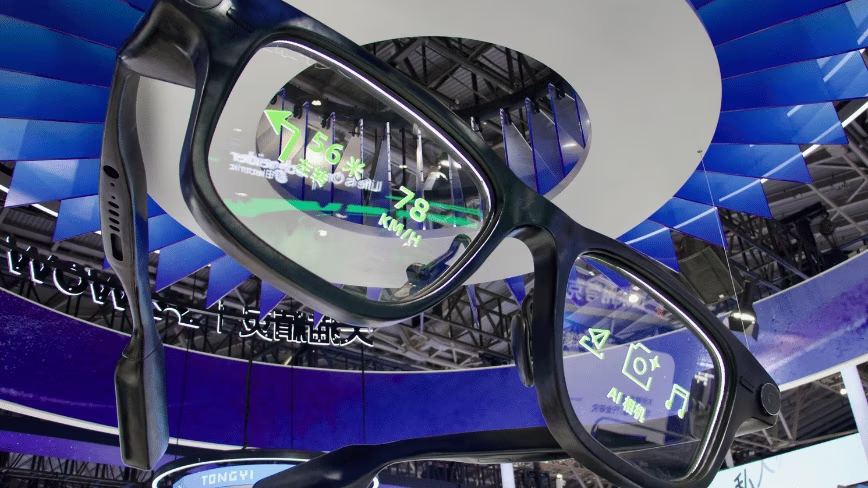
Smart glasses may look cool but there’s absolutely no place in our schools or classrooms for them. Sabine Winton said that on Tuesday. Western Australia’s education minister was announcing what she called the country’s most comprehensive ban on the devices. It is not a policy statement. The same day, the department’s director general Jay Peckitt […] This story continues at The Next Web
Smart glasses may look cool but there’s absolutely no place in our schools or classrooms for them.
Sabine Winton said that on Tuesday. Western Australia’s education minister was announcing what she called the country’s most comprehensive ban on the devices.
It is not a policy statement. The same day, the department’s director general Jay Peckitt issued an instruction to every public school principal in the state. It takes effect on 12 October, the first day of Term 4.
Principals must stop students and staff wearing, using, charging or storing the glasses on school premises. The same applies at any school organised event or activity. The charging clause matters, because it closes the locker.
Principals must also bar parents, carers, visitors and contractors from bringing the devices onto school grounds at all. The instruction says the ban should reach government residential colleges too, through separate mechanisms.
It runs on real legal authority rather than guidance. The director general issues it under section 233 of the School Education Act 1999. Principals enforce it under regulations 69 and 70. Those let a principal direct people on school premises, and bar an item from coming in. Both rules say the school must display the order publicly.
The instruction names six risks. Four are the ones you would guess: privacy, child safety and wellbeing, unauthorised recording, and cyber security.
The fifth is disruption to teaching. The sixth is examination and assessment integrity.
That last one reframes the device. The instruction’s own definition runs well past a camera. It lists audio recording, video, photography, artificial intelligence functionality and live streaming. Then internet connectivity, facial recognition, information retrieval and communication.
Principals can still approve the glasses for medical, accessibility or assistive technology use, and for educational programmes they authorise themselves. Students who break the rule fall under the student behaviour policy, staff under staff conduct and discipline. Principals can tell visitors and contractors to take the devices off, and to leave if they refuse.
Winton said the education department has recorded no instances of smart glasses being used irresponsibly in WA schools.
Prevention is the stated driver. Callum Liddelow and Courtney Withers reported the ban for ABC News . Winton pointed to growing community concern about careless, criminal and malicious use, not to anything that has happened in a classroom.
Kya Graves runs the WA Principals Federation. She told the ABC that principals had been writing their own school-level policies, with no departmental decree to work from. Some had incidents on their sites and put measures in place themselves.
Tama Leaver teaches internet studies at Curtin University. The worst outcome would be indecent recording of children, he told the ABC. He raised deepfakes as the second risk, and said it takes about 30 seconds of footage to make one with rudimentary tools.
Attorney-General Michelle Rowland ruled out an import ban on 31 August. Erin Handley reported for the ABC that Rowland said the government was not consulting on one, though it was not ruling anything out on other measures.
In its place she offered a privacy overhaul. The draft laws carry a right to erasure from large platforms and search engines, a fair and reasonable test on data collection, and meaningful consent rules. An identity document service called IDLock is due in 2027.
Rowland also encouraged councils to restrict the glasses in their own facilities, and suggested retailers could police change rooms.
The eSafety commissioner put the other side. The devices help people with disability, through speech to text for deaf users and scene descriptions for people with low vision.
Matthew Taylor reported for Lawyers Weekly that the City of Sydney and Canterbury-Bankstown have now barred the glasses from their pools and fitness facilities, joining Brisbane and Yarra.
Councillor Matthew Thompson put the motion on Monday. It directs the chief executive to review the council’s conditions of entry and update them, covering leisure centres, libraries, council childcare centres and community centres. The document notes the pools already excluded the glasses.
Canterbury-Bankstown got there first and wrote in enforcement. Its staff can order patrons to remove the eyewear, confiscate it, and move on anyone who refuses. Women and parents raised the concerns that started it.
Brisbane barred non-consensual use of camera-enabled devices at its 21 public pools, a category taking in phones and ordinary cameras. Gold Coast is considering the Brisbane model, Adelaide is weighing its own, and the City of Vincent in Perth ordered a report last week.
Thompson wants the import ban Rowland declined. He told TechRadar that Canberra has left the problem with councils. Federal crossbenchers asked for the same ban in late August.
Employment lawyers are now telling Australian employers to write their own rules.
Paul O’Halloran, a partner at Dentons, told Lawyers Weekly the technology exists in public and workplace settings for one practical reason, which is to record people without their knowledge or consent. He said it should be banned outright.
He called the technology insidious, because unlike a phone or a camera there is no obvious moment of recording. That is the feature rather than the flaw, he said.
O’Halloran argues employers already carry the risk. Privacy law and work health and safety codes oblige them to protect staff from harm, including covert surveillance. An employee could be recorded all day, in meetings, in break rooms, even in bathrooms and change facilities, and neither the employer nor the person filmed would know.
Michael Byrnes, a workplace relations partner at Swaab, put it more plainly. Employers should have no hesitation in banning the glasses, he said, and telling staff not to wear them is a reasonable and lawful direction.
His specific worry is audio. Secretly recording private conversations potentially breaches surveillance devices legislation.
Byrnes allows two exceptions. Employees with a visual impairment should be able to use them as far as the work requires. Where the glasses reduce a genuine safety hazard, that may also justify them, with rules on retaining and using any recording.
Three statutes already cover this ground: the NSW Workplace Surveillance Act 2005, the Privacy Act 1988 and the Fair Work Act 2009.
A University of Sydney study sampled 350 public Instagram videos shot on smart glasses. It found that around 60% could potentially count as harassment of a person or people. We covered that research in August, and the way the algorithm pushed those videos .
Independent testing published this week found a second problem. A hacker can get into some ultra-cheap smart glasses without a password.
People have started building their own defences. A Polish developer released an app that detects the glasses over Bluetooth.
Courts in England and Wales barred the glasses in August. New York state courts did the same in July. In the United States, cinemas, schools and Immigration and Customs Enforcement have all restricted them.
Australia already banned social media for under-16s, and Victoria bars wearables in schools from January 2027. South Australia’s attorney-general, Kyam Maher, is taking advice on whether state law is adequate, and has been talking to Rowland about nationally consistent rules.