Montenegro is the question von der Leyen left unanswered
Europe does not win by inventing fancy titles for its friendships, or by naming the rivals it means to keep out. It wins by being the place its neighbours both choose and can integrate into.
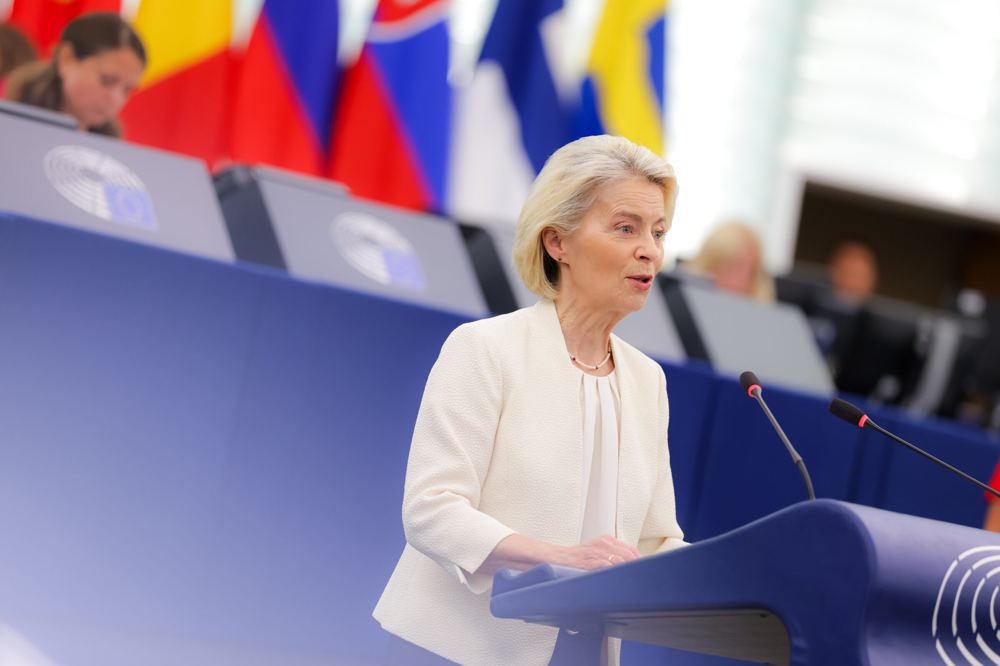
When Ursula von der Leyen rose in Strasbourg last Wednesday (16 September) to give her State of the Union speech , few in the Western Balkans were watching closely.
But those who were, citizens and politicians alike, both the ones who want their countries inside the EU and the ones who doubt it will ever happen, were listening for a hint of an answer to a single question: what will Europe do with Montenegro’s bid for membership?
That the region’s hopes now rest on the smallest of six candidates says a great deal.
Thirteen years have passed since the last country, Croatia, joined the Union, and more than two decades since the EU promised the Western Balkans a European future at the Thessaloniki summit in 2003.
Since 2022, and especially since the current government in Podgorica took power in October 2023, Montenegro has pulled clear of the pack, not merely the front-runner, but the candidate judged to have made the most progress.
Its government aims to close accession negotiations by the end of this year and to join in 2028.
From Belgrade to Skopje and Sarajevo, everyone is watching Montenegro, and for two reasons.
The first is whether the EU will enlarge at all. Montenegro is the easiest case: some 600,000 people, an economy built on tourism, a Nato member since 2017, fully aligned with EU foreign and security policy, with no war fought on its soil and none of the disputes that entangle some of its neighbours, and a government that plainly wants in.
If the Union cannot bring in Montenegro, it will not bring in a harder case like Serbia, Bosnia and Herzegovina or Kosovo either. The second question is whether accession will actually change the country: not only its laws and institutions, but the everyday lives of its people.
Europe does not win by inventing fancy titles for its friendships, or by naming the rivals it means to keep out. It wins by being the place its neighbours both choose and can integrate into.
It surfaced near the end of the 80-minute address, in a promise to propose "roadmaps for the candidates that have made most progress", set within the now-familiar language of merit and shared values. A roadmap is a process, not a destination.
Offered without any acknowledgement that Montenegro aims to finish its negotiations this year, it made membership feel further away, not closer, and it said nothing at all about whether joining would leave Montenegrins better off.
This matters far beyond the region. In late August, in a small Alpine village in Austria, participants from all walks of life gathered under this year's theme of the European Forum Alpbach : how Europe wins.
Squeezed between two powers that treat borders as negotiable, a Russia that annexes its neighbours by force and a United States whose president muses aloud about taking Greenland and Canada, the EU is in a singular position: some of its neighbours want to join it, others want to integrate more deeply.
That is an asset no rival can match, and the speech barely used it.
The economic ground is shifting too. As old supply chains and export markets fracture, Europe's prosperity increasingly depends on its own enlarged single market rather than on distant giants.
In the first half of 2026 Germany sold more to Poland than to China, whose purchases have slumped to around ninth place among its markets. Germany's four central European neighbours, Poland, Czech Republi, Hungary and Romania, together now buy far more German goods than the United States.
The countries the EU brought in a generation ago have become the fuel that keeps the engine of its largest economy running. Still, EU leaders speak of enlargement, and treat it, as charity to those outside rather than as a strategy to strengthen those inside.
Security points the same way. The American guarantee is less certain than it was, and Russia is waging hybrid warfare, and increasingly the not-so-hybrid kind, on EU soil ever more often. Against that backdrop Ukraine has emerged from four years of war as a military asset for Europe, more battle-tested, many now argue, than some of the Union's larger and better-funded armies. A Europe that can absorb such partners is stronger; a Europe that keeps them waiting in an ante-room is not.
Yet the instinct in Brussels is still to reach for symbols rather than substance. In the first days after von der Leyen floated associate status for Canada, the debate went straight to the label. Experts questioned its legal basis, and Berlin itself said the "associate membership" wording should be reconsidered, keen to avoid confusion and keep the term for Ukraine, for which its own chancellor, Friedrich Merz, had proposed it in May 2026.
The quarrel was about headings, not about what a deeper relationship should actually contain.
What the moment demands is the opposite: not a battle over titles, but a concrete answer to how Europe wins. In this world the Union's power lies in being the destination its neighbours choose, in extending not only its rulebook but its single market, its budget and the reach of its institutions, the commission and the court, to every neighbour willing to take on the obligations that come with them.
Consolidating the single market inside the 27, long overdue, is important but not enough. The model has to grow. And it will only outlast an aggressive Russia and an unpredictable Washington if, as it grows, it protects the quality of life Europeans have come to expect and extends it to those joining.
Montenegro is where that promise can be tested, and the early record is mixed.
A study at the centre of our Alpbach discussion, " The Social Dimension of EU Enlargement in the Western Balkans " by Mirna Jusić for the Friedrich-Ebert-Stiftung, looks past chapters and clusters to how everyday life actually changes.
On the positive side, the study does register progress. In Montenegro, the labour market has improved, with employment rising and unemployment falling in a slow convergence with the EU. The language of reform has shifted from cutting social spending towards making benefits more adequate.
Montenegro has also begun to reform the social-protection system itself, not only the adequacy of the benefits it pays.
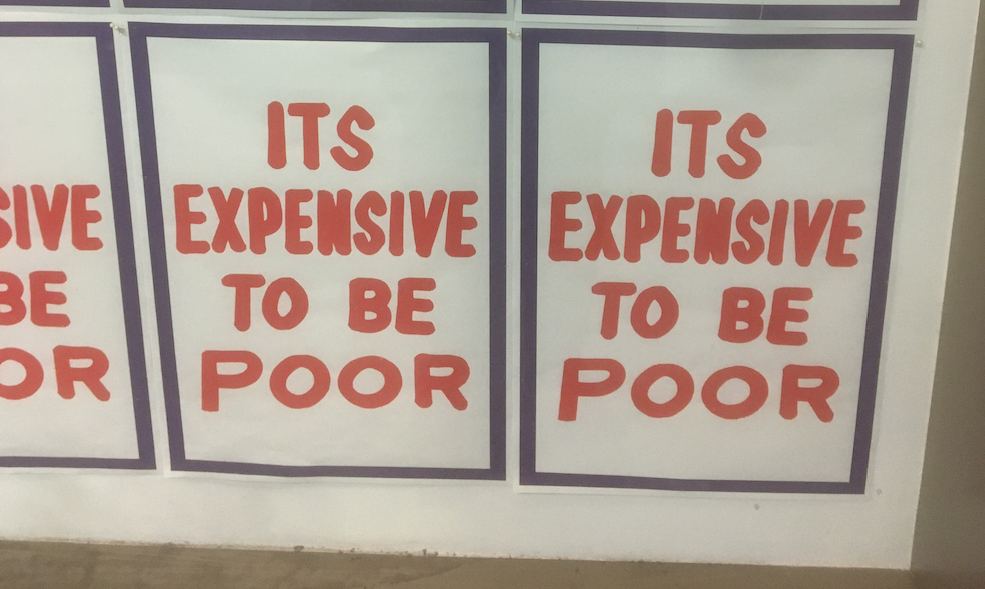
But the study's core message is sobering. As enlargement accelerated, the social dimension did not deepen; it narrowed.
When reform commitments migrated from the old economic programmes into the reform agendas linked to the new Growth Plan that now release EU money, they lost their social breadth, and progress stopped being measured against the EU's own Social Scoreboard: the money rewards boxes ticked, not outcomes people feel.
Beneath that, the structural problems persist across the region and in Montenegro, from youth and long-term unemployment and pervasive informal work to social transfers that do far less to cut poverty than in the EU and out-of-pocket health costs well above EU levels. Rising employment is not yet durable, broadly shared security.
Set against this, Brussels' recent fixation on Iceland looks like a category error.
On 29 August, by fewer than 13,000 votes, Icelanders declined to reopen membership talks.
Yet Iceland already sits inside the single market and Schengen through the European Economic Area; its courts already apply EU rules. Its 'no' cost the Union nothing of substance, only symbolism.
Montenegro is the mirror image. It has no such fallback, and it can be lost for real: through a stalled ratification, a hostile parliament, or a referendum in a member state.
Two things follow. First, the reforms still outstanding, including the hardest political ones, such as Montenegro's bilateral dispute with Croatia, should be settled quickly, and the sequence of accession adapted.
Once the accession treaty is signed, Montenegro should immediately receive the substance of membership: the single market, the budget and the enforcement of EU institutions, on the model the EU is about to start using for Andorra and San Marino and sketched in the Franco-German paper tabled at the EU-Western Balkans summit in Tivat in June.
Ratification by the 27 could then take its own course, with no need to rush it and no gamble on a hostile vote. That single change would transform the conversation not only in Podgorica but in Belgrade, Sarajevo and Pristina, and for Ukraine and Moldova as well.
Second, the implementation of reform must put far more weight on the social dimension, exactly where the study says the process has been thinnest. The moment Montenegro signs and joins, the region and its doubters will judge Europe by one measure above all: how quickly and how visibly the everyday life of Montenegrins improves.
Much can be done to make that happen: building social monitoring of wages, jobs and poverty into the funds that now drive reform, and pressing the chapters on employment, social policy and health as hard as those on the economy and the rule of law.
In Strasbourg the commission president left the Montenegro question hanging.