Lithuania moves to lift ban on nuclear weapons as ‘Russians do not attack the strong’
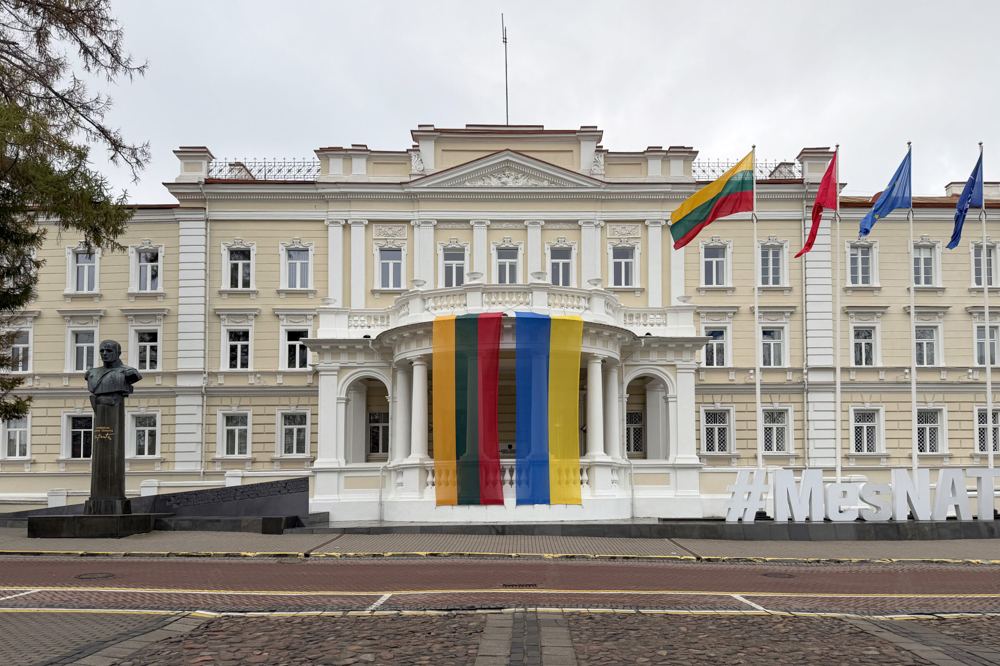
Lithuania's parliament this week backed a proposal to lift the constitutional ban on the deployment of nuclear weapons and foreign military bases, opening the way for future deployment of nuclear weapons in the country.
On Tuesday (22 September), the Lithuanian parliament backed a proposal to lift the constitutional ban on the deployment of nuclear weapons and foreign military bases on the country’s territory.
Lithuanian radio LRT reported on the development, which paves the way for nuclear weapons in the country.
Lawmakers overwhelmingly approved the constitutional amendment to lift the ban, with 99 votes in favour, 13 against and five abstentions. The proposal must pass two further parliamentary votes, three months apart, before it comes into effect.
In March, French president Emmanuel Macron announced a new French nuclear doctrine. He also raised the possibility of extending France’s nuclear umbrella over countries that could temporarily host French strategic aircraft capable of carrying nuclear weapons.
However, the final decision on their use would remain in the hands of the French president.
France is the only EU member state with its own nuclear weapons and has a similar number of nuclear warheads to the United Kingdom, which sources them from the US.
However, France has long advocated greater autonomy from the US. Macron has justified this due to the inflammatory rhetoric of US president Donald Trump, who puts into question US commitments to European allies.
Ten European countries have joined France’s forward deterrence programme: the United Kingdom, Germany, Poland, the Netherlands, Belgium, Greece, Sweden, Denmark, Norway and Finland, which joined this month ending military neutrality after Russia's full-scale invasion of Ukraine.
It was in the context of the new European nuclear architecture that MP Remigijus Motuzas, chair of the Lithuanian parliament’s foreign affairs committee, plus another 50 Lithuanian MPs tabled a proposal to lift the constitutional ban on deploying nuclear weapons on the Baltic country’s territory.
Lithuania borders Russia’s heavily-militarised Kaliningrad exclave and Belarus, Moscow’s closest ally in its war against Ukraine.
“Given the situation we are in, the geopolitical situation and what is happening, I think it is certainly worth it,” parliamentary speaker Juozas Olekas said in May, referring to nuclear deterrence.
Denisa Ballová is a reporter in the foreign affairs desk of Denník N based in France. She studied journalism and political science at Comenius University in Bratislava, previously worked at SME, later studied journalism in Aix-en-Provence and lived in Paris. She also lived in Estonia for two years.