Aurora CFO says 30,000 driverless trucks by 2030 isn’t as far-fetched as it sounds
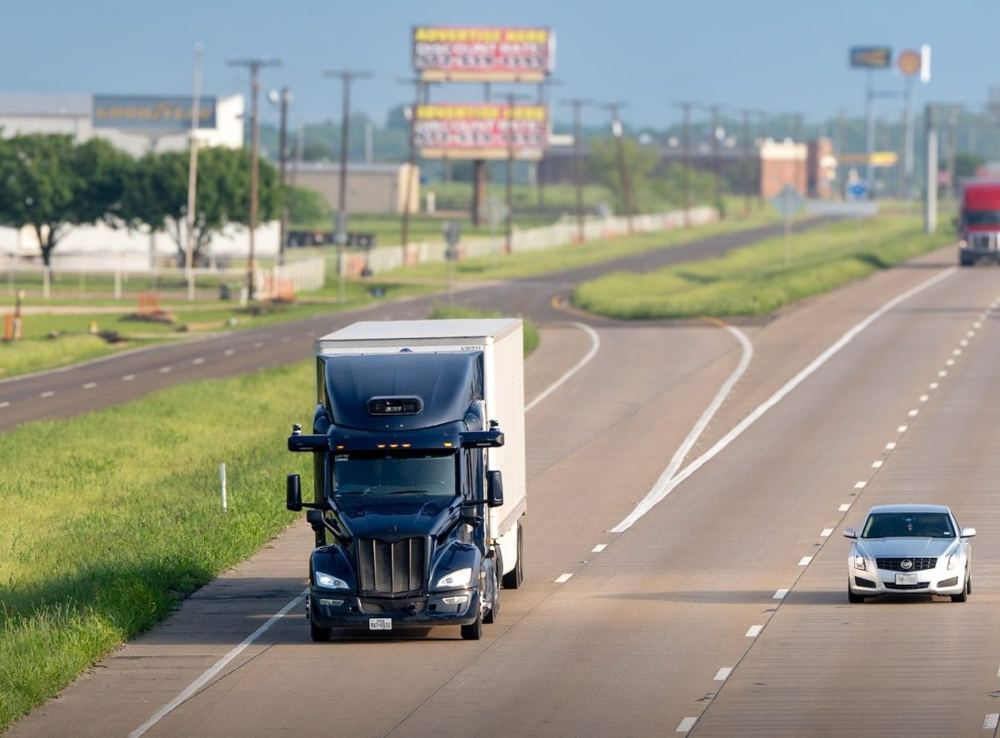
Self-driving truck company Aurora laid out an audacious plan for 2030. Its CFO says its targets aren't aspirational.
Autonomous vehicle technology company Aurora told investors last week that it expects to have more than 30,000 self-driving trucks on the road generating $5 billion in annual revenue by the end of 2030, an audacious plan considering it expects to end 2026 with just 200 driverless trucks and an $80 million revenue run rate.
CFO David Maday contends the seemingly outsized target isn’t as large or as out of reach as it might appear.
Investors haven’t exactly embraced Aurora’s 2030 vision. Shares have continued to slide since the company’s annual analyst and investor day on September 23. On Monday, shares closed down 12.42%, to $5.29.
But investors have time to come around and, according to Maday, the big “unlock” for Aurora starts in 2027 and accelerates from there. The company expects to go from 200 driverless trucks at the end of 2026 to more than 1,000 a year later.
Today, Aurora operates what it calls a transportation-as-a-service business, a proof-of-concept model that it plans to limit to about 500 trucks. It owns and operates the self-driving trucks and charges its customers, including Detmar Logistics, Hirschbach, McLane, and Werner about a $2 per mile, a rate that includes a fuel surcharge.
Moving the trucks off Aurora’s balance sheet is critical if the company wants to scale, and it’s likely what investors are paying attention to. The company said it expects to reach breakeven gross margins (meaning revenue would cover the direct costs of running the trucks) on a run-rate basis in the first half of 2027 with around 500 trucks on the road.
The next big leap comes at the end of 2027 with Aurora’s third-generation hardware, the sensors, computers, and other equipment that let its trucks drive themselves, which will be mass-produced autonomous vehicle hardware built by its partner, Aumovio (formerly known as Continental). Aumovio isn’t just engineering and manufacturing the hardware kit; the company is also financing it for Aurora, easing the financial burden on the self-driving truck company. Aumovio will also service and repair the kits for customers.
Aurora plans to expand its operations at the same time. By 2030, the company expects to grow beyond a few states in the South to the vast majority of the continental U.S., according to Maday.
“By 2028, I expect that our cost structures are going to be really outstanding, that’s why you see our gross margin starting to take off …” Maday said. “Once you get to that point, I think going into ride hailing is fine,” he said, confirming that Aurora still plans to eventually enter the robotaxi market.
When you purchase through links in our articles, we may earn a small commission . This doesn’t affect our editorial independence.
Get 50% off a second pass The Disrupt experience is meant to be shared. Get your pass and bring a colleague, partner, or peer at 50% off. Cover more ground by making connections, building momentum, and discovering what’s next in the startup ecosystem.
Crusoe abandons $1.25B plan to use Boom turbines at AI data centers
Oracle sends force majeure notice on its New Mexico Stargate data center
Vogue sent robots down the runway at Vogue World, and people were not impressed
Anthropic says its biology lab has already found something big