Do you want help from humans or AI bots? Because the UK civil service is changing, and not for the better | The civil servant
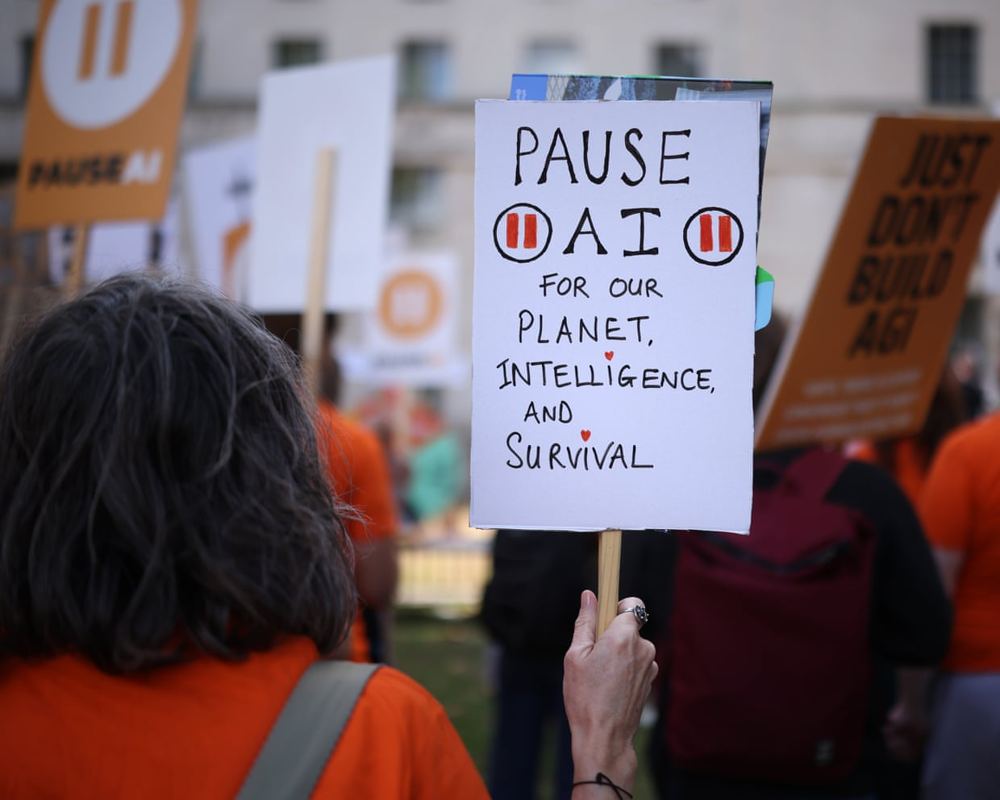
Rapidly expanding AI use within the government is numbing departments to its profound threats. And try arguing with a faceless digital bureaucrat Another day, another apocalyptic warning about the likelihood that rampantly uncontrollable artificial intelligence will solve all of our problems, including the problem of being alive. Hot on the heels of disgruntled Anthropic researchers announcing the end of civilisation by 2030, we’ve now had the portentously named Hugging Face incident , as well as the Australian government’s grim discovery of a rogue AI’s attack on its Medicare website. Swarms
Rapidly expanding AI use within the government is numbing departments to its profound threats. And try arguing with a faceless digital bureaucrat
Another day, another apocalyptic warning about the likelihood that rampantly uncontrollable artificial intelligence will solve all of our problems, including the problem of being alive.
Hot on the heels of disgruntled Anthropic researchers announcing the end of civilisation by 2030, we’ve now had the portentously named Hugging Face incident , as well as the Australian government’s grim discovery of a rogue AI’s attack on its Medicare website. Swarms of experts are now falling over each other to warn us that much, much worse is on the way.
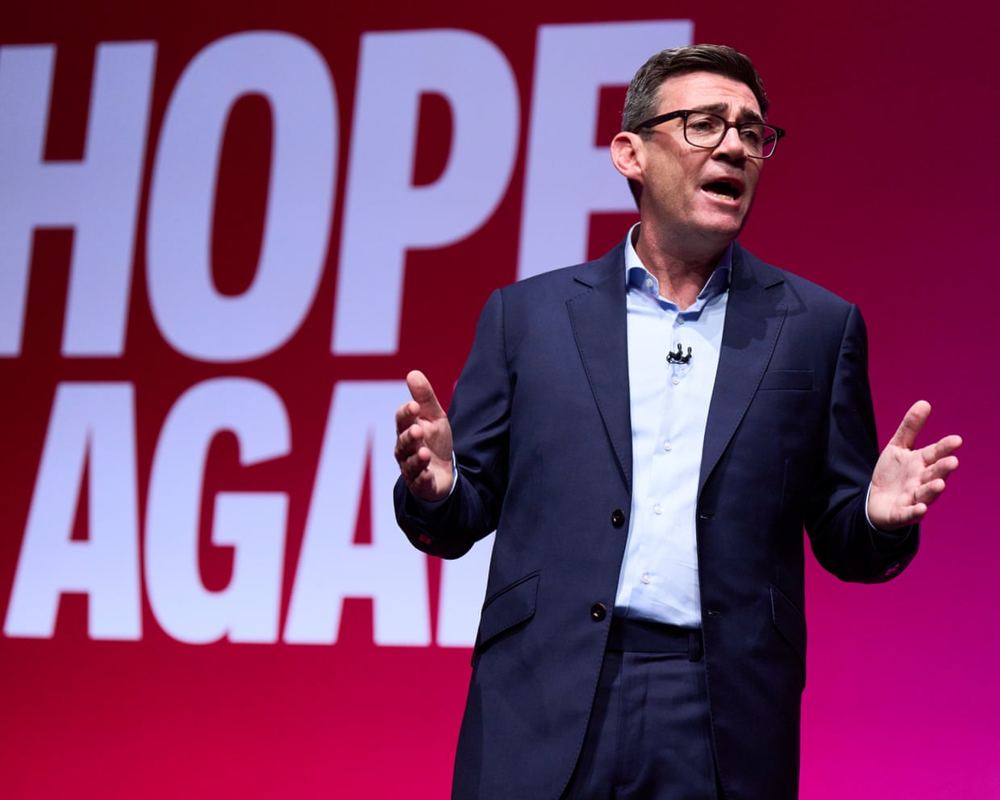
Thank God, then, that PM Uncle Andy has thrust Britain on to the bleeding edge of the fight against the rise of the self-improving machines. Except he hasn’t. Not really.
Yes, Burnham went to the United Nations and risked enraging the Orange One with talk of Britain’s prospects of leading the drawing-up of international rules for AI. Slightly awkwardly, however, one of Burnham’s first acts after sweeping into office was to abolish the Department for Science, Innovation and Technology (DSIT), the very department that had been leading work on AI safety. It’s a move that the Institute for Government warns will cause “ real harm ” and which former government AI adviser Matt Clifford has said “wastes time and energy that’s desperately needed for the actual substance”.
Isn’t there something gloriously British about all this? Having failed thus far to regulate the technology effectively at home, we are going to world-beatingly coordinate its regulation everywhere else. Whatever it is, it doesn’t quite feel like the response of a state gripped by existential urgency.
But perhaps that is because all of us, government ministers included, have already become desensitised to the risk of AImageddon. You can get used to anything. Sure, if one industry insider inadvertently leaks the news that scientists building a new technology believe it might kill everyone, a spot of existential panic is to be expected. But if you ram these tidings down our collective throat every couple of weeks, eventually the prospect of mass extinction acquires the urgency of that bowel cancer screening kit you’ve been meaning to send back to the doctor.
Civil servants understand this aspect of human nature only too well. Like the prospect of the galloping climate crisis, we too are simultaneously terrified by AI and utterly bored by it. The extraordinary becomes familiar; the familiar becomes an item on a civil service risk register, after which the real fear is that someone will arrange a Teams call to talk about it.
The median age of civil servants , remember, is 43 years, so many have already witnessed enough technological revolutions to choke a chatbot. Which means that, like me, there’s a large faction of the workforce that remembers the replacement of fax machines by email, and their first introduction to Clippy , that damnably moronic AI ancestor office assistant whose principal stab at sentience was appearing uninvited to chirp: “It looks like you’re writing a letter. Would you like help?”
So it’s entirely possible that civil servants of my vintage might not yet have been compassionately euthanised by the time government departments such as the Department for Work and Pensions (DWP) or HMRC contain more AI agents than carbon-based officials.
It may sound melodramatic, but that’s where we are headed. Ministers, convinced that harnessing AI will help keep Reform at bay by offering the tantalising possibility of slashing civil service jobs, have calmly and robotically emoted their concerns about the machines jumping their guardrails, while enthusiastically searching for things to give them. That’s amid civil service union concerns that the government is moving too quickly, citing the Fabian Society’s research finding that only 29% of those surveyed said they had been consulted about AI tools in their workplace.
They’re right to be worried. Before DSIT was deleted, its permanent secretary, Emran Mian, reportedly had plans for AI to eventually replace almost every departing civil servant in his department rather than replacing them with humans. Elsewhere, the DWP has been busily experimenting with AI across the welfare state, directing its machine-learning systems to identify supposedly high-risk universal credit claims. And in response to “serious concerns” about transparency and the handling of personal data, the DWP has been careful to insist that humans retain the final decision and that AI does not determine entitlement.
Is this just practical common sense, or the kind of world-beating complacency that some have pointed out is an echo of the government’s response to the climate emergency? Either way, the reassurances given by AI minister Kanishka Narayan to the parliamentary business and trade committee sound increasingly hollow after the spate of recent AI rampages.
Civil servants, especially those in public-facing government departments, are acutely aware that saying “a human remains in the loop” is not the same thing as saying “a human remains in charge”.
This really, truly, matters, because the commodity on which every government ultimately runs is not data, or productivity, or even money. It is trust, including the trust that, while below the OECD average, the British public still has in the civil service, and which, according to the public accounts committee , is being jeopardised by inadequate transparency and weak standards on AI.
We already have a national catchphrase for what happens when human discretion, and the accountability that comes with it, disappears. Little Britain’s “ computer says no ” still resonates, thanks in part to the haunting legacy of the Post Office’s Horizon scandal . Everyone recognises the terror of the human being behind the desk surrendering responsibility to a system whose conclusion can’t be questioned because nobody in the room understands how the hell it got there.
And that may be the real warning from Whitehall. Not that killer robots are about to lock the doors and announce the abolition of humanity. But that long before then, governments might quietly surrender thousands of small human judgments to a swarm of digital bureaucrats because doing so is cheaper, quicker and can be passed off in a ministerial speech as “transformation”. It will not feel like that to the public.