Jim Lanzone on Yahoo’s plan to fix AI search with more links to publishers
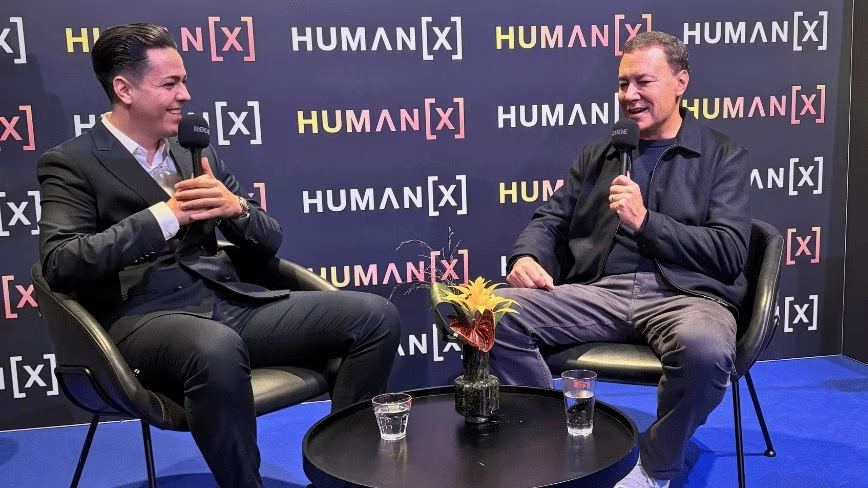
Yahoo already holds what AI agents ask people for first, their email and their calendar, CEO Jim Lanzone told TNW. He said Yahoo will launch more personalised, agentic products “in the months ahead”. Lanzone spoke to TNW in an exclusive interview at HumanX in Amsterdam on 23 September, for the first episode of the relaunched […] This story continues at The Next Web
Yahoo already holds what AI agents ask people for first, their email and their calendar, CEO Jim Lanzone told TNW. He said Yahoo will launch more personalised, agentic products “in the months ahead”.
Lanzone spoke to TNW in an exclusive interview at HumanX in Amsterdam on 23 September, for the first episode of the relaunched TNW podcast. The full conversation is in the video below.
“What’s the first thing these agents ask you to do? Give them access to your email and calendar. But we already have those users,” Lanzone said.
Yahoo is the second-largest email platform, he said. The industry has gone from “the AI wars to the agent wars” in recent weeks, and Yahoo would have built these products anyway.
Yahoo Mail launched Planner in March. It pulls appointments, bills and reminders out of emails and adds them to a calendar and a to-do list. Lanzone said products like this take steps for users based on what Yahoo knows about them, if they opt in to a more personalised experience.
Getting people to try new products is the hard part of the consumer internet, he said. Yahoo has 700 million monthly users, and more than 75% of them come to Yahoo directly or are already logged in. His plan is to put new products inside the ones people already use, as Meta does.
Lanzone joined Yahoo in 2021, after Apollo bought it from Verizon. He said the biggest challenge since then was the revenue model.
“We had an ad tech business that was the main generator of our revenue that actually made us lose hundreds of millions of dollars a year,” he said.
In early 2023, Yahoo shut two of the three parts of that business, Lanzone said. The cuts came to more than 1,600 jobs, over 20% of Yahoo’s workforce, Axios reported at the time. Lanzone said the cuts were not about saving money, but about moving on from businesses that were broken.
The year after was “topsy turvy” while the new revenue model went in, he said. Yahoo is now private, which he said lets it change fast without worrying about how the markets react. He would like it to be a public company again one day, “if we earn that”.
“It’s no longer a turnaround. We already accomplished that. The business is on really solid footing,” Lanzone said.
Yahoo’s biggest growth is with Gen Z and millennials, he said. Yahoo Finance has more than 150 million monthly visitors worldwide, according to Yahoo. In May it launched AlphaSpace , a fully customisable investment platform that Lanzone compared to TradingView and Bloomberg.
Yahoo launched its AI answer engine, Yahoo Scout , in January. Lanzone said Scout uses a lightweight model to process Yahoo’s own data, and links back to the publishers its answers come from. He made the same case on stage at HumanX later that day.
He said AI answers could carry many more links, like a Wikipedia entry, and that click-through rates would rise. They would not match search 20 years ago, he said, but would beat the first AI answer engines.
“I think what we’ve done with Yahoo Scout can be copied and should be copied by everybody as the UI for AI answer engines,” he said.
In the UK, Mirror owner Reach cut 220 editorial jobs this month as Google’s AI summaries hit its traffic. Cloudflare has told AI crawlers to pay publishers or face a block.
Lanzone said he has run three turnarounds of top 10 internet companies. He co-founded a startup out of school in the 1990s, which Ask Jeeves bought, and later became CEO of Ask.com. CBS bought his second startup, Clicker, in 2011. He then ran CBS Interactive, where the service now called Paramount Plus began as CBS All Access. He was also CEO of Tinder.
Each Yahoo business has a general manager with its own heads of product, engineering and content, who runs it like a CEO. Lanzone said he sends his teams screenshots of problems he finds every day.
His advice to people in their 20s is to join an early-stage company, even if it pays less at first. They see more parts of the business that way, he said.
“What’s the downside? It doesn’t work? Okay, then you do another one,” Lanzone said.