Hungary’s new government dismantles Fidesz‑era public media, triggering mass layoffs (67 days post-election)
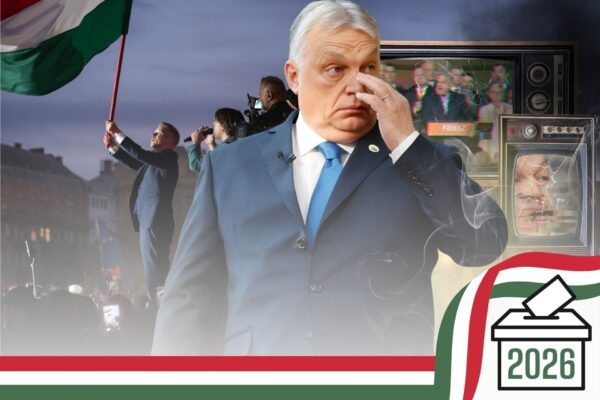
Among many other changes, Hungarians are about to find out which newsrooms can actually survive without state money - as a massive change within the public broadcast system is now underway.
Our weekly digest of Hungarian politics continues, as we report on the aftermath of April’s election and on the early days of the new Tisza government. This week we cover:
At Thursday’s (18 June) summit in Brussels, EU leaders are expected to discuss support for Ukraine and its accession to the European Union, the next seven-year EU budget, competitiveness, developments in the Middle East and migration. Before the meeting, Magyar took part in a gathering of leaders from the European People’s Party and in a revived consultation among the Visegrád Four countries.
In Brussels, he is also expected to meet Ukrainian president Volodymyr Zelensky in person, for the first time since becoming prime minister.
The Tisza government has submitted legislation proposing a complete restructuring of Hungary’s public media system. Zoltán Tarr, minister responsible for social affairs and culture, summarised the proposal in a single sentence: its purpose is to “return public media to the public, to the Hungarian people”.
Under the legislation, the current public media organisation would cease to exist and be replaced by new institutional structures. The mandates of current leaders would end immediately.
One of the proposal’s most significant innovations is the creation of an Independent Public Media Board - composed partly of parliamentary delegates and partly of professional representatives. The board would oversee state media providers. Government and opposition parties would nominate members in equal numbers. Anyone who has held a party-political role during the previous five years would be excluded from membership.
Board members would be elected individually by parliament and media professionals: six members nominated by parliamentary groups would serve four-year terms, while three members nominated by the media profession would serve five-year terms.
A government audit of the Fidesz-era public media system has already begun, and open competitions for senior management positions are expected to be announced in the autumn.
The political significance of the issue extends far beyond institutional reform. Over the past decade and a half, Hungary’s public media has become one of Fidesz’s most important communication tools, effectively functioning as a mouthpiece for the party. This year alone, more than 150bn forints in public funds were allocated to it, an exceptionally high figure by regional standards, particularly for a broadcaster financed by taxpayers.
International press freedom organisations and media groups have repeatedly criticised the system, arguing that state television and radio failed to fulfil their public-service mission.
While parliament debates the future of public media, dramatic changes are also taking place within the media system associated with Fidesz, one of the biggest losers of the change in government.
Mass layoffs have begun at several pro-Fidesz media companies, particularly outlets that functioned as instruments of the party’s propaganda apparatus, participated in smear campaigns and focused almost exclusively on amplifying government messaging.
Veronika Munk is an award-winning Hungarian journalist with more than 20 years of experience. She works as director of innovations and new markets at Denník N, the leading independent Slovak news outlet, which also has Czech and Hungarian language versions. Prior to her current role, Veronika held various senior positions at several other leading Hungarian independent news outlets. She was the founding editor-in-chief of the Hungarian independent online daily news outlet Telex, and before that, she was deputy editor-in-chief at Index, Hungary’s largest online daily news outlet. Veronika has a PhD in media studies and teaches journalism courses at ELTE University, the largest Hungarian university.