Europe’s children will inherit public-health crisis from new EU pesticide approvals
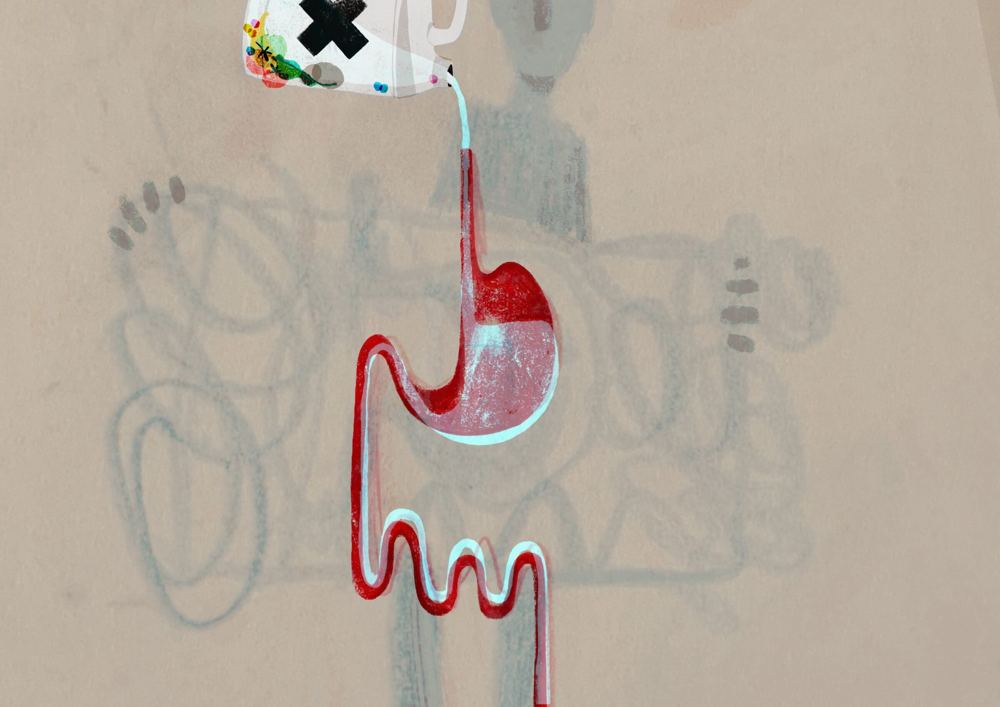
By extending pesticide approvals and keeping hazardous products on the market, Brussels is bending to Big Pharma and causing a food-system and public-health burden for decades to come.
The European Union once prided itself on leading the world in protecting children. Today, policymakers backed by big polluters are betraying that promise in the name of “competitiveness”.
In June 2026, Florence, Franck, and Isabelle packed their bags and headed to Brussels. Why? Because their children have all suffered serious harm from pesticides.
These children have endured physical pain and heavy medical procedures, including repeated chemotherapy treatments. And their families have shouldered both the financial and emotional burdens alongside them.
As Isabelle puts it: “It destroys a family.” Her own daughter has been fighting leukaemia for the last seven years.
And they are not alone. In 2024, almost one in 20 children in the EU were exposed to dangerous levels of pesticides; that’s 380,000 kids. Now these parents have a clear message for policymakers: prioritise public health and stop dismantling the rules that protect children against harmful substances.
In 2024, around 316,000 tonnes of toxic pesticides were sold in the EU to be sprayed across our countryside, risking not only the health of farmers but also polluting our soil, air and water.
The European Environment Agency in Copenhagen has reported environmentally unsafe levels of pesticides in about a quarter of Europe’s rivers. In groundwater, which supplies 65 percent of the water we drink in Europe, unsafe levels were detected in 11-18 percent of water bodies.
In the same year, trifluoroacetic acid, a harmful “forever chemical” that forms when ‘PFAS’ pesticides and F-gases break down, showed up in 94 percent of drinking water samples tested across 11 EU countries.
We are surrounded by pesticide pollution. It’s even in our homes .
In December 2025, the European Commission proposed a legislative package that would remove fundamental environmental and health protections against pesticides in the EU.
Among other changes, the proposal, ironically labelled the ‘Food and Feed Safety’ Omnibus, suggests extending pesticide approvals indefinitely and relaxing the rules to allow pesticides already identified as hazardous to remain on the EU market.
These proposals are a political choice to prioritise short-term profits for Big Polluters over children’s lives, people’s health, and the nature and ecosystems we need to survive.
Human health is at stake, and children are at particular risk, as they absorb substances more easily and are less able to excrete them.
Pesticide exposure is linked to the development of childhood cancers , hormone disruption , neurodevelopmental impairments and birth defects . And prenatal and early childhood exposure can permanently alter development, with consequences that can be irreversible, and deadly .
Under the UN Convention on the Rights of the Child, as well as the UN-declared human right to a healthy environment , all EU countries must commit to protecting children from environmental harm and ensure the highest attainable standard of health.
Yet, instead of strengthening protections, the EU is moving backwards at a worrying speed. This is largely due to intense (and repeated ) lobbying from multi-billion euro corporations, which includes the pesticides industry. Corporate chemical giants now spend €46m a year just to lobby the EU; that’s over 60 percent more than in 2020.
The incoherence of current EU policy is troubling. On the one hand, the EU Commission is celebrating its new Intergenerational Fairness Strategy, a framework that is meant to ensure today’s policies do not disadvantage future generations. On the other, the same institution is actively seeking to relax controls of harmful substances.
Ripping up rules that protect people and the planet only benefits Big Polluters, industries that already make billions in profits at the expense of children’s health.
What’s more, an independent assessment found that the measures the EU institutions propose “will not accelerate innovations and authorisations”. In short, these proposals would actually make Europe less competitive.
Children’s rights and youth organisations have warned that deregulation exposes children to serious (and preventable) health risks. And the international scientific community recently stressed that robust environmental risk assessments cannot be optional .
Ultimately, Europe should widen and accelerate its access to pesticide-free alternatives. It must also support farmers in their efforts to transition away from pesticides, towards a more sustainable and resilient model .
So, what can be done? First, the EU must close the tap on pesticide use and production, and support farmers transitioning to safer alternatives. Second, it’s time for leaders to hold Big Polluters accountable for the damage they cause, not force the bill onto regular taxpayers and families harmed by these toxic substances.
Florence, Franck, and Isabelle’s children are among the hundreds of thousands already affected by pesticides. And they show that victims of pesticides are not just a statistic.
The ‘Food and Feed Safety Omnibus’ raises fundamental questions. Who exactly is the EU’s food policy supposed to protect? How many more children need to be harmed for politicians to act? And what kind of future do EU institutions want to build?
Should pesticide protections be treated as obstacles to short-term profits, or should children be able to grow up safely?
Politicians should reject this devastating Omnibus proposal and work instead to support the EU’s transition to safe, sustainable, and resilient farming.
Faustine Bas-Defossez is director for nature, health and environment at the Brussels-based European Environmental Bureau
Suzanne Astic is a policy and advocacy adviser on children’s rights and chemicals at Child Rights International Network