Way Dynamic Is Letting It Flow, And Good Things Are Happening
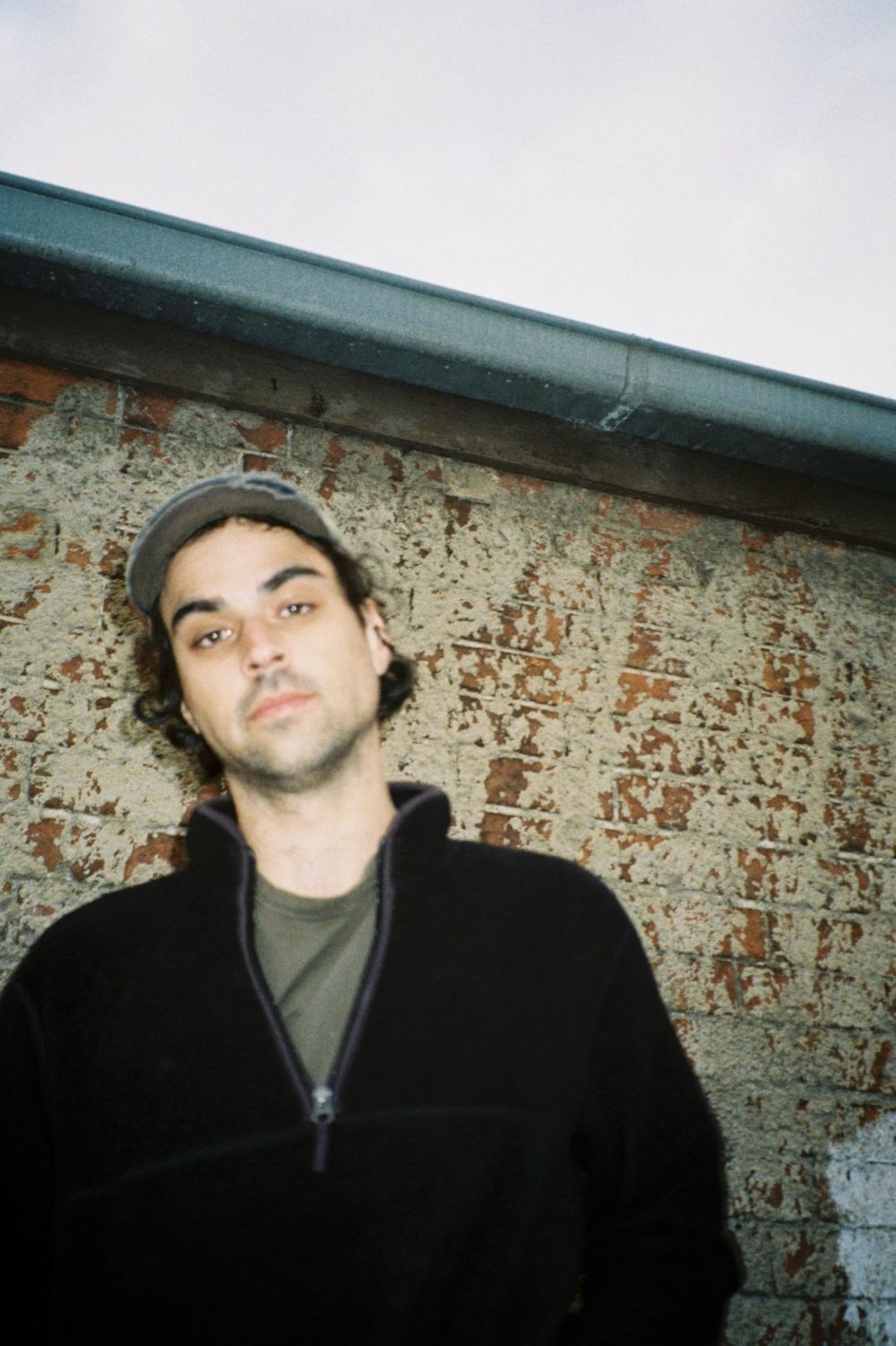
Way Dynamic is a funny moniker for a band so chill. Dylan Young has been recording under that name since his university days at RMIT in Melbourne about a decade ago, and the project has ramped up in the 2020s with a trio of albums crafted in tandem with Good Morning's Stefan Blair. But things really picked up with last year's Massive Shoe , a casually excellent '60s and '70s throwback that evokes everyone from Paul McCartney to Nick Drake to Talking Heads. The post Way Dynamic Is Letting It Flow, And Good Things Are Happening appeared first on Stereogum .
Way Dynamic is a funny moniker for a band so chill. Dylan Young has been recording under that name since his university days at RMIT in Melbourne about a decade ago, and the project has ramped up in the 2020s with a trio of albums crafted in tandem with Good Morning's Stefan Blair. But things really picked up with last year's Massive Shoe , a casually excellent '60s and '70s throwback that evokes everyone from Paul McCartney to Nick Drake to Talking Heads.
In 21st century terms, Way Dynamic reminds me of a cross between Tobias Jesso Jr.'s sincere Nilsson/Newman pastiche and Mac DeMarco's playfully vibey indie soft rock. He was supposed to tour with Star Moles this fall, and there's definitely a similarity in the way both acts channel old-school influences into modern music that feels slightly out of time. But the more time you spend with Massive Shoe , the more you start to recognize Young as his own distinctive talent, rooted in the classics but unmistakably himself. His salt-of-the-earth songwriting, thoughtfully dreamy disposition, and devotion to analog recording add up to an irresistible, compulsively listenable experience. This is an album you can really live with.
A lot of people have already been living with it. First released through Melbourne's Spoilsport Records, Massive Shoe became a streaming sensation and caught the ear of American mega-indie Jagjaguwar, which reissues the album today with the new bonus track " Officially ." Way Dynamic was supposed to be deep into a US tour right now, too, but visa issues have pushed that back to early next year. Although Yanks will have to wait to see Young and his band performing these loose, lively, pleasingly unpretentious songs in person, you'd all do well to dive into the record while reading my recent interview with Young below.
Your earliest Bandcamp release dates back to 2018. What can you tell me about your life in music before that? Do you have a musical artist origin story or any bands you played in before this one?
DYLAN YOUNG: In fact, there was a time where I had, I think, three other EPs on Bandcamp that are now not on there. But Way Dynamic was always my name for whatever I was doing at the time. It started as a unique project to encourage us to create whatever. I've been playing guitar since I was like eight, playing in bands in high school from 14 onwards probably, and all through my adult life in Melbourne as well on different projects. Some of them I'm still in, like Cool Sounds . It's the guitarist in my band, Dainis [Lacey]'s project.
What were your teenage bands like? What kind of music were you playing back then?
YOUNG: This was the young teenage band. One of my first bands was called Natural Mess, which I might use still one day, it's kind of sick. We were playing originals, and I don't know if they were inspired by anything in particular. It's just the sounds you make when you pick up a guitar or a drum or a bass for the first time. I don't know if that has a name. Later on, there was another band I was in that was kind of Foals-inspired. And then later on, another band that was a little more Kinks as well, so just going all over the place.
YOUNG: Yeah, it was a sort of music industry degree, although it wasn't that fun. I thought it would be a lot more practical than it was. But in one class, it was an arts degree, so we were encouraged to start a thing. I did, and that was the name I gave it.
In your music, I hear different influences from song to song, leaning into one here or another one there, but there is a remarkably consistent vibe. Did you have a vision for what you wanted Way Dynamic to be? Or is it more like what comes out is what comes out?
YOUNG: It is more what comes out is what comes out, but I suppose maybe that alludes to that I'm a simple guy with simple tastes. I would like to push myself. I attempt to push it to different places, which I think I am, slowly. Fourth record, I hope, will be the most different. I guess we'll see. I guess I can't help but be continuously influenced by the type of songwriting that I am and type of sonics that I am, which is to say a lack of production and sonics. Very raw, immediate sounds.
I imagine that universal creative struggle is to push yourself into new territory without losing the soul of the project or moving it so far that it ceases to feel like Way Dynamic.
YOUNG: I don't think I'm worried about that at all. I like the idea that it'll change completely. But so far, it hasn't that much. I guess that means in that space of four-ish years, I was fairly consistent. But looking back on what I was like eight years ago, if that's anything to go by, what I'm interested in is totally gonna change.
You've co-produced for a long time with Stefan from Good Morning, and then you've been a part of their band at times. How did you get connected with them? What's your relationship with them like?
YOUNG: Just from the scene in Melbourne. Him and Liam [Parsons], the other songwriter in Good Morning, both produced my first album. Liam moved away to London, so he hasn't been around to produce the rest. I just knew them for years, even prior to doing the first record, and I was such a big admirer of their music. They taught me inadvertently about how they record on tape, and that's now what I do. Stefan's endlessly exciting to bounce ideas off of in the studio. They've taught me everything.
Why is he so exciting to bounce ideas off of? Is he just encouraging, or you bounce the ideas off of him and they go in a different trajectory?
YOUNG: They might go on a different trajectory, and yes, he's encouraging. But maybe to put it another way, he is just so free and intuitive. Rather than being like, “Oh, here's an idea that I've conceived of, and let's chase that,” it’s more, “Move buttons, chase knobs, do spontaneous things. And when it clicks, go with that instinct and move forward, and don't look back or second-guess.” He's really good at acting intuitively. Both of them are.
It seems like that'd be important. From reading some of your other interviews, you care a lot about having a loose, free-flowing atmosphere in the studio. It feels like that's essential to the core of what you're doing, right?
YOUNG: Yeah, that's what I say. Even if sometimes it doesn't stray far from what I am bringing to the table, I'm usually bringing a pretty conceived arrangement, which maybe goes against what I was saying, if something better may come along in the recording day, as long as we're following that rather than sticking to the plan, then that's a good thing. That's the type of free-flowing thing I'm talking about.
It's easier, I think, to pivot when you have a plan, if you're holding to it loosely. Whereas going in with no plan, it can feel rudderless. What's the saying about how you can change the direction of a moving ship?
YOUNG: Yeah. I had someone, I think they were quoting a filmmaker who said, “All you need to be a good director is a vision and the ability to communicate that vision to the people you're working with,” and it seems to apply here, too. If you come up with a plan but you are able to navigate changing it, rather than not knowing why something is working or not working, if you're able to navigate all those things, you're onto something. Well, that's how it is for me, anyway.
On this subject of how to achieve a loose feeling that doesn't feel endlessly labored over, you've talked about trying to finish recording a song the same day you started. Are there any other tricks to keeping things feeling loose?
YOUNG: No. Nothing too formulaic because then you're starting to lose that looseness. But I think as long as you just have trust in the people you're doing it with, you'll feel free to make interesting, strange decisions together. You'll encourage one another.
You've talked about how your natural inclination is to be a control freak who wants to play every instrument, but there's a lot of people credited on Massive Shoe . Are you learning to open that up a little bit more?
YOUNG: Yes, slowly. For the most part, they're doing things I can't play anyway, so I've got no choice but to let them play. At the same time, yes, I'm definitely trying to allow some spontaneity into the process. Two of my favorite songs on the record are the ones where I wasn't playing the rhythm section myself, although I was one-third of the rhythm section as opposed to the whole thing. I'm gonna try and keep that up, invite more people to the studio, let things change, let things morph into something else. As long as I trust these people, and all of these people I have heaps of trust in.
Have you found that getting more attention for the band has made it easier to connect with more interesting musicians that you wanna work with? I know sometimes people start to gain a little bit more of a profile and they double down on their crew that they already know they can trust.
YOUNG: So far, I'm in that world. I’m really fond of my crew. I can see working with people that I admire as well, but sometimes I get so quiet and shy around those people who I really admire. I'm not sure it would be a really freeing experience, you know? I've got decades of experience being stupid and cheeky with these other people.
You’ve said you aimed for a balance of banal specifics and broad platitudes to make the songs more universal, and clearly they did connect with people. What is it about that approach that works so well?
YOUNG: Those are two strong ways of delivering the story, I guess. Something so specific that it becomes universal because people can read into, I don't know how that works, but it just does. People can read into the situation and, because it's so specific, relate to some part of it, at least. It just works. And then something broad and existential, on its own, is pretty inaccessible. It's not direct storytelling. But when you pair them up, I find that they make each other more profound. I've been noticing that pairing of those types of things in more and more music, when I go back and listen to some of my favorites.
I was about to ask if there were any songs that you looked to that sparked that thought process or made you say, “Oh, I see how they struck this balance.”
YOUNG: I had a big moment a few years ago with Andy Shauf, and I really liked his storytelling. Super specific, really cool. And I guess Dylan's that way, as well. Maybe Dylan's the guy that can do both.
I can't believe I didn't make the Andy Shauf connection until now. That makes perfect sense. On “Interview,” you sing, “Flying to space in a massive shoe/ And I'm still the one who wakes up next to you.” Is there a personal story there? I’m trying to learn where the image of “Flying to space in a massive shoe” came from.
YOUNG: I'm pretty bad at remembering why I wrote anything, but I'll do my best. I think it was me shedding ideas on what it's like to reminisce on a relationship gone by, or past, or finished. “Flying to space in a massive shoe” is just abstract imagery on what you could have achieved together. And then “wake up next to you,” that's the contrast of surreal and grounded. That's always what's interested me. I suppose there isn't a specific story.
So it's not like there was some inside joke about flying in space in a shoe?
YOUNG: No, just imagery, really. Like we've been saying, hopefully it's just specific enough and vague enough that people can read into it in whatever way they like.
Another thing that struck me on the album is in “Mercy Town.” There's that funky little piano break in the middle with a real nasty bassline. Where did that come from?
YOUNG: I guess in a way it's all improvisation when I'm writing. You just try something and follow your ears until something piques your interest. It's quite intuitive. But if I had to really think about why that happened, it might be a nod to some Brian Wilson-type melodies, or Harry Nilsson. It's certainly a Smiley Smile , Brian Wilson-type moment. I was writing it with my friend. He was helping me with some lyrics on other parts, and we built that section up together, trying to hype each other up.
YOUNG: No, I've never been. I'd like to go. It was in my mind as the pinnacle of clubbing or something, like clubbing in the sun, a Balearic club thing. But the song is about interrogating, I don't know who I'm interrogating. Maybe myself. “What is it that is legitimate out here?” Interrogating aesthetics and what goes anything deeper than that in my own music. It’s nothing too thought out about it, just musings on coolness in music, aesthetics.
“Officially” was added to the album for this reissue. Was that an outtake before, or was it a newer song that was finished more recently?
YOUNG: It was a slightly newer song, but not so new that I thought I'd save it for the next record. It feels like it belongs a little further in the past, and it wasn't going to come out unless I put it here. The opportunity came along to release another song. It belongs because it's about relationships. I think it can really work well along with these other songs. It's a nice bow on the whole arc of Shoe .
It's about starting a new relationship, and a lot of these other songs are the end of the old one, right?