A death, a plagiarism scandal and a quest for revenge: the bizarre tale of Otto Z
After his mother died, Otto became convinced he’d been wronged by the forensic investigators – and that one of them was a fraud. The truth was even stranger On a balmy, quiet evening in June 2020, Otto’s elderly mother, Doria, was fading in her Munich apartment. As she lay with her eyes closed, her pale face, framed by her white hair, was calm. Otto, masked, gloved and draped in a sterile apron, dozed in a chair beside her. Otto, who sometimes goes by the name Rainer, and whose last name is only known as “Z” because of Germany’s strict privacy laws, was a doctor who had cared for his mother fo
After his mother died, Otto became convinced he’d been wronged by the forensic investigators, and that one of them was a fraud. The truth was even stranger
On a balmy, quiet evening in June 2020, Otto’s elderly mother, Doria, was fading in her Munich apartment. As she lay with her eyes closed, her pale face, framed by her white hair, was calm.
Otto, masked, gloved and draped in a sterile apron, dozed in a chair beside her. Otto, who sometimes goes by the name Rainer, and whose last name is only known as “Z” because of Germany’s strict privacy laws, was a doctor who had cared for his mother for years, ever since she had suffered a stroke and moved in with him. He described the course of that night to me. He woke to the sound of her short breath and tried to sit her upright. Her eyes were shut, and her lips pursed. She stopped breathing. Otto reached for his phone to call for help, but then Doria opened her eyes and stared into his. She smiled, drew one last deep breath, shut her eyes again, and lay still.
Otto sank into his chair. As a doctor, he had seen death many times, but his own mother’s passing sent him into shock. He felt frozen, watching the windows glisten in the fading light. He was 66, and his brother and father had died years before. He had no friends. He had given all of his time, energy and attention to his mother’s care, and now that his task was suddenly over, he had no one to turn to. He mourned in solitude, with an impromptu ritual. He lit candles and set metal plates at the four corners of her bed. He sat beside her and thought about her soul.
Once the rite was complete, Otto picked up the phone and called a funeral home. He knew the procedure: as a doctor, he could issue his own mother’s death certificate. After he hung up, Otto waited. It was the last calm moment he would experience for many months.
After he called the funeral home, Otto told me, he waited beside his mother all night and into the next afternoon before he heard a knock at the door. He was surprised to see that, rather than doctors, the two men in the hallway were police officers. They wore bulletproof vests and carried guns. He invited them inside, where they scanned the rooms. He directed them to his mother’s bedroom and followed close behind, but the officers stopped him and asked him to take a seat.
While the officers inspected his mother’s body, Otto sat in his office. Forty-five minutes passed, and then he heard someone else enter the flat without knocking. A tall, stylish woman approached and introduced herself as a coroner from the Munich Institute of Forensic Medicine, before walking off to the bedroom.
Otto knew that a coroner, as opposed to a doctor or nurse, is only sent to the scenes of suspicious deaths. He followed her to the bedroom, where she had begun inspecting his mother’s body. Otto wasn’t easily rattled, but he told me that the way the coroner handled Doria threw him off. He found her elegant attire unprofessional, given the circumstances, and her bedside manner lacking. He said that he tried, however, to remain polite and helpful. As she went about her work, he offered his recollections from his mother’s final hours and an account of her long illness, which he had documented minutely over the years. Otto informed the coroner that he was a doctor, but it seemed to him that she was uninterested. She turned to the police officers and, without explanation, told them that this was a matter for law enforcement, before leaving the flat. Otto told me he wondered why nobody was listening to him, the grieving son, the doctor?
More armed police officers arrived and searched the rooms. A commissioner approached Otto and told him to gather his things, as they needed to conduct their work uninterrupted. Sleep-deprived and grief-stricken, Otto was ushered on to the street and ordered not to return. He drifted along Munich’s wide, lamplit streets. As darkness fell upon the city, Otto told me he felt that he “didn’t understand the world any more”.
He checked into a hotel, but found it intolerable to sit in his room. Later that night he wandered back to his flat and found the door sealed with police tape. He was desperate to check in on his mother and thought she might still be inside. He broke the police seal and entered the dark rooms, which were a chaotic mess, as if burglars had turned it over before fleeing the scene. He entered the bedroom. His mother was gone.
Otto went back to his hotel but still found it impossible to sleep. He returned to his flat a second time at about 2am, and this time he found several police officers stationed there. They spotted him and put him in the back of a police car. He was taken to the Institute of Forensic Medicine, where doctors extracted samples from him: hair, urine and blood. When they had finished, Otto was taken back to the police station and found himself alone in what he described as a tiny, windowless cell with only a mattress, a stainless steel toilet and bars on the door.
The next morning, two officers questioned him. How did he care for Doria? Why did he document her condition so precisely? Had he given his mother a concentrated saline injection? Only then did Otto understand: the police believed he had murdered his mother.
After two nights in jail, or possibly three (his memory of this time is confused), Otto was released and allowed to return to his flat. While it was a relief to be home, he told me he still didn’t understand why he was under suspicion. He had not yet been formally charged with any crime. Otto wrote to the head of the Institute of Forensic Medicine, Prof Matthias Graw, to ask if his team had discovered anything suspicious while inspecting Doria’s body. Eager to prove his innocence, Otto offered to send Graw all of his day-to-day notes on Doria’s health. He suggested, boldly, that they co-author a paper about the cause of her death.
Graw never answered Otto’s emails, and Otto fell into a depression. He told me he began blaming himself for his mother’s death. Had he made a mistake? Overlooked some critical detail? Was there some way he could have saved her? Over the years, he said, he had taken her to see 19 different specialists to ensure that she received the best care. He made sure she exercised and spent time each day in the fresh air. He had tried his best, hadn’t he?
Doria was his whole world. Before the pandemic he used to take her into the city centre each night, where she was a favourite among the buskers for her generous tips. In her younger years, Doria had been an avid traveller, and Otto had taken her, in a wheelchair, on one last holiday to Italy. Now she was gone. Otto’s despair grew until he was unable to eat or sleep.
In January 2021, the authorities dropped their investigation into his mother’s death, and Otto was cleared of any wrongdoing. But he still couldn’t get over her death. He checked himself into a psychiatric treatment centre, hoping to quiet his mind.
Through therapy and exercise, Otto slowly regained his strength. Meanwhile, he had received a copy of the results of his mother’s toxicological report, signed by Graw and two of his institute’s specialists, but he was too disoriented to examine them carefully. Months passed. It was mid-summer, after Otto had moved back into his apartment, when he finally sat down with Doria’s medical files and the report.
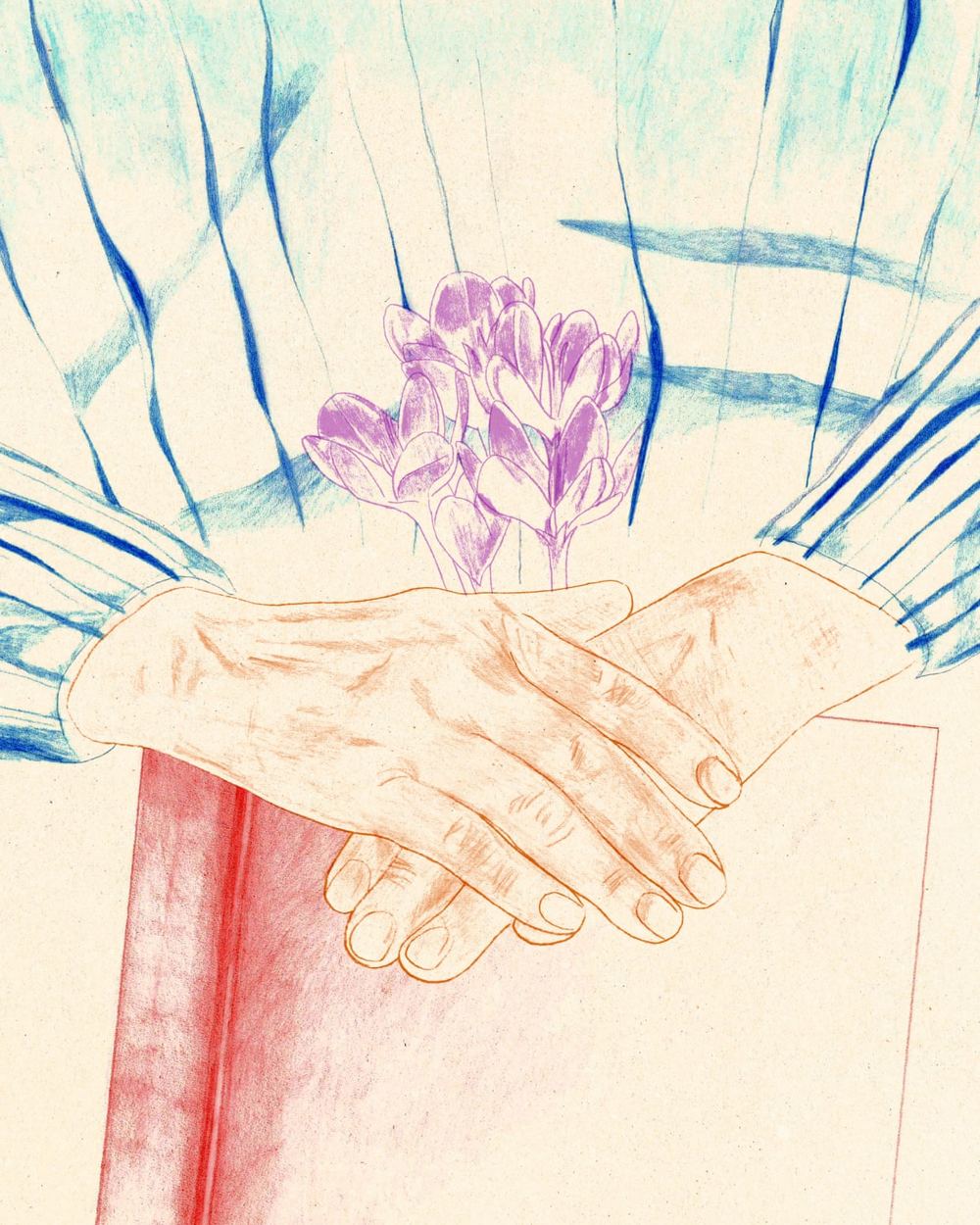
With two PhDs and decades of experience in medicine and chemistry, Otto knew how to interpret lab reports. He told me that something seemed off. Data seemed to him to have been highlighted selectively. Other details seemed to him to have been glossed over. In the toxicological report, he said he spotted a chemical compound, commonly associated with exposure to cold, in her bloodstream. In his telling, an impossible, unspeakable idea crept into his mind: could his mother have somehow still been alive when she was taken away and stowed in the mortuary’s freezer? Could she have actually died at the Institute of Forensic Medicine, under the coroner’s care? And if so, how? The report also mentioned unusual traces of a substance contained in the autumn crocus flower, a poison called colchicine.
Otto began researching the Institute of Forensic Medicine. He started with its director, Prof Matthias Graw, and discovered that decades earlier, when Graw was a doctoral student at the University of Hamburg, he had written his dissertation on a certain naturally occurring poison found in the autumn crocus flower, called colchicine, the same poison found in Doria’s blood. Otto told me that a dark theory took shape in his mind: what if the institute had tried to frame him, to cover up the fact that they had actually killed his mother?
He did not go to the police, who, he reasoned, must work closely with the head of the institute of legal medicine. He would take the matter into his own hands. Hoping to perform his own examinations, Otto again wrote to the institute and requested access to his mother’s remains. Once more, his letter received no reply. In his apartment, hunched over his computer, Otto dug deeper into Graw, looking for evidence of negligence or criminality in the records of the man who oversaw his mother’s autopsy. He scoured scientific literature to research colchicine, the poison in which Graw was an expert.
By mid-February 2022, Otto had on his desk a book, dated 1982. Its title was Colchicine, 100 Years of Research . One of the chapters, its experiments, findings, tables and conclusion, was nearly identical to Graw’s dissertation, published five years later. Otto was convinced that he had in his hands the evidence he needed to bring Graw down.
At the end February 2022, a man named Stefan Weber was sitting in his office on the outskirts of Salzburg when an intriguing email landed in his inbox. The message claimed that Graw, the head of the Institute of Forensic Medicine at the University of Munich and one of the most respected forensic scientists in Germany, had plagiarised his doctoral thesis.
This was the kind of message Weber lived for. Fifty-six years old, baby-faced, broad, energetic and unrelentingly serious, Weber is the German-speaking world’s most-feared plagiarism hunter. His investigations have previously targeted Austria’s former labour and family minister Christine Aschbacher, who stepped down after Weber claimed her master’s thesis showed “never-before-seen depths of gobbledegook, nonsense and plagiarism”, and the German politician Annalena Baerbock, whose once-promising bid for the chancellorship was torpedoed when he investigated her book. The New York Times has called Weber the “undisputed terror of academics, politicians, [and] celebrities”.
Weber does not go out of his way to be liked. A former communications professor, he failed on eight occasions at eight universities to attain tenure. His colleagues in academia often found him brusque and inflexible. He told me he was hated because of his insistence on high standards.
Weber dresses in black and conducts his affairs with extreme scrupulousness. Fearing diabetes, he fasts for long periods. He spends his days in almost complete solitude, moving between his office, the library and the copy shop. He receives numerous requests for investigations each month, mostly from law firms and private individuals who want him to look into an applicant, competitor or colleague. Weber told me he charges up to €350 an hour for his work. He frequently pillories both public figures and obscure academics on his blog, where he also rails against “the Wokistan ideology ” and has written: “ Rightwing extremist must be understood as a title of honour!” In his spare time, he writes lofty books of philosophy and theory, with titles such as Language, Humanity, Universe.
The email, sent by one Otto Z, claimed that Graw’s entire career was “built on deception”. From Otto’s description, the colchicine book would have been an easy source to pilfer. It had been published in East Germany at the height of the cold war, which meant that it most likely wasn’t known to western academics when Graw published his dissertation. It was also, in plagiarism-hunter parlance, “grey literature”: informal material that isn’t peer-reviewed and therefore lies outside the reach of digital research platforms. Without Otto’s tip-off, it would have been impossible for Weber to discover the book’s existence.
Weber accepted the case and, with the help of an assistant, got to work researching the book. The archive of the East German publisher had been lost after reunification, and the book had never been cited by another source. Weber went searching for a physical copy. At the library, the elderly archivist told him they didn’t carry it. After consulting her databases, she informed him that no other library in the world did, either. But she found a single copy on eBay, for $220, and soon Weber held the book in his hands: a bright red hardcover. When Weber sat down to read it, he discovered that the red book told an incredible story nearly lost to history.
It was a record of an academic symposium held in 1981 at a hospital in the small Romanian city of Târgu Neamţ. Present were eminent experts on colchicine, biologists, pharmacists, zoologists, who gathered to present their work. Their lectures and conversations were assembled into chapters that chronicled the history of their niche field of research. Since at least the first century, the autumn crocus has been known to be toxic. Since the sixth century, the toxin responsible, colchicine, has been used to treat gout. Throughout the 20th century, new uses for colchicine were discovered: its ability to disrupt microtubules, for example, helps scientists study cell division, disease mechanisms and drug toxicity.
More surprising than any discovery presented at the symposium, however, was the guest list. Experts came from both sides of the iron curtain. At least two Americans were present: zoologist John Julius Biesele and obesity researcher Jules Hirsch. Had these westerners risked their reputations, careers and possibly their freedom to take part?
Perhaps the explanation had something to do with the symposium’s host, Elena Ceaușescu, the eccentric and ruthless wife of Nicolae Ceaușescu, then-dictator of Romania. Adding a bizarre twist to Weber’s investigation, Mrs Ceaușescu was, herself, an infamous academic cheat . Despite only completing elementary school, she believed that she was “born a great chemist”, and coerced the Polytechnic Institute in Bucharest into awarding her a PhD in chemistry. Throughout her husband’s reign, she forced Romanian chemists to produce work under her name. Had she somehow blackmailed western scientists into attending her conference? Or could they have been spies sent by the CIA to gather intelligence?
When Romania’s Soviet-backed regime collapsed in 1989, Elena Ceaușescu, along with her husband, was executed by firing squad. Weber’s research turned up no other references to her groundbreaking conference. By 2022, most of its attendants had also passed away. The conference seemed destined to remain a footnote in the history of science. But poring over the pages of Colchicine, Weber was soon convinced that one man had not overlooked the book: Matthias Graw.
After cross-referencing the red book and Graw’s dissertation, Weber and his assistant concluded that nearly 80% of Graw’s work was not original. Two of his thesis’s central chapters and many whole sections were word-for-word copies, with images and tables reproduced wholesale.
On 6 June 2022, Weber finally filed his report . In the 70-page document, which he sent to several media outlets, he claimed that Graw had plagiarised deliberately and with intent to deceive. “The case smells of severe scientific misconduct,” he declared in his blog. “The head of a forensic medicine institute … obviously has a corpse in the basement himself.”
Graw was on holiday in northern Norway when word reached him. On 20 June 2022, a reporter from the investigative magazine Der Spiegel contacted the University of Munich’s Institute of Forensic Medicine, asking if Graw would like to comment on allegations that he had plagiarised his thesis. Graw, a stern man of 66, told me through his lawyer that he remembered being baffled by the call. He explained that he had gone on holiday and left his laptop behind in Munich, about 1,500 miles away. Without it, he couldn’t possibly respond to each of the many accusations, which were anyway baseless. Soon after, the legal department of Graw’s employer, the University of Munich, called Graw to say that they could not support or represent him, as they had to maintain impartiality until the end of the investigation.
Der Spiegel broke the story on 1 July 2022 with an article headlined: “Serious plagiarism allegations against Munich forensic pathologist”. The Munich-based Süddeutsche Zeitung quoted Weber saying that Graw should be suspended while the allegations were investigated. Then came the tabloid Bild , which reported that several lawyers were calling for all the institute’s reports published under Graw’s directorship, thousands, to be reviewed, and the cases re-examined, potentially causing an “earthquake in the Munich judiciary”.
There were calls for Graw to resign. His underlings at the institute began speculating about his successor. The German government asked him to step down from his position as vice-president of the Society for Forensic Medicine. Finally, Graw’s alma mater, the University of Hamburg, opened an inquiry. If its investigation corroborated Weber’s report, Graw’s doctorate would be rescinded. He would lose his office, tenure and pension.
While Weber waited for the results of the Hamburg inquest, in late August he was surprised to read a follow-up story in Bild . Without alerting Weber, Otto had granted the paper an interview in which he claimed that Graw had stolen a gold tooth from his mother during the autopsy. In the article, Otto also claimed that his mother, Doria, was a Jewish Holocaust survivor, which immediately evoked a parallel between the gold tooth theft and the Nazi concentration camps. It was Weber’s policy never to investigate his clients’ motives. He was only interested in the truth, not in hearsay or petty grievances. But reading the article, he began to wonder whether Otto’s interest in Graw might go beyond academic integrity.
Three months after opening their investigation, the University of Hamburg’s panel of ombudsmen finished their internal inquiry. Graw’s detractors expected his disgrace to be complete. But the story was to take a new, unexpected twist.
The university team did not agree with the conclusions of Weber’s report accusing Graw of plagiarism. In fact, they pointed the finger in an entirely new direction. In the university’s view, it wasn’t Graw’s dissertation that was fraudulent. The panel had examined the red book on colchicine, which Graw had supposedly plagiarised for his thesis. And in their expert opinion, it was the red book that was fake.
This evidence struck Weber as weak. It could all be the result of sloppy socialist-era publishing, rather than proof of a forgery. And why would anyone go to such lengths to destroy Graw’s reputation as to create an entirely fake book with such an elaborate backstory?