How has Northern Ireland's economy fared since Brexit?
A decade on from Brexit, BBC News NI's John Campbell looks at whether the region has benefited from having dual access to the EU and GB markets.
In two of Northern Ireland's port towns, the starkly different economic impacts of the 10 years since Brexit come to life.
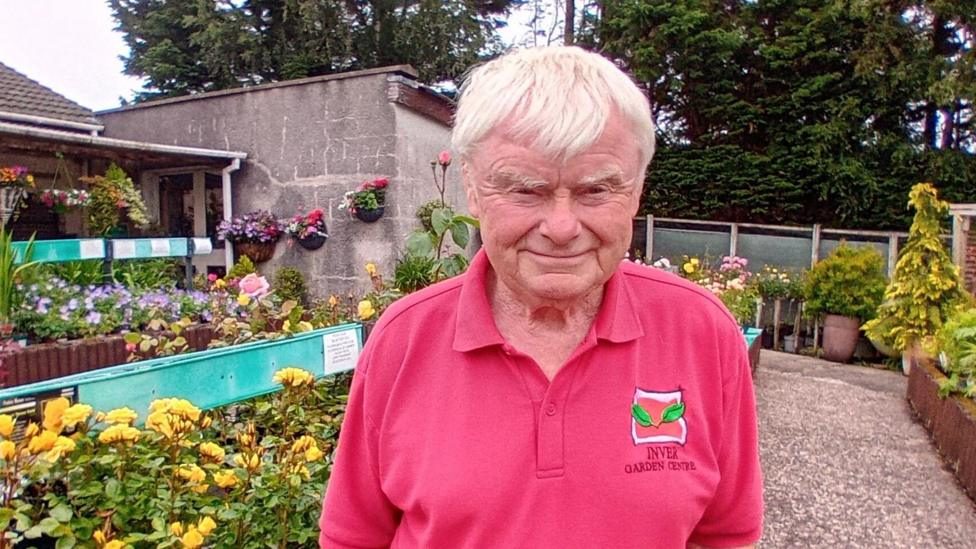
In Larne, garden centre owner John Shannon points to a £387 "export charge" he must now pay just to bring in roses from Great Britain (GB).
In Warrenpoint, food manufacturer Brian Reid sees a different reality.
"Off the back of the Brexit vote, we picked up a lot of customers who wanted to source on the island of Ireland," he said.
In the 10 years since the referendum result that saw the UK leave the EU, Northern Ireland's economy has outperformed the UK average on some key measures.
Northern Ireland has a Brexit deal which means it has a closer economic relationship with the European Union (EU) than other parts of the UK.
It is tempting to conclude the better performance is all due to that special deal.
Part of the story is Northern Ireland undergoing a delayed recovery having suffered a deeper and longer recession following the 2008 financial crisis and property crash.
On a wider note, Brexit set the tone of politics in Northern Ireland for years, leading to the suspension of devolution between 2022 and 2024. Its impacts remain divisive and contested.
In the negotiations that followed the Brexit vote in 2016, the trickiest issue was how to keep a free-flowing border between Northern Ireland and the Republic of Ireland.
Northern Ireland, as a part of the UK, would be outside the EU while the Republic would remain inside.
There was political consensus that a return to checkpoints on the border was undesirable.
Ultimately the UK government agreed the most practical solution was for Northern Ireland to stay in the EU's single market for goods.
That means goods from Northern Ireland have not faced any new checks or controls when entering the Republic of Ireland or the wider EU.
The UK government also guaranteed that goods from Northern Ireland would continue to enter the UK without any new barriers.
This gives Northern Ireland manufacturers unique "dual market access" - a privilege unavailable to businesses in England, Scotland, or Wales.
It led then-Prime Minister Rishi Sunak to declare Northern Ireland "the world's most exciting economic zone".
However it has also meant a new trade border for goods coming into Northern Ireland from other parts of the UK.
Customs paperwork is required and goods, particularly food products, are regularly checked at Northern Ireland's ports.
It was January 2021 before these measures were put in place and they have been modified on several occasions, most notably by the Windsor Framework in 2023 .
Small businesses that rely heavily on supply chains from GB have borne the brunt of the friction.
They face increased paperwork, unexpected handling charges, and the frustration of some GB suppliers withdrawing from the market altogether.
The recent "export charge" from his supplier was to cover the cost of official inspections which are now required for plants being sent from GB to Northern Ireland.
Shannon also started to take his van to England to pick up loads which hauliers are reluctant to deliver due to the paperwork now required.
He has also switched some of his purchasing to the Republic of Ireland and says plant nurseries there have "upped their game".
For Brian Reid's business, Deli Lites, it provided an opportunity to win significant new customers.
Before Brexit, big retailers would often supply these products to the island of Ireland from manufacturers in GB.
After Brexit, it became more complicated and risky to get these short-life products across the "sea border" so they sought out local suppliers.
"We picked up a number of contracts with retailers on the back of that which has been brilliant for the company," he said.
"We have the best of both worlds, we've managed to take advantage but it hasn't come easy and there are lots of challenges we've had to work through."
The most comparable data is known as regional Gross Value Added (GVA), produced by the Office for National Statistics (ONS).
It only goes up to 2023, so it cannot give us a full picture, and the story it tells depends on the timeframe we choose.
Looking at the long-term picture from the 2016 referendum up to 2023, Northern Ireland's economy grew by 11.5% in real terms, noticeably outperforming the UK national average of 8.7%.
However, in the immediate period after Brexit was actually implemented - from 2021 to 2023 - growth was marginally slower in NI.
During this transition period, NI's growth stood at 4.4%, just behind the UK average of 4.7%.
If we focus only on 2023, NI performed better with growth by 1.5% - outperforming a sluggish UK national average of just 0.3%.
Company payroll data collected every month by HMRC is another way to compare economic performance.
It suggests that NI has done better since 2021 with payrolls growing by nearly 10% compared to a UK average of around 7%.
NI's special deal covers trade in goods so if it is helping we would expect to see manufacturing driving NI's economic performance.
The official data, known as the Index of Manufacturing, does point to a stronger performance for NI, but only quite recently.