Band To Watch: RIP Magic
The post Band To Watch: RIP Magic appeared first on Stereogum .
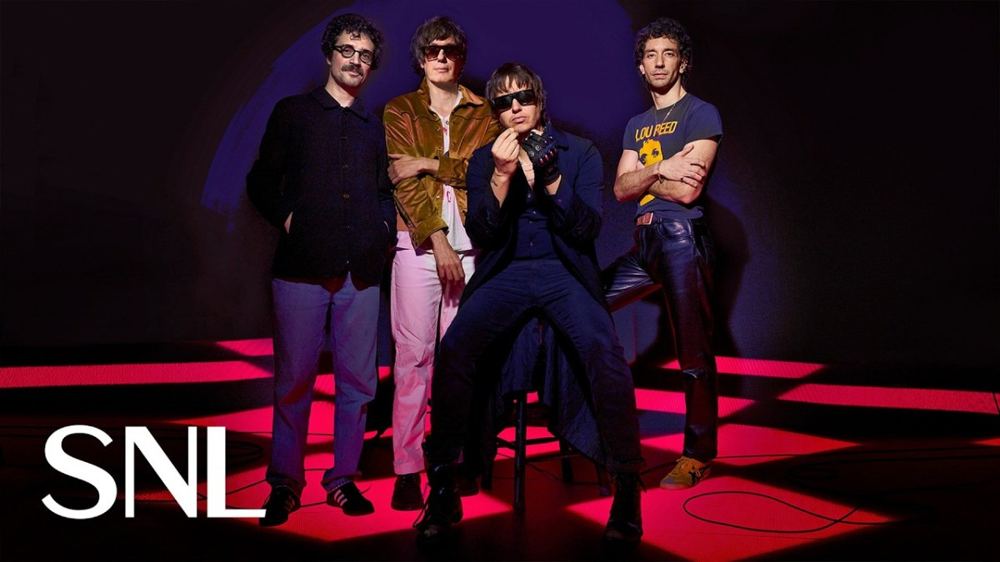
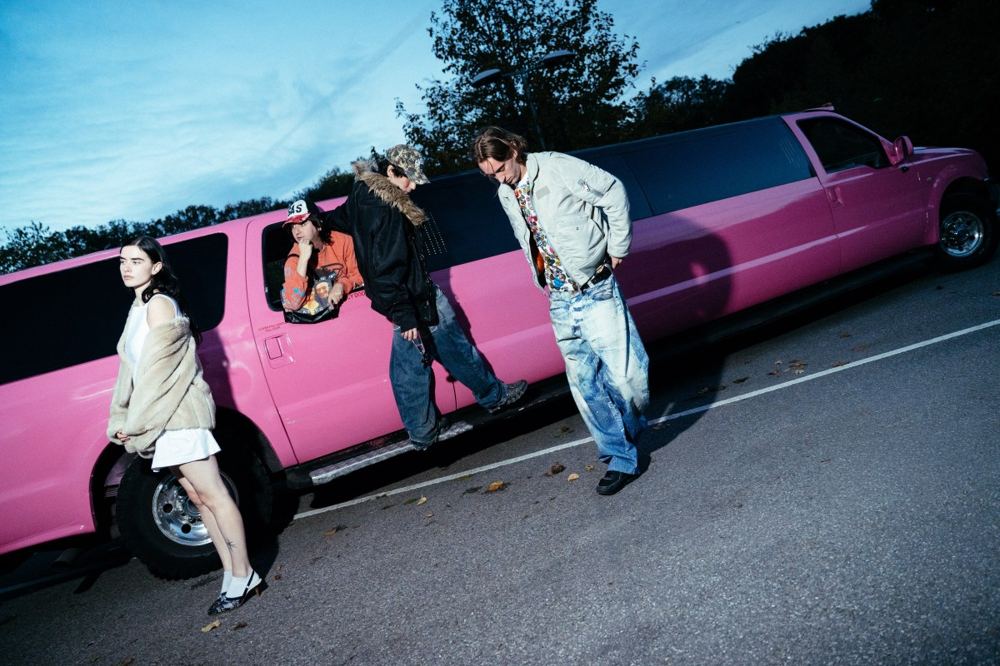
The press bio for rising London quartet RIP Magic doesn’t have any words. That doesn’t mean it doesn’t say anything. The group of four multidisciplinary artists, drummer Beth Boswell-Knight, audio-visual artist Felix Bayley-Higgins, DJ and sound designer Marco Pini, and bassist Pedro Takahashi, opted to use visual language to describe their band’s warped, technicolored world. The Dropbox file of images include kids exploring a neon bouncy castle, stills from filmmaker Sissel Morell Dargis' hot air balloon documentary Balomania , cartoon devils, rainbow bursts of light, balloons from the Macy’s Thanksgiving Day Parade, Kim Kardashian with a sunglasses sunburn, Pope Leo XIV holding a vintage baseball bat on an airplane, and a facepainted image of Garfield .
Their debut album 1,2,3, which came out Friday, a little over a year after the release of their earliest singles "Loot" and "Dox", is an amalgamation of bizarre samples, gauzy rhythmic trances, fuzzy vocals, and hypnotic noise. It evokes the kaleidoscopic grandiosity of groups like the Chemical Brothers or Animal Collective. Over the past year, they’ve attracted admirers including Tyler The Creator (who was onboard when all they had was demos), LCD Soundsystem’s James Murphy (who produced their single “5words"), and Tame Impala (who they opened for in UK arenas this past spring).
Whether it’s their unexpected sound choices or business pivots, the foursome is boldly creating a new kind of sound in our age of overstimulation. It’s the sound of rotting in your car on a building summer’s day: sort of sluggish and disorienting, but also strangely comforting. That’s evident on the low-riding tracks “11:30” and “Rock,” where Boswell-Knight’s drumming and Takahashi’s bass lock into a magical (pun somewhat intended) synchronicity. Across 1,2,3 , samples take infinite detours, with buried screams and melted conversations mingling with laser synths, acrylic guitars, and jaunty drums. I couldn’t help but let out a laugh when I recognized the sample of Lissie introducing her “Pursuit Of Happiness” cover at the Great Escape 2010 that closes out album highlight “Loverboy.” It’s a strange and fun inclusion that doesn’t seem to nod at any profound meaning.
I sat down with the band a couple of weeks before the album’s release. They were tired after a long day consumed by a photo shoot, but our conversation quickly turned to the world they’ve built around RIP Magic. Listen to 1,2,3 and read our conversation below.
Is it hard to balance your sound live with all the samples? I'm curious on your approach to intentionality regarding what comes through very clear and what's more obscure. Even on the album, there’s a fuzzy element to the vocals, where it purposefully sounds like you can't really tell what is a sample and what's not, or maybe the vocals feel closer connected to the samples because of that veil of noise.
MARCO PINI: I think we tried for a long time to figure out where the track sits, because we're a big fan of using track as a sort of element, because we're quite influenced by DJ culture. We all sort of do DJing as well. So we wanted to sort of try and fuse that with the band elements and ride the track a bit.
FELIX BAYLEY-HIGGINS: People shy away from that quite a lot. When we first set out to do live shows, the onus was on approaching the whole thing in a way where we're just able to have the most fun on stage, rather than pure technical performance.
PINI: I mean, these guys provide the majority of the live band swing.
PEDRO TAKAHASHI: Maybe it sounds a bit punchier live as well. Some of the songs, there's a different character sometimes when you play them live. Certain elements are more pronounced than the recorded versions, which can be a bit headphoney sometimes. There's more attack to certain songs.
PINI: Some people thought we were quite more of a hardcore band, actually, when we first started playing with the album. That wasn't intentional. I think just when you get a chance to play live, you can go as crazy as you want.
PINI: It's the only opportunity you get to really do that in any sort of setting.
Do you have specific artists that inspire like how you come to the stage or present yourself, or that feel like maybe inspired like a certain wildness?
TAKAHASHI: I grew up going to a lot of hardcore shows, and being in that environment. And in the live setting that comes out maybe a little bit more, the wildness of that. Definitely more on the fun end of the spectrum, obviously.
BAYLEY-HIGGINS: We're just gassed to be playing with each other.
PINI: I think it's no artist in particular, but I think audiences really respond well when you are genuinely having some sort of catharsis on stage. Especially with dancing, I almost get more inspired by looking at dance stuff because that's such a mad expression of emotion that's unintelligible.
Do you imagine how people will dance to your music when you're writing it?
BAYLEY-HIGGINS: Kind of, yeah. Or we'll dance to it as a way of figuring out what the groove should be.
PINI: It’s very zonal with it. We really go in and we don't really know what's happened in that moment where we're making the music and we sort of come out. We literally will probably do that for hours.
BAYLEY-HIGGINS: We’ve had discussions where the swing should be, like this rather than like this.
PINI: It came from like a vibe-based thing, in the sense that we didn't really know each other as well.
PINI: We met to do the band. Me and Felix wanted to, he was doing a lot of visual work, and I was doing a bit of music stuff, but not in any professional musician way. Me and Felix had been working on a lot of art stuff, and we wanted to make a band as a project, as we would any other sort of art project. So we just chose people that we thought were really vibey. And then I guess that in some ways informed the music, because I think people's energies, people's vibes carry through into the way that they perform the music. That's maybe how the language is just formed through deciding to all come together and do something. I don't know. Don't know if that answers your question.
You were more comfortable with each other as friends, as opposed to being like this is like a sound that we agree on.
PINI: Yeah, totally, totally. First. But also because I think we just respected everyone's different visual medium, because we're all from mainly visual backgrounds. Beth’s a photographer and Pedro’s a filmmaker-director, and I think we came together firstly through mutual respect of the visual medium. So maybe that's helped how we can talk about music in a very naive way.
I don't know if this is common, or I actually have never seen this done with any band. But the visual bio that you guys made is very unique and really cool. I would love to hear more about your own individual relationships with images and how that multidisciplinary approach informs the songwriting.
BAYLEY-HIGGINS: [ Laughs ] I don't know. I sort of started out, like when we were like 22 or something, Me and Marc were in a project that we did together, which was like an improv thing, and I was doing playing with video as an instrument, basically. As he was saying earlier, I don't have any training or anything musically, so I think it provides an angle into the whole thing, which is you're sort of liberated from trying to be a good musician, trying to like do things which follow music theory guidelines, or you're free to make your own metrics and stuff. So that's the main way having an output as a visual thing, it allows you to feel confident in taking a different angle into making music.
TAKAHASHI: Yeah, I guess like Marco and you were saying, all of us sort of have a visual background, studied or trained in that sort of area. For me personally, I've made music videos mainly and commercials and stuff like that, everything's very image-based. It’s quite interesting coming into this band, working in a certain aesthetic, and then it's almost the opposite of what I've been making. But it feels like taking the brakes off a little bit. It's training in one thing, and then you have to open up to this RIP world. We’ve said this in a few interviews, but we all know what an RIP vibe is. It’s a certain intangible sensibility that runs through imagery that appeals to us. I think definitely having a visual backgrounds has helped the band move forward and not just be a music-based project. It's a universe more than just music.
PINI: It widens the goalposts of what you can do if you can explain something, also with the press thing that you said with the bio, we've always been like, "Well, why can't you just do that?" Pretty much every decision has been made like, "Oh, it'd be really cool to do this. Ah, but wait, no, you can't do that." And then it's like, "Well, fuck it. Yes, you can and we should because..." and basically trying to be confident with the stranger ideas of how to approach music because we're not confined to any training or anything learned.
BAYLEY-HIGGINS: It’s a huge part of how people receive music, and it doesn't make any sense to not take hold of those handles as well, as something to be creative with. I've never understood the thing of, I mean, I get it for certain acts, but it just wouldn't ever make sense to me to do the music and then hand off everything else. The way that people receive something is as much a part of the thing as the content itself. You know?
PINI: I think it's funny you say that. When I was younger, I would force myself to get into albums I like the cover of, like really, really try to like the music, and actually, a lot of that music has ended up being maybe some slightly more experimental stuff that then informs what the music is. So it’s so important, I think, to be guided by your visual sense.
TAKAHASHI: So many of my favorite albums, I can’t remember who I was talking about this with today, but like going to HMV when I was a kid, and you see an album cover, like seeing the first Vampire Weekend album and not knowing what the music really sounded like, but you're drawn to it for certain reasons.
TAKAHASHI: And then you end up liking the thing. I don't think imagery and music are divorced from each other.
BETH BOSWELL-KNIGHT: Yeah I think it’s very much like anti-don't judge a book by its cover. We're very like, well, I am especially like, "I'm going to judge everything by the visuals." I think that's how we work. Everything’s tied together. I feel like you can know that you're going to be into something just by the visual language.
BAYLEY-HIGGINS: Or be confused by it, and then you're drawn to it for that reason. Like I remember growing up, as you're discovering different areas of culture, it's like, like I don't know, with Vampire Weekend, I’d never seen like that visual language before, and so then you're drawn into what the sound, which is like harmonizing with that, would be.
Do you take into account what people will project onto you as an act?
PINI: We've learned to maybe try and not care about as much as we possibly can. I think it's a natural human instinct to worry about or expect what people are going to think. But then we're always just like, "Well, we like this. Let's just go for what we are taken by or disturbed by."
BAYLEY-HIGGINS: That's the only guiding force you have, really. If you try and get into preempting that, then you're kind of cooked.
What was the conversation regarding the album cover, then, for 1,2,3 ?
BAYLEY-HIGGINS: There was a bunch of images. We just got savaged time after time for a bunch of images that we wanted to license to use for the cover that we couldn't license, and I guess they were more in the domain of what you would think about as being a RIP-type visual language. And then actually I think having a line drawing as the cover would not have been something that we would have expected.
PINI: We both had late night 3 a.m. [epiphanies] in bed, like, "Oh it needs to be black and white. It needs to be devoid of as much information as possible. It needs to be a mainly white space so people can fill it with their own color." I think because all the singles have been photos that we very much would consider the RIP world, it's something quite nice about extracting that for the album. We've also commissioned loads of different artists that we respect and loads of different mediums to make a version of the cover for each song, which yeah, even to get to do stuff like that is quite fun. This is fun, isn't it?
BAYLEY-HIGGINS: I think it's still a boxing glove image somehow, or it still has a punch to it. It's more of a framework rather than a fixed meaning. Do you know what I mean? For people to take one reading from, it’s more opened-ended.