UK EU reset paused as Barnier sets out single market terms
Michel Barnier has signalled the EU could fast-track UK access to the single market under a new prime minister, but only if London abandons its opposition to free movement and ends sector-by-sector deals.
A planned UK-EU summit to finalise agreements on agrifood, emissions trading and youth mobility has been postponed following the resignation of Prime Minister Keir Starmer. European Council President António Costa confirmed the delay of the 22 July meeting, which was intended to conclude months of "reset talks" between London and Brussels.
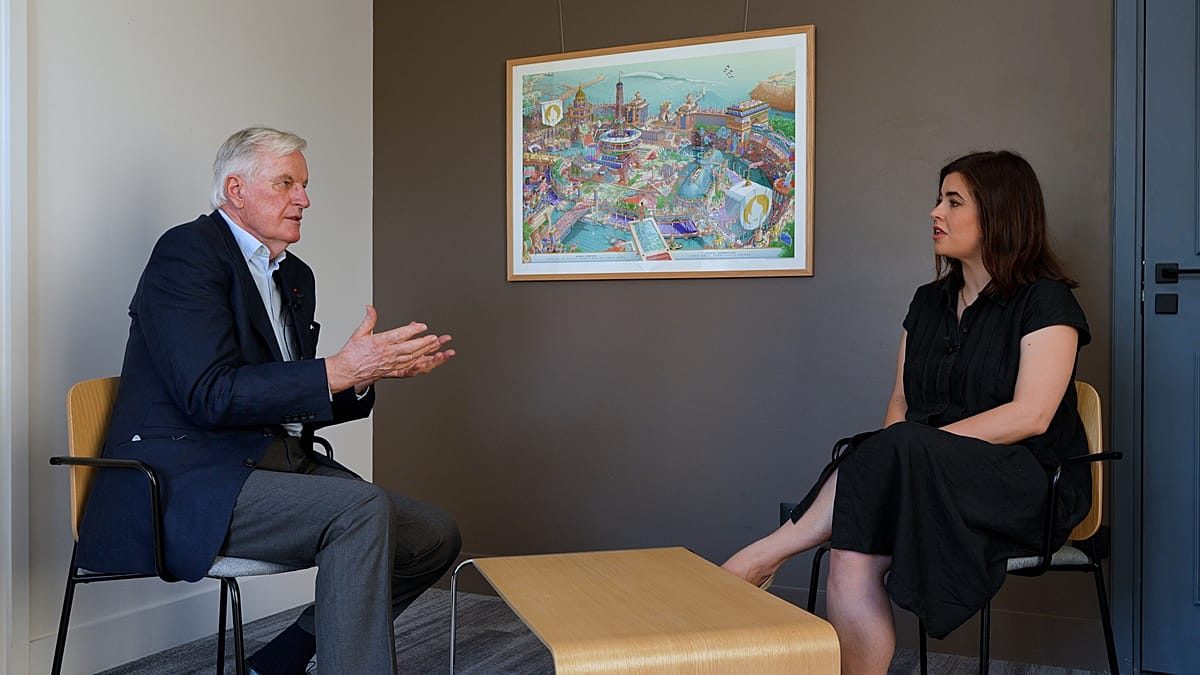
The sudden political upheaval has prompted fresh debate about the long-term economic relationship between the two sides. The intervention comes a decade after the 52% to 48% vote to leave, at a time when polling shows a majority of Britons across party lines now view Brexit as a mistake. Michel Barnier, the EU’s former Brexit negotiator and a former French prime minister, told Euronews that the bloc's door remains open.
However, Barnier warned that any economic integration requires strict adherence to EU rules. "Brexit decided by a sovereign vote 10 years ago is done, but the future is open, and the door is open," he said. He stressed that the UK "cannot cherry-pick" policies and "cannot have its cake and eat it" in negotiations.
Barnier highlighted that the UK could join the single market without full EU membership, following the model of Norway, Iceland and Liechtenstein. This path would grant British businesses access to the borderless economic area, significantly reducing current trade friction. The prerequisite, he noted, is "respecting the four freedoms", covering the movement of goods, services, capital, and people.
Accepting free movement of people remains a political non-starter for Labour. Starmer had maintained non-participation in the single market and customs union as a strict red line to honour his manifesto and retain Leave voters, instead pursuing a limited, sector-by-sector approach. With Andy Burnham now the frontrunner to replace Starmer, Liberal Democrat and pro-EU Labour MPs are urging him to "drop the red lines" to unblock rapprochement efforts.
For investors and companies, the speed of any future integration would depend entirely on regulatory alignment. Barnier indicated that a former member state could bypass the lengthy, multi-phase accession process required of candidate countries like Ukraine or Moldova. "If there is no divergence, no crucial divergence, it will be very rapid," he said, warning that diverging standards on food or security would cause delays.
In the interim, Barnier proposed deeper cooperation on defence and technology through "a kind of European Council for Defence and Security". This body would sit alongside existing EU institutions and include non-members like the UK, Norway and Ukraine. Until such structures materialise, European businesses must wait for the political uncertainty in London to settle before any concrete reductions in trade barriers can take effect.