AI firms sign Macron’s Paris Call, but safety group says it lacks teeth
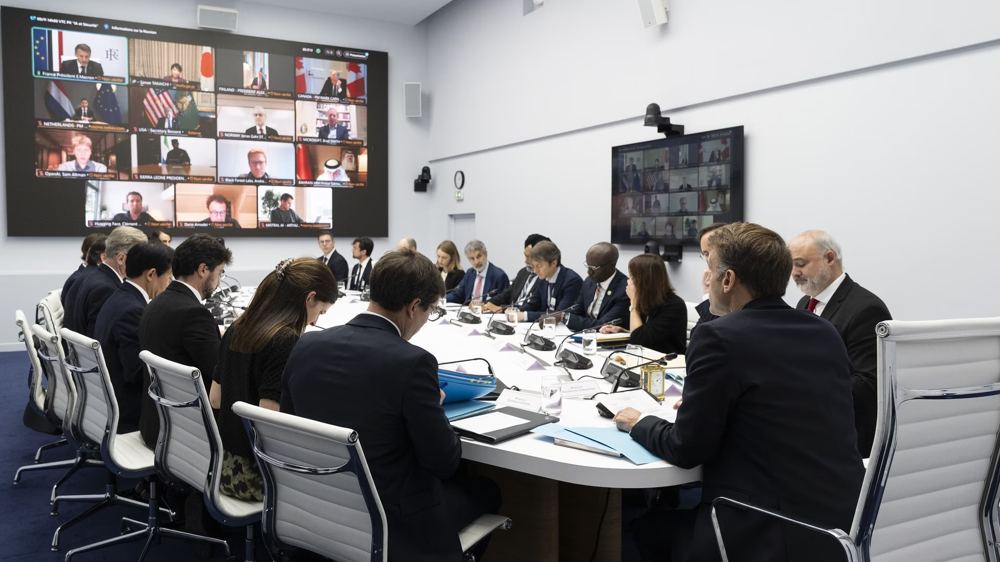
OpenAI, Anthropic, Microsoft and Mistral are among ten AI companies that have signed a new declaration on the safety of advanced AI models. The Paris Call for AI Safety and Security was agreed on Monday at a meeting hosted by French President Emmanuel Macron. L’intelligence artificielle avance très vite. On l’a déjà vu : cela […] This story continues at The Next Web
OpenAI, Anthropic, Microsoft and Mistral are among ten AI companies that have signed a new declaration on the safety of advanced AI models. The Paris Call for AI Safety and Security was agreed on Monday at a meeting hosted by French President Emmanuel Macron.
L’intelligence artificielle avance très vite. On l’a déjà vu : cela implique des risques réels pour notre sécurité collective.
Notre travail pour developper nos technologies doit aussi être celui de l’anticipation et de la maîtrise de ses risques.
J’ai réuni à Paris et en visio une cinquantaine d’acteurs : chefs d’État et de gouvernement, dirigeants des plus grands laboratoires d’IA, chercheurs et experts.
Le constat est partagé. Il faut agir ensemble. Nous avons obtenu des engagements de tous autour de trois priorités : mieux évaluer de façon indépendante et publique les risques des modèles les plus avancés, mieux partager les alertes en cas d’incident grave et responsabiliser les acteurs qui développent des modèles.
Notre ambition est claire : faire de l’IA un progrès pour tous, avec une sécurité garantie par l’engagement de chacun.
The announcement came on the opening day of the Paris Peace Forum, where AI was one of the main topics of discussion.
Six countries signed the declaration: France, Canada, Finland, Norway, the Netherlands and Bahrain. The other participating companies are Hugging Face, Cohere, Black Forest Labs, Domyn, Sakana AI and Synthesia. Yoshua Bengio’s AI safety organisation LawZero is among the research groups supporting it.
Around 50 people joined the discussions by video, including OpenAI chief executive Sam Altman, Anthropic chief executive Dario Amodei and Microsoft president Brad Smith.
US Treasury Secretary Scott Bessent also took part, although the US is not among the signatories. Google, Meta and China have not signed the declaration either.
Macron said AI was advancing rapidly and posed “real risks to our collective security”, calling for governments and companies to work together to address them.
The signatories have committed to developing fail-safe mechanisms that can shut down their AI models, including during training and internal use. They will also provide clearer information about what their systems can and cannot do, and allow qualified independent experts to test them where appropriate.
The declaration also calls for a shared approach to assessing and managing the risks of frontier AI. This would cover malicious uses, including cyberattacks and weapons development, as well as the possibility of AI systems acting independently or moving beyond human control. Non-sensitive test results would be published in a common format.
Governments and companies will also share early warnings about serious incidents, while whistleblowers will have access to secure channels for reporting concerns.
The commitments have drawn criticism from French AI safety organisation CeSIA , which signed the declaration but argues that it leaves important gaps.
It sets no common risk thresholds for deciding whether a model should be developed or released, and does not guarantee that independent testers or governments will have access to the systems they need to assess.
CeSIA also wants governments to have the authority to suspend a model when its risks become too high. It argues that developers need clearer obligations and a timetable for meeting them.
“These decisions must rest with public authorities,” said Charbel-Raphaël Ségerie, CeSIA’s executive director.
The Paris Call follows an initiative launched by Norway and Finland in September to bring frontier AI under greater oversight, which France later joined. It also builds on earlier global safety commitments made by AI companies in Seoul and discussions at the G7 summit hosted by France in Evian.
The declaration remains open to other signatories, but it sets no deadlines. The shared testing framework it proposes has yet to be developed.
On Tuesday, the forum turned to another concern for Macron: the effects of AI on children. Speaking at a summit on children in the AI era, the French president called for AI tools to undergo checks before being made available to young users.
“We will push for pre-certification of all artificial intelligence solutions,” he said.
Macron compared the idea to the safety checks required for children’s toys, arguing that parents would not give a child an untested toy and that AI tools should be held to the same standard.
He also warned that the effects of AI on young people’s mental health were already becoming apparent, as more children and teenagers turn to chatbots that can influence their emotions and how they see the world. A charter on safer AI for children was due to be signed later on Tuesday.
President Emmanuel Macron also received a report, titled “Protect without preventing”, from a government-appointed panel of experts examining generative AI and human vulnerability.