Free museum Sundays and a €9 ticket: Berlin's likely government has bold plans
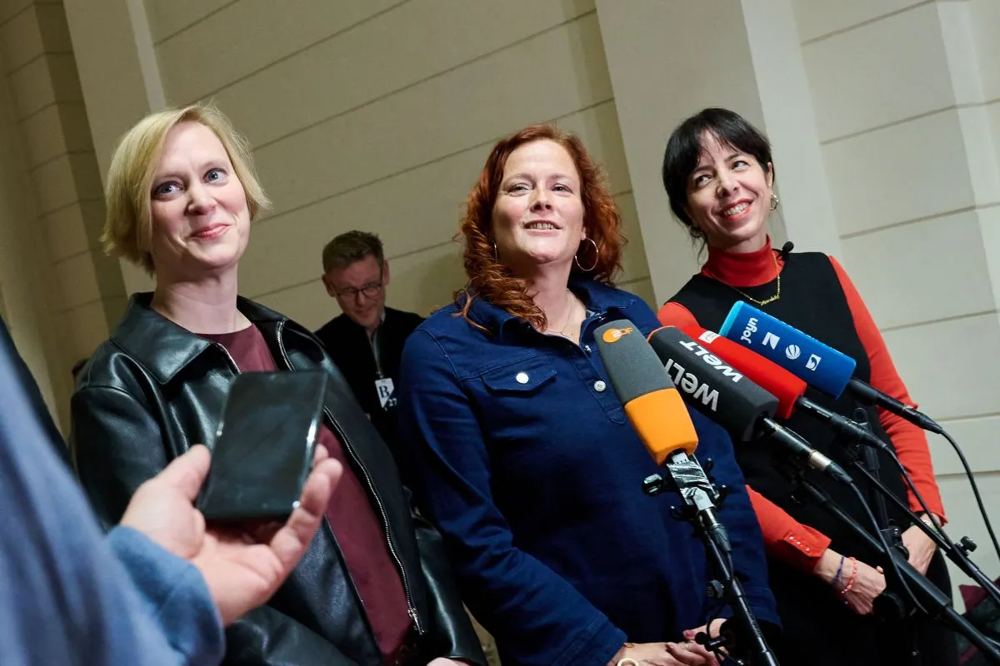
From a cheap social transport ticket to rent protections and bringing back free museum Sundays, Berlin’s prospective red-red-green coalition has set out an ambitious list of priorities.
From a cheap social transport ticket to rent protections and bringing back free museum Sundays, Berlin’s prospective red-red-green coalition has set out an ambitious list of priorities.
Berlin’s Left Party ( Die Linke), Social Democrat (SPD) and Green parties are working towards a new red-red-green government, sometimes shortened to 'R2G' in German media.
Their priorities for the capital include cheaper social transport passes, a rent cap at state-owned housing companies and support for neighbourhood services.
But some negotiators have voiced concerns that the roughly €220 million earmarked for additional spending may not cover everything on the list.
The coalition wants to cap rents at state-owned housing companies and strengthen rent oversight.
Other priorities include more cycle paths and bus lanes, additional money for climate adaptation and the heating transition, and a four-point economic development plan.
Several proposals have a distinctly social focus. They include more funding for addiction prevention and supervised drug-consumption rooms, a neighbourhood canteen and a youth culture card.
The priorities also include free museum Sundays and renovations to police and fire stations.
The most eye-catching proposal is the return of the €9 monthly 'social' transport ticket for people receiving qualifying benefits, down from €27.50, alongside a discounted nationwide Deutschlandticket for eligible passengers.
READ ALSO: How a left-wing coalition in Berlin would reshape housing and integration
Separately, Berlin’s Social Affairs Administration plans to launch the browser-based Fairgnügen Pass in February, which would provide digital proof of eligibility for transport, sporting and cultural discounts. The existing system would remain available until the end of April, with the new pass due to become the sole proof from May.
The €220 million package is not the whole financial picture. Other costly ambitions include extending the U-Bahn, building the Charité Children’s Hospital and bringing large private housing companies into public ownership.
The last of these could require compensation of up to €16 billion and would need loans rather than ordinary budget funding.
Berlin does not yet have a finished coalition agreement. The parties have instead divided negotiations among specialist working groups ( Fachgruppen, often known by the German abbreviation FAG).
More than 300 people are involved in the parties’ specialist working groups. The participants also include people from the wider community, some of whom have to fit the negotiations around their regular jobs.
Each group covers a particular policy area and must turn the agreed priorities into detailed proposals. Further ideas will be considered only in exceptional, well-justified cases.
More importantly, each group is expected to explain how its proposals would be funded and identify any financial risks.
The negotiators have also been asked to review departmental budgets and identify outgoing CDU-led government projects that no longer match R2G priorities and whose funding could be redirected.
Time is short. The working groups have between 21 and 36 days to report, with the first deadline on November 26th and the budget group due by December 11th.
The leadership group plans to begin its final review on December 16th, before the parties aim to present a coalition agreement in January.
READ ALSO: What does Die Linke's election win mean for foreigners in Berlin?