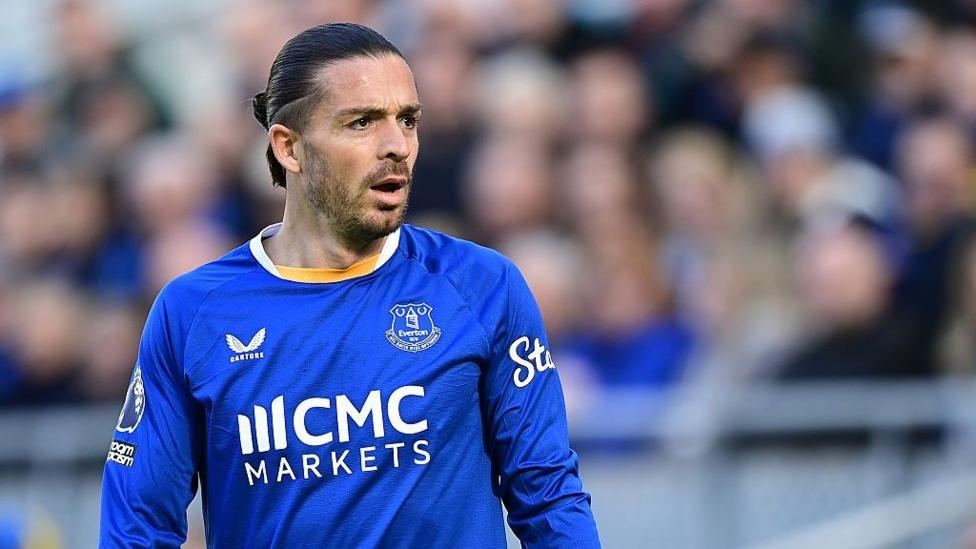
Where does Kane rank among all-time England greats?
Harry Kane is England's all-time top scorer and record appearance maker, but where does he rank among the Three Lions' greatest players?
Harry Kane is now England's most-capped men's player as well as his country's record goalscorer, but harder to quantify is where these achievements place him among the Three Lions' greatest ever players.
This is a tricky debate with so many variables and a timescale as old as the game itself and, to my mind, not merely a determination of a player's individual ability but also a measure of their impact upon the nation's psyche.
Ballon d'Or winners Stanley Matthews, Kevin Keegan and Michael Owen would surely have a shout if the criteria was such, not to mention genius technicians such as Glenn Hoddle, Chris Waddle and John Barnes.
Likewise, if any England boss managed to extract the best from Paul Scholes, Steven Gerrard and Frank Lampard they would be surely making a classic late dart from midfield.
But to qualify as one of the greatest England players of all time, you need the above ability combined with an impactful overall contribution - those memorable moments and an element of longevity - in a Three Lions shirt.
It might be controversial then to leave out Geoff Hurst, who produced the most recognisable performance in England history, while the man he replaced, Jimmy Greaves, would be a shoo-in were it not for injury earlier in the tournament.
It is also hard to rank the contribution of those whose best football came outside of major tournaments and before the dawn of continental competitions - see Eddie Hapgood, Tom Finney, Nat Lofthouse, Dixie Dean et al.
Spice Boy. Celebrity. Galactico. There is no argument David Beckham is one of the most iconic England players of all time, but he backed it up on the pitch, too.
Beckham was the face of the Three Lions for a generation, and to his credit managed to overcome the vicious fallout of his red card against Argentina in 1998.
At times he seemed to single-handedly carry England, most notably scoring a 93rd-minute free-kick against Greece to qualify for the 2002 World Cup.
Beckham's former team-mate Gary Neville called him the "most influential player out of England in transforming football".
It's true. On top of 115 caps, Beckham was part of Manchester United's 1999 Treble-winning outfit - finishing Ballon d'Or runner-up - before joining Real Madrid.
His profile was truly global with spells at LA Galaxy, AC Milan and Paris St-Germain.
There's arguably no England star fans forged an emotional attachment with more than Gazza - crying with him in 1990, rejoicing in his spectacular effort against Scotland and desperately willing him to connect during that Euro 96 semi-final defeat by Germany.
Gascoigne won 57 caps and scored 10 goals. At his peak, he was captivating - transcending football as a cultural phenomenon during the summers of '90 and '96, having joined a star-studded Serie A between those tournaments.
Creative, unpredictable, vulnerable. He was a loveable but flawed genius.
He suffered long-term injuries as England missed out on Euro 92 and the World Cup in the USA, but helped the Three Lions qualify for France 98 before being dropped from the final squad, famously wrecking boss Glenn Hoddle's office.
Goalscorers often grab the headlines but I've tried to credit players across positions and eras. From a defensive point of view Ashley Cole, arguably England's best-ever full-back, was close to making it.
But instead it's the great Billy Wright, the first men's player to surpass a century of international caps, including a remarkable 70 successive appearances over eight years.
Wright captained his country on 90 occasions, a joint-record recently broken by Kane, taking in three World Cups with impressive longevity for his era.
He was a true one-club man, winning three league titles, the FA Cup and becoming unofficial "world champions" with Wolves in 1954 - helping inspire the birth of the European Cup - while finishing Ballon d'Or runner-up to Alfredo di Stefano in 1957.
It feels a little premature to include a 23-year-old with the bulk of his England career ahead of him, but that shows the impact Jude Bellingham has already made for England and Real Madrid.
A Champions League winner, the midfielder has also appeared at four major tournaments for the Three Lions, becoming the youngest player to do so at the delayed Euro 2020, aged 17.
But his role in helping carry England to the final two years ago and a third-place finish at last summer's World Cup really make him stand out.
Bellingham has delivered those moments a nation collectively remembers. The last-gasp overhead kick against Slovakia in 2024, a quickfire double at the Azteca against Mexico this summer and 93rd-minute quarter-final winner against Norway.
His seven goals at this World Cup were more than any previous Three Lions player in a single edition, the solo effort against France a thing of beauty.
The former Birmingham and Dortmund man doesn't turn 24 until June but has already collected 61 England caps and netted 14 times. As Roy Keane put it, Bellingham has the potential to be one of the "greatest of all time".
Bursting on to the scene at Euro 2004 as an electric 18-year-old, having become England's youngest player and scorer the previous year, convinced fans and media the teen sensation could carry the Three Lions to glory in Portugal.
He bounced World Cup winner Lilian Thuram around in England's opener against France in a glimpse of his precocious strength, before scoring twice against both Switzerland and Croatia.
Who knows how far England would have gone had Rooney not been injured against Portugal in the quarter-final?
He was unable to replicate the impact of his first Euros - a red card at World Cup 2006, suspension for the Euro 2012 group stage, seven goals across six major tournaments - but was an all-rounder who brought more than just goals.
Rooney also won it all with Manchester United, becoming the club's all-time top scorer, and finished his 15-year England career with 53 goals from 120 caps.
There has to be a place for a goalkeeper, and Gordon Banks is the safest pair of hands.
A World Cup winner in 1966, his save from Pele four years later against Brazil is one of the most iconic of all time. Pele called him a "goalkeeper with magic".
Banks spent the majority of his career at Leicester and Stoke, winning a League Cup with each, and earned 73 England caps overall between 1963 and 1972.
His incredible athleticism and reflexes saw the shot-stopper named Fifa's best goalkeeper for five successive years between 1966 and 1971.
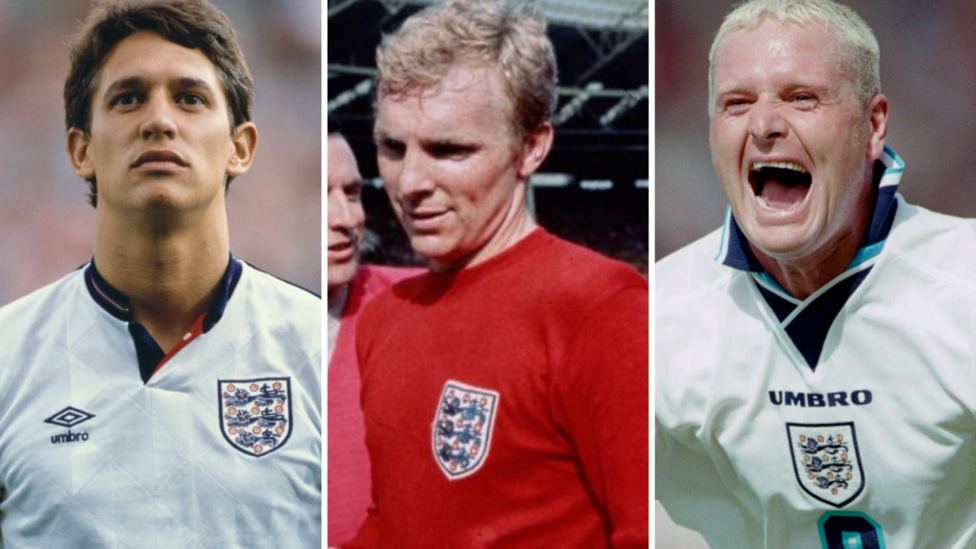
Gary Lineker's early club career did not deliver the silverware as his goals deserved, netting 40 times but finishing league and FA Cup runner-up in his one season at Everton before joining Barcelona.
He scored a Clasico hat-trick and won the Copa del Rey and Cup Winner's Cup, however, before adding an FA Cup with Tottenham in 1991.
Lineker netted 283 club goals (and famously no cards) in total across spells with Leicester, Everton, Barcelona, Spurs and Nagoya Grampus Eight.
But as a player Lineker is most renowned for his contribution in an England shirt, winning the Golden Boot as they reached the World Cup quarter-finals in 1986 - finishing Ballon d'Or runner-up that year - before netting another four as the Three Lions reached the semi-finals in 1990.