High attendances fail to lift Scottish football TV revenues
Despite boasting the highest per-capita match attendances in Europe, Scottish football's broadcast revenues significantly lag behind those of similarly sized nations, a funding gap that threatens the domestic talent pipeline.
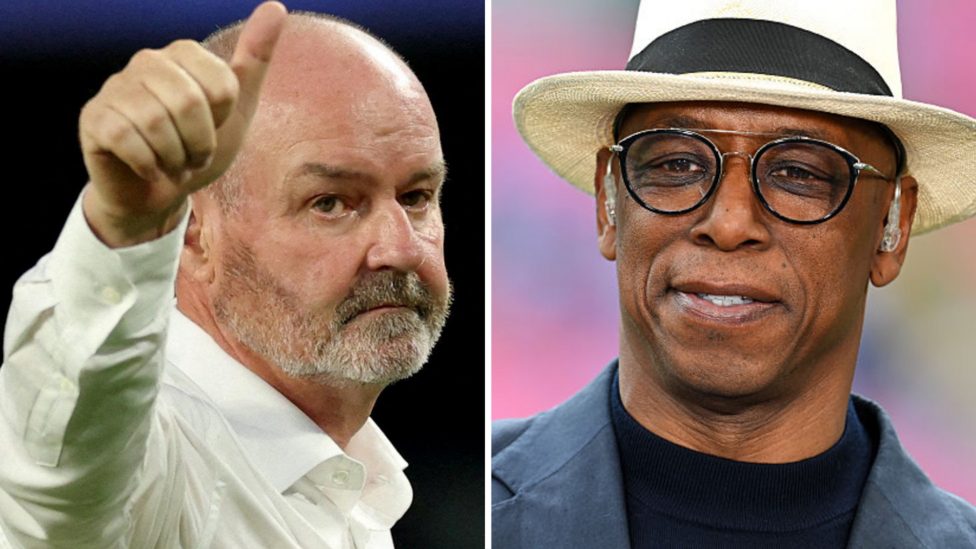
Former England striker Ian Wright has highlighted a stark commercial disparity in European football, pointing out that Scotland earns far less from television rights than Norway despite drawing more than double the live spectators. "Norway have managed to get a broadcast deal that was £25m a year more than Scotland's," Wright noted on ITV.
The numbers support his claim. The Scottish Premiership averaged roughly 16,000 fans per game last season, a figure heavily inflated by the crowds at Celtic and Rangers. In contrast, Norwegian top-flight games averaged just over 7,000 in 2025. A Uefa report published last September confirmed that Scottish top-flight attendances per capita were the highest in Europe for the third consecutive year.
Yet this proven fan engagement has not translated into equivalent media rights valuations. The SPFL locked in a £150m broadcast deal in 2022, distributing about £30m a season to Premiership clubs and aiming for £50m annually by 2029. Norwegian media report that their domestic rights already exceed £50m per season, with projections to surpass £60m when the next cycle begins in 2029.
For European sports business observers, this represents a clear market mispricing with tangible economic consequences. Broadcast revenue is the primary engine for club infrastructure, academy funding, and player retention. Scottish clubs are currently losing young talent to better-resourced leagues, often in England, because domestic playing budgets cannot compete.
A recent Scottish FA report explicitly warned that domestic clubs are failing to bring through enough young players. Without the cash to reverse this trend, the national team's prospects remain constrained. The contrast on the pitch is evident: a Norway side led by Erling Haaland and Martin Odegaard reached the 2026 World Cup quarter-finals after beating Brazil, while Scotland exited the group stage with three points, prompting the resignation of head coach Steve Clarke.
Wright argued that Scottish football needs a "bolder, braver vision" and suggested "somebody is letting down Scotland on a massive scale." The immediate challenge for the league's executives is proving that a highly engaged fanbase of five million people can be monetised at a rate comparable to its European peers.