Health-tech founder's AI use flags gaps in oncology
Conno Christou used a chatbot to interpret ambiguous scans and avoid unnecessary radiotherapy, a case study in how consumer AI is already bypassing the rigid inefficiencies of modern healthcare systems.
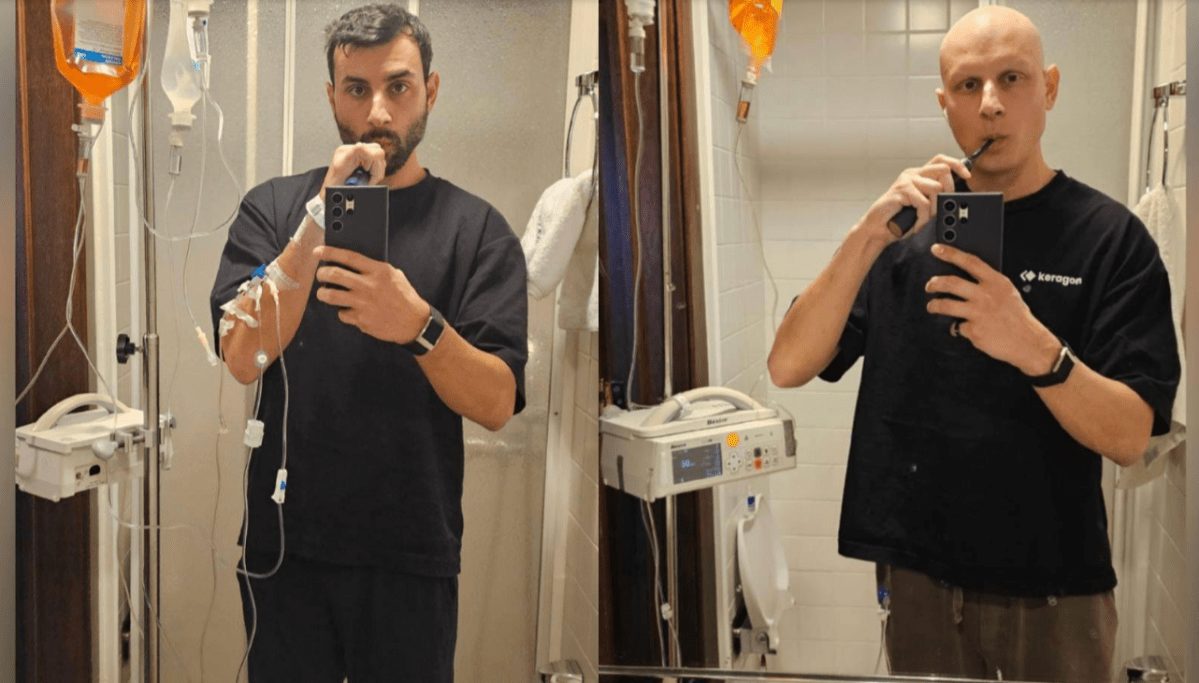
Conno Christou, the 35-year-old founder of medical automation startup Keragon, used Anthropic’s Claude chatbot to interpret his final cancer scans, successfully preventing unnecessary radiotherapy near his heart and lungs.
Christou was diagnosed last year with an aggressive form of non-Hodgkin’s lymphoma, a rare condition affecting roughly one in 420,000 people. An 11-by-11-by-8 centimeter mass was discovered behind his sternum purely by chance during a pre-operative exam for a blood clot. Left undetected for another three weeks, the tumour would have reached stage four.
After six months of chemotherapy, his final PET scan returned ambiguous results, prompting his oncologist to discuss a second line of treatment. Christou inputted his scan data into Claude. The model identified a known but easily missed phenomenon called thymus rebound, where the gland reactivates after chemotherapy in patients under 40 and mimics active disease on imaging. A fourth doctor later confirmed the AI's roughly 90% probability assessment, ruling out cancer.
Implications for health-tech markets
Christou’s experience offers a concrete look at where medical AI markets are heading. A March poll showed a third of American adults already use chatbots for health advice. While experts like Mass General Brigham's Danielle Bitterman caution that general-purpose models are frequently wrong and lack clinical evaluation, the demand for personalized data synthesis is clearly established.
For health-tech investors, his ordeal highlights lucrative inefficiencies. He watched clinical staff buried in administrative work, exactly the problem his pre-diagnosis startup, Keragon, aims to solve by automating medical practice operations. Furthermore, he received the exact same chemotherapy protocol as an 80-year-old woman, illustrating a systemic lack of personalized care that data-driven platforms are uniquely positioned to address.
The market signal is that consumer AI is already intervening at the clinical level, forcing traditional healthcare systems to adapt. Patients are aggregating their own wearable data, blood results, and scans to challenge standard protocols. “It’s not happening in 10 years,” Christou says. “It’s happening today.”