Ruhr's empty postwar churches find new life in Manifesta biennial
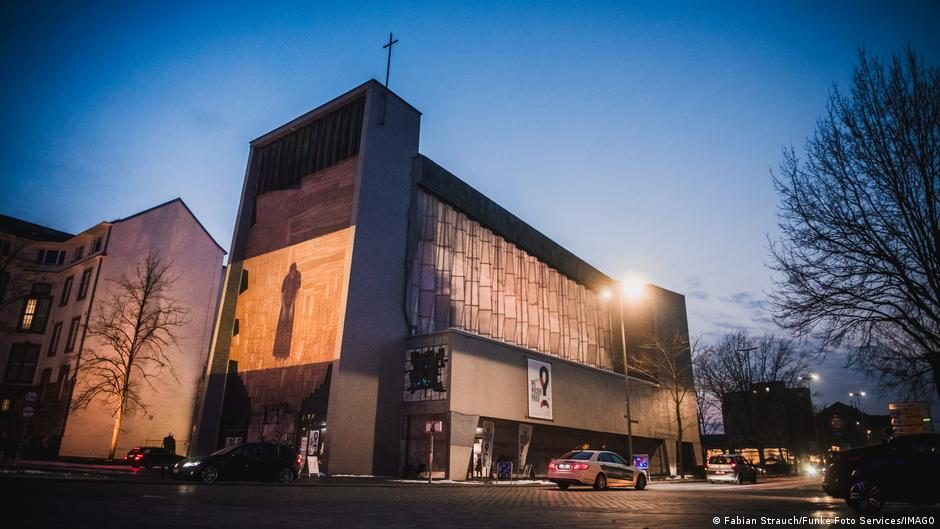
A new art biennial is transforming unused postwar churches in Germany's Ruhr region into public spaces, highlighting the structural challenge of repurposing urban infrastructure as congregations vanish.
The 16th edition of Manifesta, the European biennial for contemporary art and urban development, opened across the Ruhr region on June 21. Under the title "This is not a church," artists have installed commissioned works inside 12 deconsecrated buildings in Bochum, Duisburg, Essen and Gelsenkirchen. Installations include Emil Walde's display of damaged wired-glass from Duisburg Central Station inside confessional booths, and a basketball court inside St. Anna Church in Gelsenkirchen.
The biennial addresses a pressing structural shift in Germany's largest metropolitan area, where Catholic and Protestant congregations are in freefall. Dozens of places of worship are deconsecrated annually, leaving local authorities and communities to determine the future of large, purpose-built properties.
The current vacancy crisis contrasts sharply with the postwar era, when bishops drove the construction of roughly 1,000 churches in the region. Dubbed "slipper churches" because parishioners could reach them in minutes, these buildings were designed as neighborhood hubs providing social services.
"The church was supposed to be at the center of people's lives," said Manuela Klauser, an art historian at the University of Bonn. "It wasn't just about attending service itself regularly but also about practical social services that connected neighborhoods, such as municipal libraries or programs for seniors and children."
The architecture itself reflected the young Federal Republic's democratic ambitions. Architect Rudolf Schwarz, who designed many Catholic churches in the area, described the effort in 1957: "At the moment, we are building almost only churches. Each time, it is hard and desperate work. You might think we ought to be getting better at it, but in reality the opposite is true, it gets harder every time."
Built as a deliberate counterpoint to Nazi monumentalism, the structures often relied on rubble and debris. The 43 "Bartning emergency churches" across Germany were delivered as prefabricated kits, allowing local congregations to build walls and adapt the structures themselves.
"These churches were designed for newly developing settlements," Klauser said. "They were intended to help introduce people to a new democratic ideal and to be built on equal footing with them, using materials from everyday life."
As predicted by a 1963 article in the Protestant weekly newspaper Der Weg, these builders were not constructing for eternity, but taking "into account tomorrow, not the day after tomorrow." Now that tomorrow has arrived, Manifesta's "16+" program is funding practical transitions.
In Herne, the Christuskirche is using experimental dance theater to become an intercultural meeting place. In Oberhausen, the Heilige Familie Church, which has housed a food bank since 2007, will host building and cooking workshops to create a learning space for young people.