UK prepares for regional power shift as Burnham nears premiership
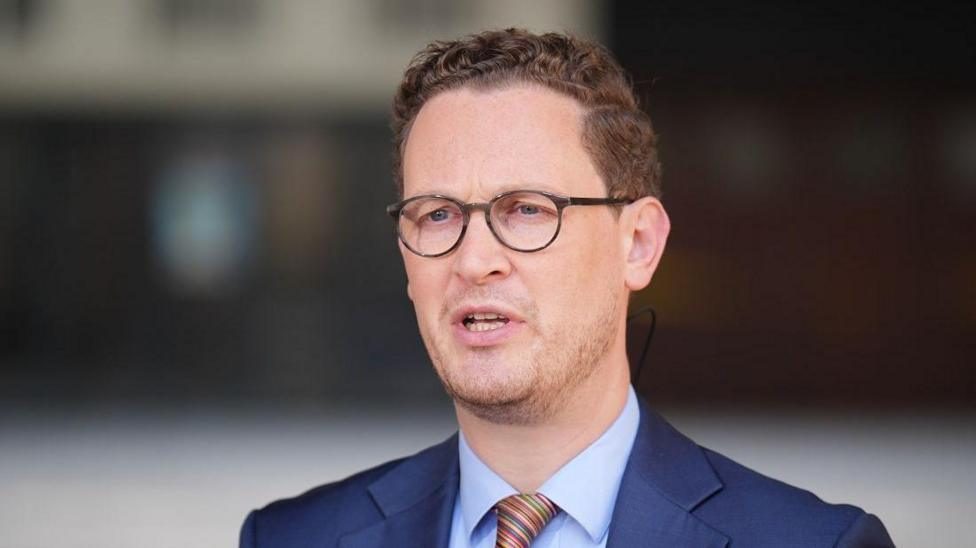
Andy Burnham's expected ascent to the UK premiership is prompting a major shift toward regional economic power, signalling an end to Whitehall's tight grip on local growth and infrastructure.
Andy Burnham, the frontrunner to become the UK’s next prime minister, is proposing a fundamental shift in how the British state manages its economy by moving power out of London. Burnham, who is widely expected to win the Labour leadership contest later this month following Keir Starmer’s resignation, wants to establish a "No 10 North" in Manchester.
The plan represents a direct challenge to the traditional Whitehall model of economic management. Burnham argues that central civil servants have actively blocked progress in Greater Manchester, where he served as mayor. "It is time for Whitehall to accept that growth cannot be ordered from the top down - it can only be nurtured from the bottom up," he said.
For businesses and investors, this signals a potential restructuring of UK infrastructure spending and regional development policy. Burnham wants to redistribute power to drive "good growth in every postcode," with a specific focus on essential utilities, reindustrialisation and regenerating derelict buildings.
The shift has backing from within the current government, though with notable caveats. Former Deputy Prime Minister Angela Rayner told the New Economics Foundation that "Whitehall empires hoard their own power" and require "much deeper cultural changes" to allow fiscal devolution.
Rayner pointed to moves giving regional mayors the power to charge tourists an overnight tax as an example of the local financial levers needed. She also identified transport and children's social care as sectors where local leaders should take control.
Darren Jones, the chief secretary to the prime minister, publicly endorsed Burnham’s critique of overcentralisation. "I just say to Whitehall with the direction the political winds are blowing, I think this is a clear warning," Jones told a conference in London. "Devolution must mean devolution, not duplication."
However, Jones’s own agenda complicates Burnham’s vision of a decentralised state. Jones has spent recent months trying to "rewire Whitehall" by reducing bureaucratic checks and setting up central taskforces to enforce policy delivery. He also argued that the next prime minister must "strengthen the centre" by creating a new department for the prime minister in London.
This approach has drawn criticism from Patrick Diamond, a former head of policy planning in Downing Street. Diamond co-authored an article warning that Jones’s methods are "heavily centralising," treating delivery as the transmission of control from the centre rather than building lasting local capacity.
Burnham has yet to explain how his plan for "the biggest rebalancing of power our country has ever seen" will coexist with a strengthened central apparatus in London. The outcome of that tension will determine whether regional economies gain genuine new levers to attract investment, or simply face a new layer of bureaucracy.