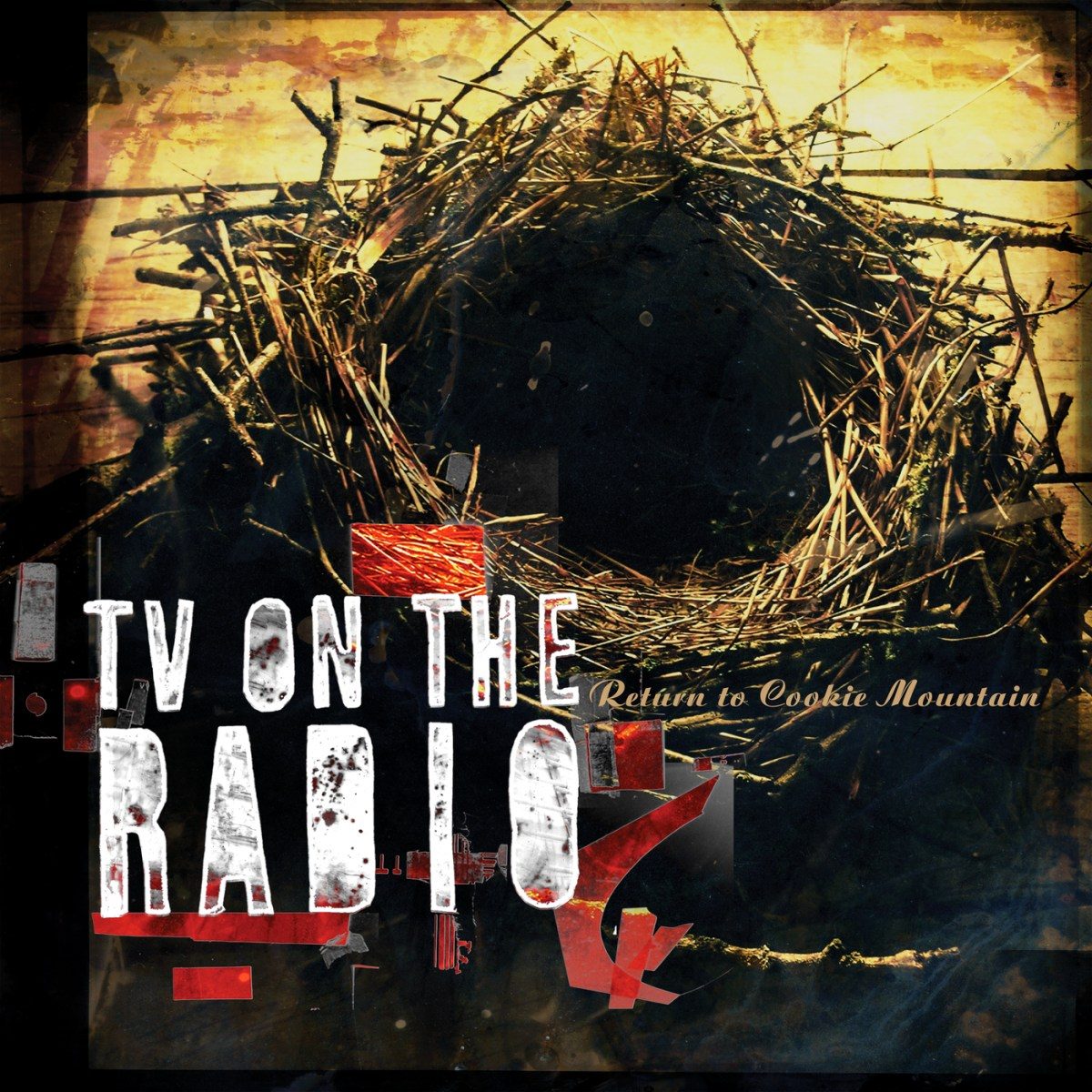
Return To Cookie Mountain Turns 20
The post <em>Return To Cookie Mountain</em> Turns 20 appeared first on Stereogum .
When that issue hit the red plastic newspaper boxes all over New York City, I worked at the Voice , and the office was in complete fucking chaos. A rapacious out-of-town conglomerate had just bought the paper, and it was in the process of tossing all of the legendary institution's redoubtable journalistic paragons out on their asses. One of the first people they fired was Robert Christgau, the guy who basically invented alt-weekly rock criticism and who'd overseen every Pazz & Jop poll since he launched the whole damn thing in 1971, and then again in 1974. The Pazz & Jop issue adorned with Kyp Malone roadkill was the first one ever that didn't feature a long, fascinating Christgau essay about What It All Meant. His presence was sorely missed.
That moment at the Voice was a fucking shitshow. Nobody knew if they'd have a job by the next morning. I was safe, at least in that moment, because I was young, worked for peanuts, and wrote almost entirely for the website that they were desperately trying to solidify, but I didn't know that I was safe. The staff union kept threatening to strike. The new owners kept firing great writers and editors. Plenty of august music critics blogged that they would boycott that year's Pazz & Jop poll, though Christgau wasn't one of them. The website Idolator launched Jackin' Pop, its own critics' poll, specifically to take the place of the presumed-dead Voice version, and the Voice 's new owners did not like that one bit.
Chuck Eddy, the music editor who hired me at the Voice , was another casualty. In his place, the new owners installed someone who they thought would be a company man: Rob Harvilla, the young music editor from their West Coast paper the East Bay Weekly . Except Rob did not turn out to be a company man, not for those fuckers, anyway. The first time I met Rob, I was sure I'd want to tar him, feather him, and run him out of the office on a rail. Within a few days, we were good friends. Rob did everything in his power to maintain the critical voice of the Voice , to keep an embattled institution running. It wasn't easy. Ahead of that issue, there were furious negotiations. One of the company bigwigs wrote an article that attempted to dunk on the entire rock-critic landscape, proclaiming that they were new the sheriffs in town or some shit. Rob kept that from happening, and the associated stress probably took years off of his life.
In the midst of that whirlwind of shit, nobody thought that maybe that cover illustration, the one where an exaggerated Bob Dylan caricature scooter-murders an exaggerated Kyp Malone caricature, was a bad idea. That shit just skated right past everyone. I honestly don't even remember whether I saw the cover before it went to press. People were just trying to get that thing out . When readers hated the cover illustration, I remember everyone being like, "Damn, of course, yeah. Should've thought that one through."
Anyway, it wasn't a surprise that Bob Dylan beat TV On The Radio that year. If Bob Dylan had a new studio album out around that time, the critics of America were going to vote that album to #1 on the Pazz & Jop poll. Time Out Of Mind crushed OK Computer . Love And Theft obliterated Is This It . The records before and after Dylan's three-album run, 1993's World Gone Wrong and 2009's Together Through Life , had middling Pazz & Jop placements, underneath Yo La Tengo albums. But in that late-career comeback window, Dylan was simply unbeatable. You wanted those metaphorical tire tracks on your back. That meant you'd achieved immortality.
That funereal feeling is all over TV On The Radio's full-length debut, 2004's Desperate Youth, Blood Thirsty Babes , but the band hadn't yet learned to capture the grandeur of their vision. In retrospect, Desperate Youth was a rough draft, an outline. TVOTR had already shown that they were capable of touching greatness, as they did on the 2003 EP Young Liars , and they took the years after Desperate Youth to figure out how to become truly great.
"Wolf Like Me" sounds like OK Computer and Is This It at the same time. It's a guttural, soulful bellow of hunger and determination. Like all instant-classic songs, it sounds both eternal and like a monument to the exact second in which it was conceived. The riff is interstellar rock on overload, like Spacemen 3 traveling through the 2001 stargate. The feral, post-verbal backup vocals, from Kyp Malone and frequent collaborator Katrina Ford, could go on howling forever. Tunde Adebimpe sounds like he's surfing on lava, freaked-out and exhilarated in equal measure. His heart's aflame, his body's strained, but God, he likes it. You ever see the video of TVOTR playing that song on Letterman ? Whoo, baby. Even after decades of watching indie bands playing on late-night TV, that performance feels impossible, unreal, a miracle. "TV On The Radio, that's all you're lookin' for! Nice goin'!"
The week's most important music stories and least important music memes.