Russian missile and drone barrage strikes Kyiv in escalating campaign
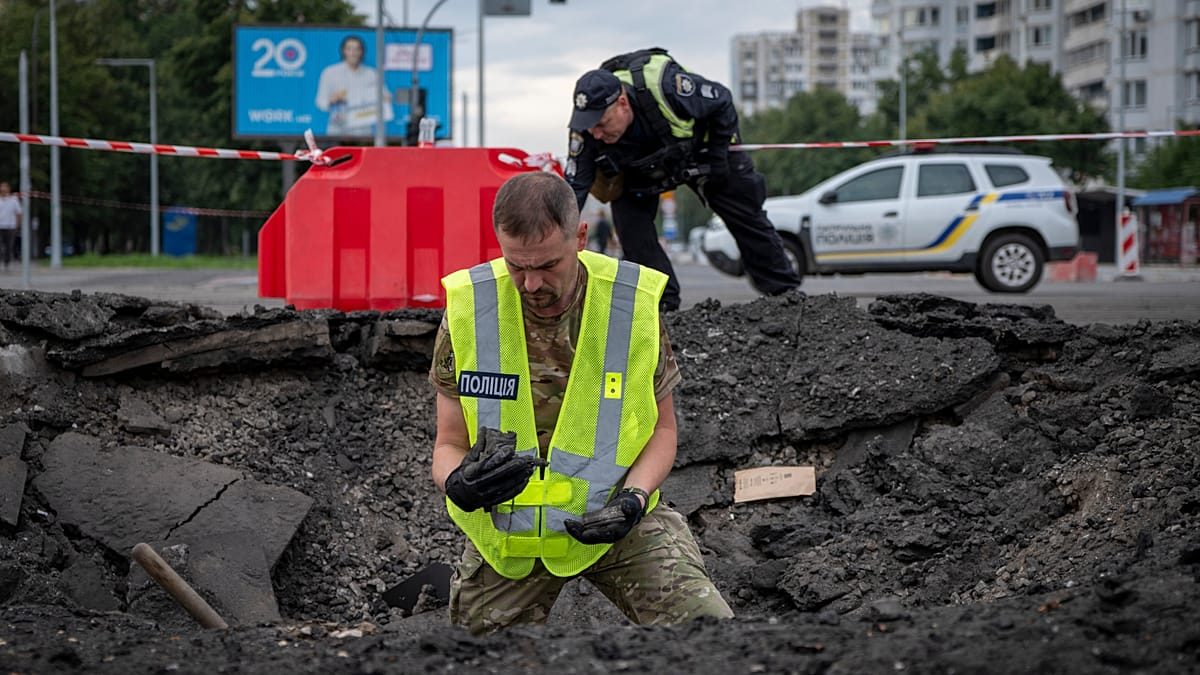
Ukraine woke to fresh destruction on 11 July after Russia launched overnight strikes on Kyiv, leaving at least 10 people injured, including a child, according to Ukrainian officials.
Russian forces launched a coordinated assault on the Ukrainian capital early Saturday morning, deploying a large swarm of 121 drones alongside ballistic and cruise missiles. The strikes impacted four distinct areas of the city, specifically the Solomianskyi, Darnytskyi, Dniprovskyi, and Sviatoshynskyi districts. Footage from the morning showed smoke rising over the capital while emergency workers collected missile fragments and residents swept broken glass from their courtyards and vehicles.
Mayor Vitali Klitschko confirmed that at least ten individuals sustained injuries during the bombardment, including an 11-year-old boy, with four requiring hospitalization. The sheer volume and speed of the attack overwhelmed local warning systems, with soldier Oleh Tymoshenko noting that the initial missile impacted before any air raid alert sounded. He was cleaning his damaged vehicle when he recounted that a second strike hit just five minutes later while he sheltered in a hallway.
According to the Ukrainian Air Force, the overnight assault included six Iskander missiles and several cruise missiles, though air defences successfully intercepted the majority of the incoming threats. This latest bombardment follows a strike on 8 July that claimed four lives. Officials describe the recent attacks as part of an intensifying military campaign against the capital by Russian forces, signaling an escalation in the conflict.
For European observers, policymakers, and investors, this intensifying military campaign carries significant implications for regional stability and public life across the continent. The deployment of large drone swarms alongside advanced Iskander missiles demonstrates a sustained effort to overwhelm existing air defences. This persistent escalation on Europe’s eastern flank maintains a high geopolitical risk environment, which continuously influences European defense planning, impacts cross-border economic stability, and keeps broader market sentiment cautious regarding the prolonged duration of the war.