Low water levels reveal 15th-century shipwreck in Lake Constance
Historically low water levels at Lake Constance have exposed a rare 15th-century vessel, offering new insights into medieval navigation but highlighting the high cost of heritage conservation.
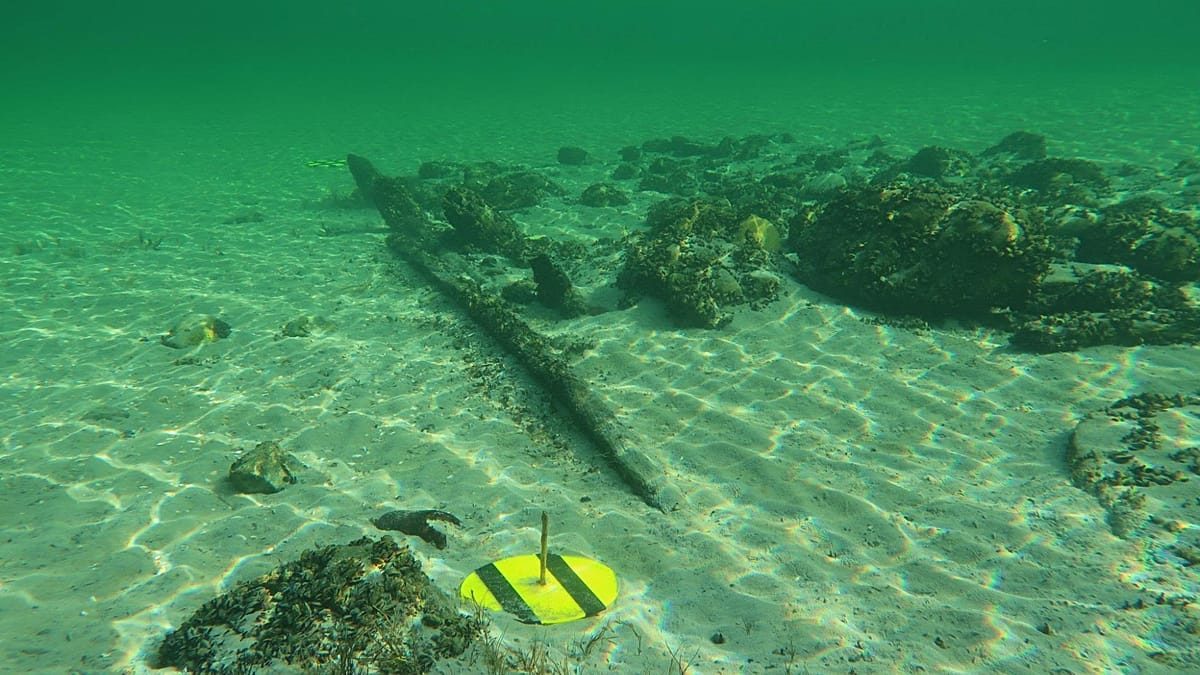
Underwater archaeologists have identified the remains of a 15th-century shipwreck off the shore of Lindau in Lake Constance. The vessel, dated to between 1420 and 1450, was found in Germany's largest inland body of water near the borders of Austria and Switzerland.
The discovery was facilitated by historically low water levels recorded last year, prior to recent heatwaves. A recreational diver familiar with the area alerted researchers to the site, prompting the Bavarian Society for Underwater Archaeology (BGfU) to investigate. Initially, the protruding timber could have been dismissed as ordinary debris, but the identification of multiple frames confirmed it was a ship's hull.
Measuring between eight and twelve metres long with a three-metre-wide hull, the vessel represents a significant addition to the region's maritime record. Professor Dr Tobias Pflederer, honorary president of the BGfU, noted the surprise of the timeline. "We had actually expected it to be dated to the modern era," he said. With only four other late medieval wrecks previously documented in the lake, the find offers new insights into historical navigation.
Unlike the heavy dugout canoes previously discovered in Lake Constance and Lake Chiemsee—some of which are exhibited at the Deutsches Museum in Munich—this vessel was built using connected frames. These load-bearing components act as the ribs of a ship, indicating a more advanced construction method.
However, the economic reality of heritage management means the wreck will likely remain on the lake bed. Salvaging the vessel is not currently planned, a stark contrast to the recent Roman-era cargo recovery in Switzerland's Lake Neuchâtel. "Salvage always means that the parts of the wreck have to be professionally conserved and preserved. This is an enormously expensive undertaking," Pflederer explained. He emphasised that leaving the wreck under a protective layer of sediment is the most effective conservation strategy.
The BGfU operates largely on volunteer power. The organisation has around 100 members, including professional archaeologists, students, and experienced recreational divers. Pflederer, who works professionally as a cardiologist in Kaufbeuren and a professor at the University of Erlangen, noted that the team has completed only two initial survey dives. Radiocarbon dating confirmed the 15th-century origin, and the group is considering a small-scale excavation solely to document the ship's exact construction techniques and dimensions.