Google AI rebuilds Pelé’s lost 1959 goal for Santos museum
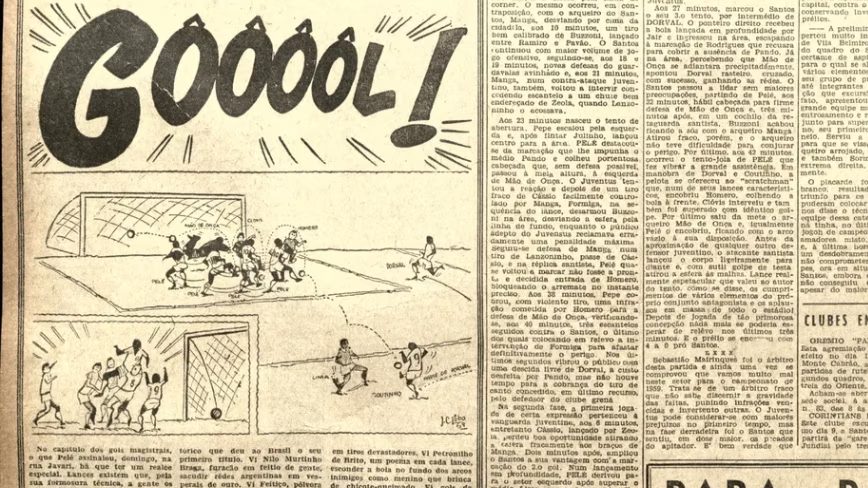
Google DeepMind has used its latest generative video models to recreate a famous unrecorded 1959 football goal by Pelé, offering a high-profile demonstration of AI's potential for historical preservation over synthetic content production.
Google DeepMind has reconstructed the only unrecorded goal widely considered the greatest of Pelé’s career. The 1959 strike, known as the "Gol da Rua Javari", has been brought to life using a combination of Google's latest artificial intelligence models and is now on display at the Pelé Museum in Santos.
On August 2, 1959, the Brazilian forward executed three consecutive sombreros over defenders, a knee flick past the goalkeeper, and a header into the net without the ball touching the ground. Because no cameras captured the moment, the feat survived for 67 years solely through the accounts of eyewitnesses.
To rebuild the play, Google partnered with Pelé’s family and the Pelé Brand. A production crew shot live-action stunt footage at the original Rua Javari stadium using period-accurate leather balls and uniforms. Google’s Veo 3, Gemini Omni, and Nano Banana Pro models were then used to map Pelé’s likeness onto the stunt player, revert the modern stadium to 1959 architectural standards, and generate era-appropriate crowd scenes.
The AI was not working from scratch. Historian Anita Lucchesi compiled nearly 2,000 historical records, including stadium blueprints and family albums, alongside interviews with surviving spectators. This evidentiary base allowed the technology to function as a reconstruction tool rather than a purely generative one.
The final digital output was processed through a filmout machine to replicate the visual texture of 1950s cinema. Traditional visual effects were then applied for ball compositing and colour grading. "He would be so proud to see all this happening. He’d always say it was a shame that the goal was never recorded," said Flávia Kurtz, Pelé’s daughter.
For European tech and media sectors grappling with a flood of synthetic content, the project highlights a potential pivot in how generative video is marketed and deployed. Google launched Gemini Omni as a conversational video-generation model at I/O 2026. This Pelé reconstruction serves as its most culturally significant application yet.
The deployment of Nano Banana Pro underscores a shift in the industry's narrative. Rather than inventing scenes from nothing, the model was tasked with rebuilding a verified historical event from fragmented evidence. In a market increasingly sensitive to generative AI's disruptive impact on creative industries, framing these tools as instruments of cultural preservation offers a compelling counterpoint to accusations of digital counterfeiting.