Ruhr art festival lays bare the economic decay of Germany's industrial heartland
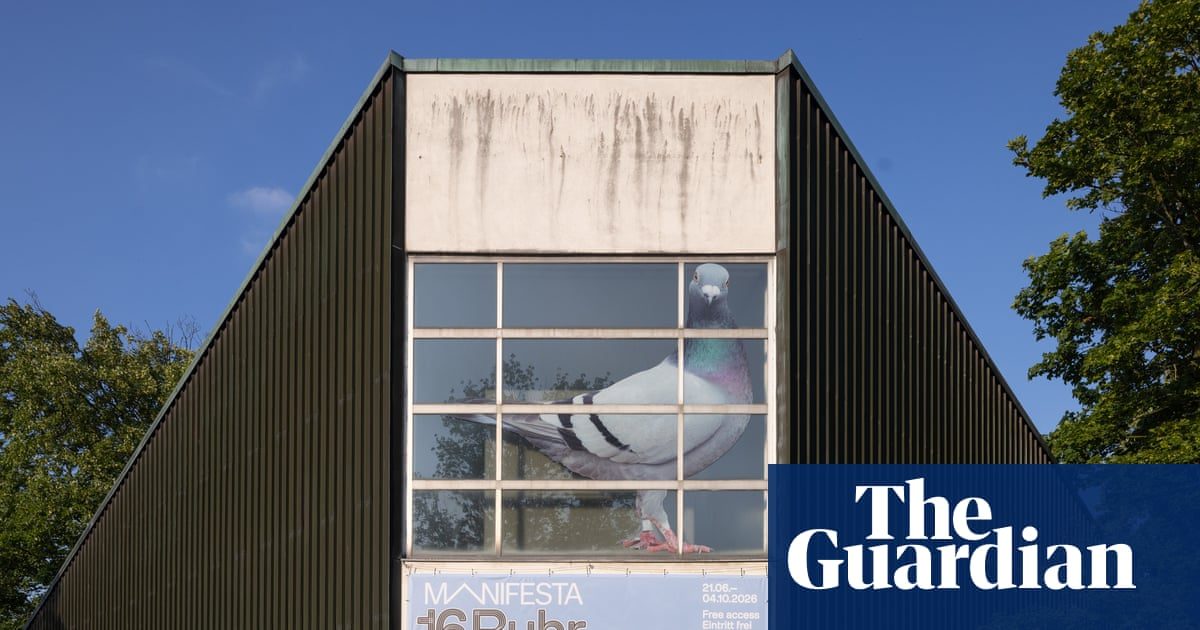
The Manifesta 16 biennale has taken over dozens of derelict churches in Germany’s former industrial powerhouse, exposing the deep social fractures left by decades of deindustrialisation.
Until October, twelve disused churches across Germany’s Ruhr conurbation are housing Manifesta 16, a travelling art biennale. Following the Second World War, when 80% of the region was destroyed, planners built hundreds of these closely packed "slipper churches" to serve new housing estates. Today, an estimated 300 of these structures lie derelict, with 100 sold off in the past year alone.
The festival is set against a grim economic backdrop. After decades of deindustrialisation and welfare dismantlement, much of the Ruhr is now poorer than eastern Germany. Gelsenkirchen currently holds the highest unemployment rate in the region and the highest vote share for the far-right AfD in western Germany.
Like the UK's West Midlands, the Ruhr was once a primary driver of national growth but has since suffered deep structural decline. This stagnation is visible in neglected infrastructure, including tram and underground networks built in the 1970s. The A40 autobahn now acts as a physical barrier, dividing the conurbation into isolated, often unwalkable enclaves of varying wealth.
Rather than occupying former factories, the biennale focuses on these failing neighbourhood institutions to highlight the shifting demographics that powered the post-war "economic miracle". Director Hedwig Fijen notes the churches were where people tried “to imagine a different kind of society” after “years of war, genocide and destruction”.
That post-war boom was driven by "guest workers" from southern Europe and Turkey, often encouraged by industrial families like Thyssen and Krupp. Curator Gürsoy Doğtaş has renamed two Gelsenkirchen churches after local migrant figures, turning them into spaces documenting the labour struggles of the workforce. Exhibitions feature art created by former guest workers, such as Abuzer Güler and Hanefi Yeter.
These temporary interventions, ranging from basketball courts to public weaving workshops, cannot solve the region's economic dysfunction. As Catalan architect Josep Bohigas notes: “I’ll be honest: I don’t care about churches, I care about neighbourhoods.” He points out that “[The churches] were built for people who are no longer there,” leaving behind structures that now symbolise a vanished industrial era.