SpaceX rocket debris on collision course with Moon
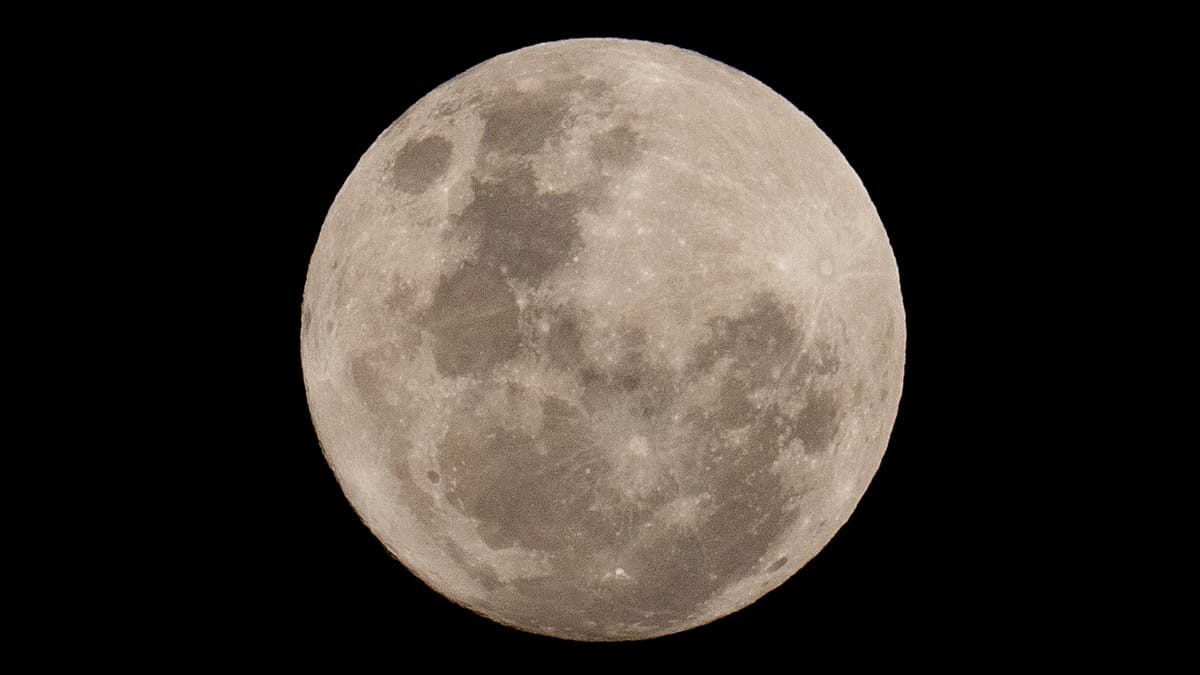
A spent SpaceX Falcon 9 upper stage is expected to strike the Moon in August, highlighting the growing commercial space sector's challenge with unplanned orbital debris.
A four-tonne upper stage of a SpaceX Falcon 9 rocket is on track to collide with the Moon on 5 August 2026. The component was used in a January 2025 mission that successfully sent two lunar landers to the surface. The spent booster is now travelling at more than two kilometres per second, and the impending impact was not part of the original flight plan.
The trajectory calculation was published in September by independent astronomer Bill Gray, creator of the Guide astronomy software used by professionals and amateurs to track near-Earth objects. Initial mathematical models had even suggested a potential collision in March of this year. Gray has stated that the impact itself does not pose any danger to Earth.
NASA’s Solar System Exploration Research Virtual Institute (SSERVI) convened a panel of experts in early July to assess the event. If the rocket debris strikes precisely at the edge of the lunar disc, a resulting dust cloud could be illuminated by the Sun and potentially visible. "I think it will be very, very hard to see, if not impossible," said William Cooke, a manager at the US space agency.
For the rapidly expanding commercial space economy, this incident highlights the unresolved logistical challenges of increased lunar traffic. As private enterprises dramatically reduce launch costs and accelerate missions beyond Earth's orbit, the failure to safely dispose of hardware creates an accumulating layer of orbital debris. SpaceX has not yet responded to requests for comment regarding the uncontrolled trajectory of its rocket stage.
The volume of space debris is growing, and analysts warn that unplanned lunar impacts could become a more regular byproduct of the new space race. A highly similar event occurred four years ago when NASA’s Lunar Reconnaissance Orbiter photographed a crash site on the Moon. NASA scientists suspected an old Chinese rocket stage caused that crater, though China rejected those reports.
Intentional crashes into the Moon are routinely conducted for scientific research purposes. However, the August collision will be an entirely uncontrolled event driven by the commercial sector. As lunar observer Brian Day noted during the recent SSERVI discussion, the Moon is a dynamic environment where changes and impacts do occur.