Nvidia ships Vera Rubin chips as investor focus shifts to rivals
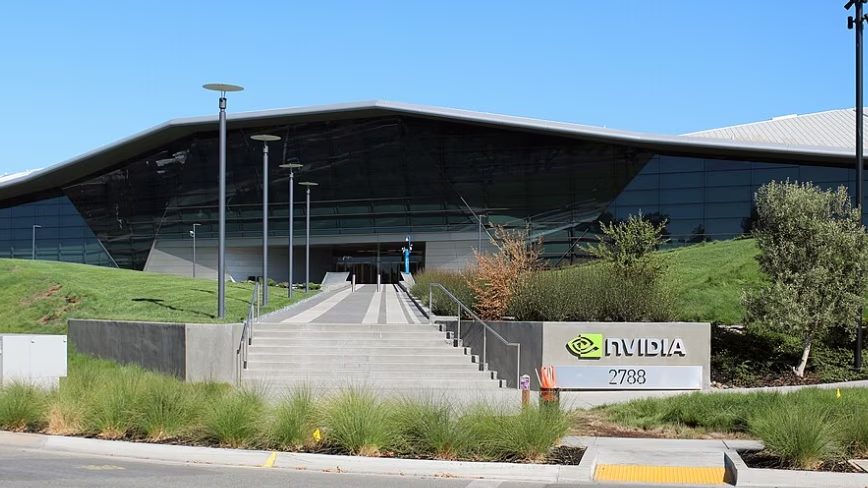
Nvidia has started full production of its Vera Rubin AI platform, yet a stark divergence in its share price signals that global investors are increasingly betting on the broader semiconductor sector rather than the dominant GPU maker.
Nvidia confirmed on Monday that its Vera Rubin platform has entered full production, with systems now shipping to a roster of major cloud providers and tech firms. Alongside early adopters like CoreWeave, Dell and Oracle, the hardware is heading to Google Cloud, Microsoft Azure and Meta. OpenAI is scheduled to deploy the systems at scale during the third quarter, according to Ian Buck, Nvidia’s vice president of accelerated computing.
The new architecture represents a deliberate engineering shift for the industry. The flagship NVL72 rack pairs 72 Rubin GPUs with Nvidia's newly developed Vera CPU, utilizing liquid cooling to eliminate internal copper cabling. This design allows for much denser component packing. Early customer CoreWeave reports the new racks are already delivering ten times the token output of the previous generation.
By introducing the Vera CPU, Nvidia is directly challenging the semiconductor companies it previously relied upon for processors. The company claims its new chip is nearly twice as fast as AMD’s Turin processor on Python workloads, the dominant language of AI inference software. Anthropic, OpenAI, Perplexity, SpaceX and Oracle are among the initial recipients.
Despite these tangible product milestones, Nvidia's stock performance tells a different story. The company’s shares have risen just nine percent this year, a stark underperformance compared to a broader chip index that has climbed 66 percent. Competitors Intel, ARM, and AMD have all more than doubled in value over the same period.
For investors and the wider tech economy, this divergence is significant. Analysts still project Nvidia’s revenue will surge 82 percent to roughly $393 billion this fiscal year. However, the missing share price momentum suggests the market is no longer rewarding sheer GPU dominance. Capital is increasingly flowing to competitors and a diversifying AI supply chain rather than consolidating around a single hardware vendor.
A degree of caution is warranted regarding the newly released figures. The performance benchmarks highlighted on Monday, including the tenfold token claim and the Python comparison against AMD, originate entirely from Nvidia and its partners rather than independent testing. Full independent verification of these metrics and the actual volume of shipments across all named customers remain pending.