Ibrox disorder report warns of systemic safety and governance failures
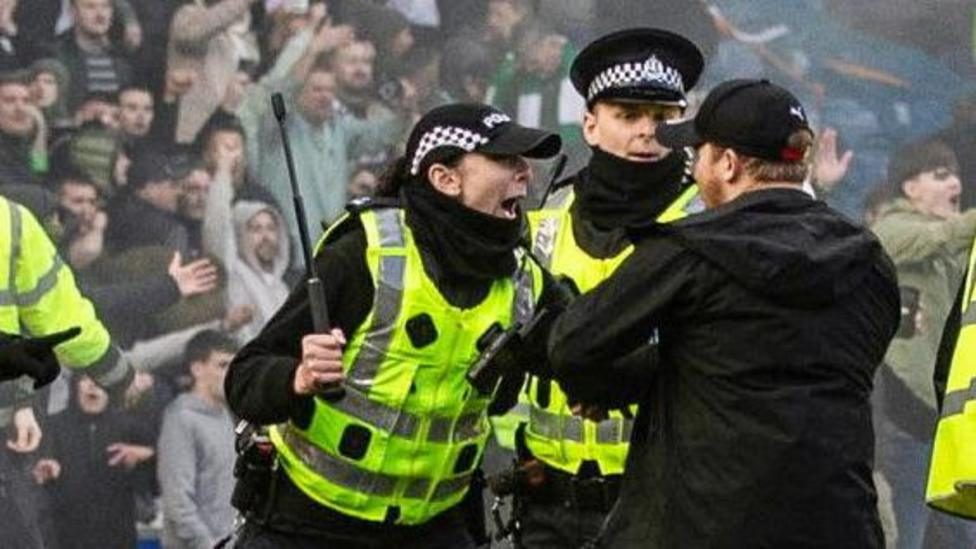
An independent review into the Old Firm Scottish Cup quarter-final has exposed severe security breakdowns and institutional inaction, warning that current governance frameworks are failing to curb organized fan violence.
An independent review into crowd disorder at the Scottish Cup quarter-final between Rangers and Celtic at Ibrox in March has delivered a damning assessment of the clubs, police, and football authorities. The 37-page report, authored by sports event consultant Mark Blackbourne, found that the violent scenes following Celtic's penalty victory came dangerously close to a mass confrontation. It took police four minutes and 28 seconds to establish control, a window the report describes as a period where "life-threatening violence was possible."
The findings reveal staggering operational and security breakdowns that carry significant liability implications for the clubs and stadium operators. A steward admitted to accepting payments to allow fans into the stadium during the match and has been arrested. Pre-match risk assessments failed completely, dismissing a pitch incursion as "unlikely" despite hundreds of visiting fans eventually invading the pitch, prompting a hostile counter-invasion by masked Rangers supporters armed with poles and reinforced gloves.
Blackbourne raises the stakes beyond typical fan misbehavior, likening the clubs' Ultra groups to organized criminal entities. The report notes these groups exhibit internal hierarchy, coordinated planning, and operational security awareness to intimidate rivals and secure positioning. Crucially, the review accuses both clubs of tacitly tolerating this dynamic out of a desire to maintain the "atmospheric value" the groups provide, alongside a fear of retaliation.
At its core, the review is an indictment of institutional governance. Blackbourne argues that the Scottish FA and the SPFL possess the necessary disciplinary tools—including points deductions and expulsion—but lack the will to deploy them. "The question is not whether the tools exist. It is whether there is the will to use them," the report states, noting that current fines are too modest, deferred, and inconsistent to alter behavior.
To reverse what is described as an upward trajectory in unacceptable conduct across the 2024-25 and 2025-26 seasons, the report demands a shift to immediate crowd restrictions and stadium section closures as standard first responses. Without these structural governance changes, the review implies that the commercial and safety risks will only escalate for Scottish football's most prominent institutions.