Turkey-PKK peace process survives early stages amid regional shifts
A historic peace process between Turkey and the PKK is advancing, offering Europe a crucial opportunity for enhanced stability on its southeastern border.
The most sustained peace effort in a decade between the Turkish state and the Kurdistan Workers' Party (PKK) is advancing, with both sides taking steps to end a conflict that cost an estimated 40,000 lives.
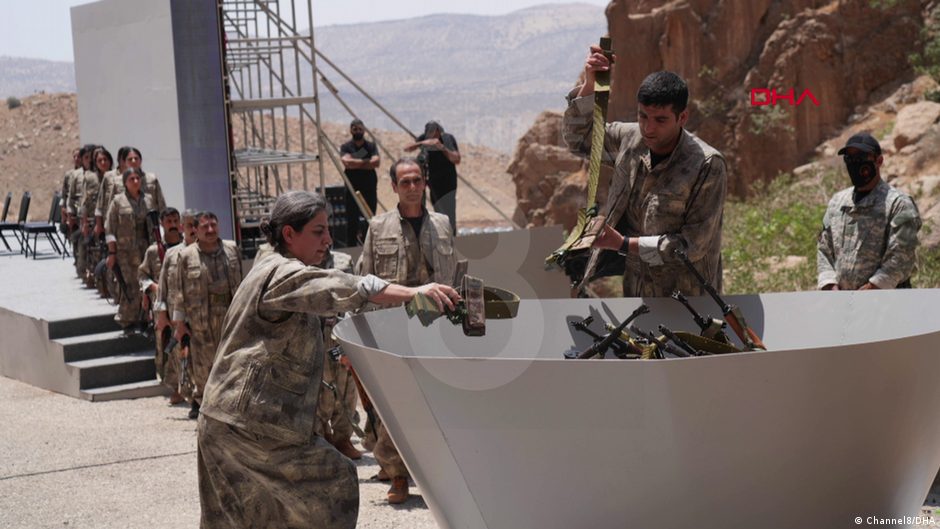
Last May, the PKK announced it would end its armed insurgency. The 77-year-old jailed PKK leader Abdullah Ocalan subsequently called on members to lay down their weapons in February 2025, a directive that led around 30 fighters to symbolically burn their arms in northern Iraq on July 11.
For European policymakers and investors, the resolution of this conflict is critical. Turkey is a key NATO ally and a major economic partner, meaning its internal security directly impacts the stability of the EU's neighbourhood and regional markets.
The current dialogue is largely driven by a transformed Middle East. Syrian Kurdish groups, once semi-independent along the Turkish border, have lost territory and had to accommodate a new government in Damascus. Aret Demirci of the Friedrich Naumann Foundation noted that these geopolitical shifts are forcing the dialogue forward, as improved relations with Turkish Kurds give Ankara greater leverage regarding Syrian and Iraqi Kurdish groups.
However, the economic and security dividends of a lasting peace remain at risk due to deep mistrust. The Turkish government is pushing for complete disarmament, while Kurdish representatives demand political and legal guarantees first. The pro-Kurdish DEM party recently reiterated Ocalan's call for a legal framework, with the jailed leader stating that "the Kurdish-Turkish alliance is the cornerstone of Anatolia's shared future."
"The parties' differing expectations are likely to be the biggest challenge in coming months," Demirci said. He described the weapon burning as a "historic turning point," adding that "unlike previous peace initiatives, the process has not collapsed at an early stage."
A Turkish parliamentary committee has heard from roughly 140 civil society representatives and recommended reforms to reintegrate former militants. Yet the ruling AKP has only offered a partial amnesty and made no concrete commitments regarding Ocalan.
The long-term success of the process will depend on broader democratic reforms. "This very ambivalence currently shapes the debate in Turkey and makes the process both historic and extremely fragile," Demirci warned, adding that a lack of transparency makes it difficult to build public trust.