Designers Republic marks 40 years by selling Sheffield archive
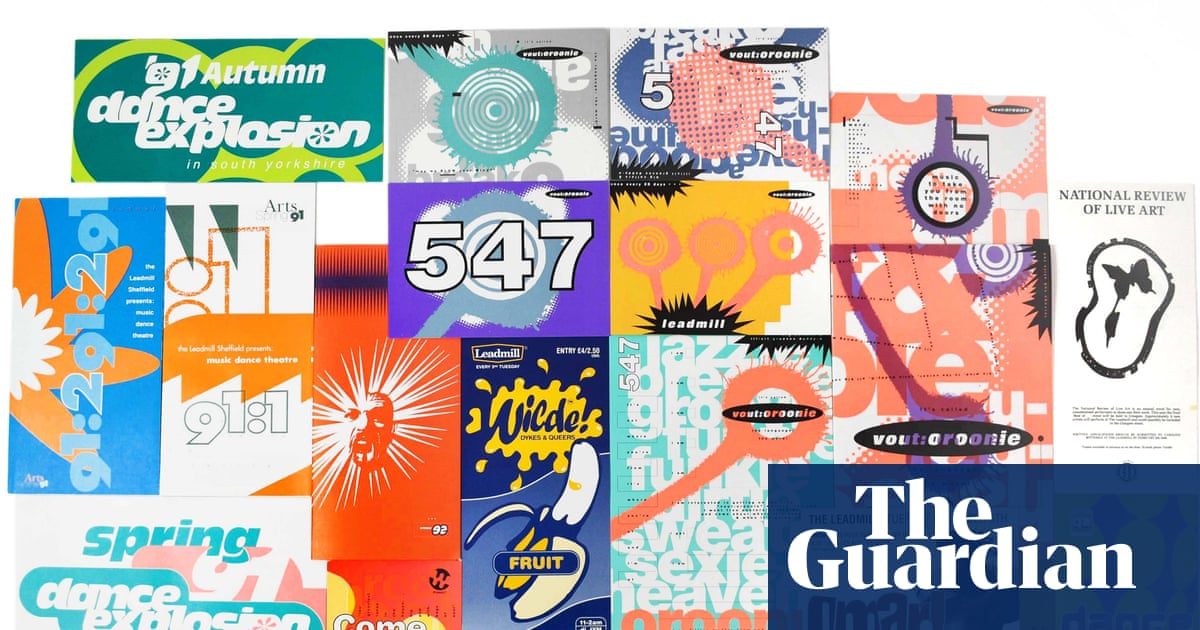
Sheffield's influential Designers Republic is selling its vast archive to mark 40 years in business, a milestone that highlights the fragile economics of scaling anti-corporate art in Europe.
Ian Anderson, founder of Sheffield’s Designers Republic (TDR), is selling original pieces and launching a new merchandise line to mark the company’s 40th anniversary. The move clears out a vast personal archive built over four decades. It also serves as a practical case study in the economics of Europe’s creative industries, where scaling an anti-corporate brand often collides with commercial reality.
Anderson founded TDR in 1986 by accident with Nick Phillips, initially producing black-and-white record covers for local Sheffield labels like Fon and Warp. Their brightly coloured, text-heavy aesthetic was a deliberate rejection of the minimalism popularised by Manchester’s Factory Records. This distinct visual identity quickly transformed a self-taught experiment into a globally recognised brand.
The studio’s geographic isolation acted as an unlikely business advantage, as clients rarely travelled to Sheffield to monitor their work. “No one was gonna jump on a train to come up and check on us,” Anderson notes. This distance allowed TDR to maintain a spiky attitude, with Anderson admitting, “We really didn’t care what the client wanted.”
Despite this rebellious posture, TDR became a sought-after entity for major corporations, eventually designing campaigns for Coca-Cola, Adidas, and Pringles. The shift drew accusations of selling out, but Anderson viewed it as a necessary expansion that provided new opportunities. Original TDR posters bearing slogans like “Work. Buy. Consume. Die.” now sell for thousands, proving the enduring market value of their anti-consumerist art.
Following the financial crisis, shrinking marketing budgets made TDR’s expansion to about 20 staff unsustainable, pushing the company into voluntary liquidation in 2009. “When I took a back seat to allow TDR to grow beyond me, it died,” Anderson said. “Its creative spark was crushed under the weight of business self-interest.”
The company survived as a slimmed-down, solo operation, producing conceptually rigorous work like the receipt-style packaging for Aphex Twin’s 2014 album Syro. While social media has elevated him to an "elder statesman of design," Anderson remains focused on future work. “It’s like having a fantastic house full of stuff, but actually preferring to sit in your shed thinking about new things,” he says.