World Climbing Association cancels vote on suspending Israel, Russia and Belarus
The decision to replace immediate suspensions with a future framework highlights the growing struggle of international sports bodies to navigate geopolitical conflicts and apply international law consistently.
The World Climbing Association cancelled a scheduled vote on July 23 to suspend the national climbing federations of Israel, Russia, and Belarus from international competition. Instead, a slight majority of the more than 70 federations attending the virtual General Assembly approved a motion to develop a future principles-based framework for national participation.
The cancellation followed eleventh-hour motions submitted on July 8 by the United States, Australia, and Cyprus to halt the proceedings. The Israeli Climbing Association did not respond to requests for comment regarding the outcome.
For European observers of global governance, the divergence in how these federations are treated underscores a complex fracture in the application of international law. Russian and Belarusian athletes were initially banned in March 2022 over the war in Ukraine, though that ban was lifted in February 2026 with the condition that they cannot compete under their national flags.
Conversely, no international governing body for an Olympic sport has ever sanctioned Israeli athletes or blocked them from competition. Advocacy groups argue this discrepancy exposes a double standard in how sporting bodies enforce geopolitical accountability.
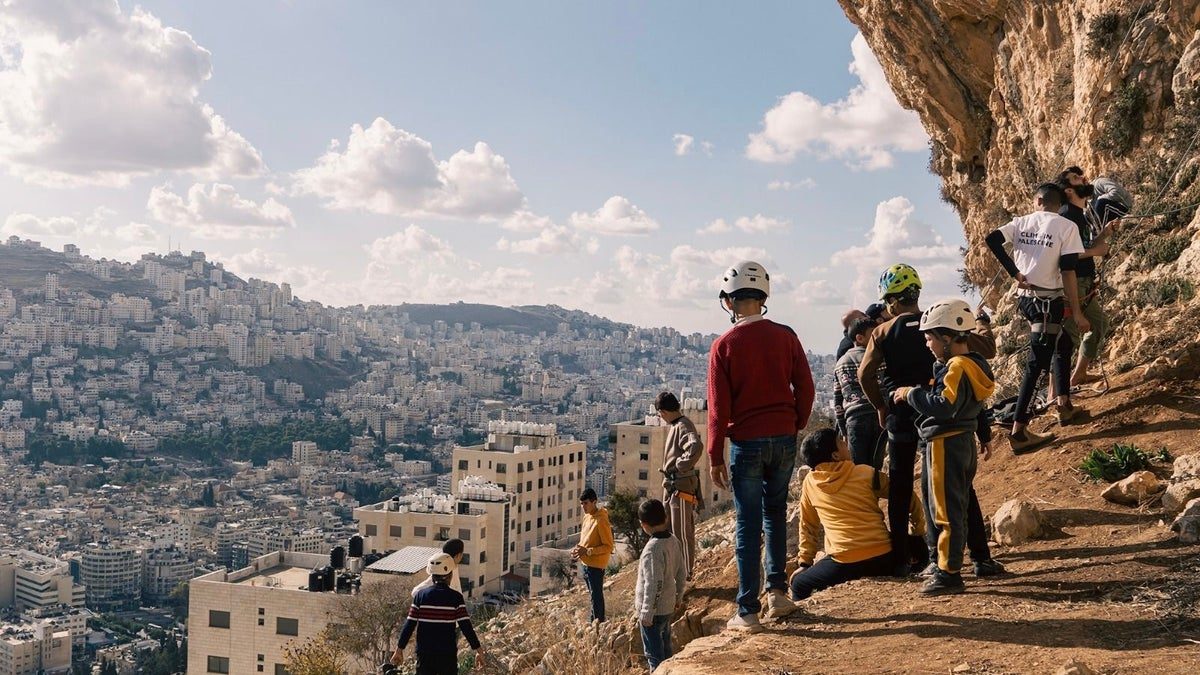
Climbers for Palestine Spain and Colorado contend that the World Climbing Association risks violating its own statutes and international law by cooperating with the Israeli federation. They argue the Israeli body promotes climbing in the occupied West Bank, a military occupation deemed illegal by the United Nations General Assembly and the International Court of Justice in 2024.
“We are deeply concerned that the ILCA is permitted to engage in activities that contribute to serious breaches of international law, including the annexation of climbing crags in the occupied West Bank,” said Michael Concannon of Climbers for Palestine Colorado. Advocates point to the Israeli federation’s digital guidebooks, which map the occupied territory as Israeli land and allegedly copied entries from a Palestinian climbing guide.
Defending the new framework, USA Climbing Chief Executive Marc Norman argued that the approach protects the integrity and autonomy of the global body while insisting it does not shield any federation from consequences. He noted the strategy aligns with his organization's approved principles for athlete and international federation participation.
The geopolitical dispute has tangible consequences for Palestinian climbers navigating the West Bank. Since the October 7, 2023 Hamas attacks, which killed 1,195 people, and the subsequent war in Gaza, Palestinian athletes have been forced to abandon five climbing crags due to safety concerns and violent settler expansion.
Momin Abuyacoub, executive director of Wadi Palestine, recounted a February 2023 incident where armed settlers threatened climbers in the village of Burqa. Shortly after, in August 2023, a settler believed to be part of that group killed 19-year-old Qusai Jamal Maatan in the same village, leading to the establishment of new settlements around the area.
Palestinian climbers also face systemic barriers, with approximately 20% of the West Bank declared a closed military zone. Hiba Shaheen, president of the Palestinian Climbing Association, noted that areas bolted by Palestinians are now off-limits to them but remain open to Israelis. Meanwhile, prominent Palestinian climber and filmmaker Abdallah Motan remains in administrative detention, with his imprisonment renewed for a third six-month term on July 14, 2026, without formal charges.