Pioneering assemblage artist Betye Saar dies at 99
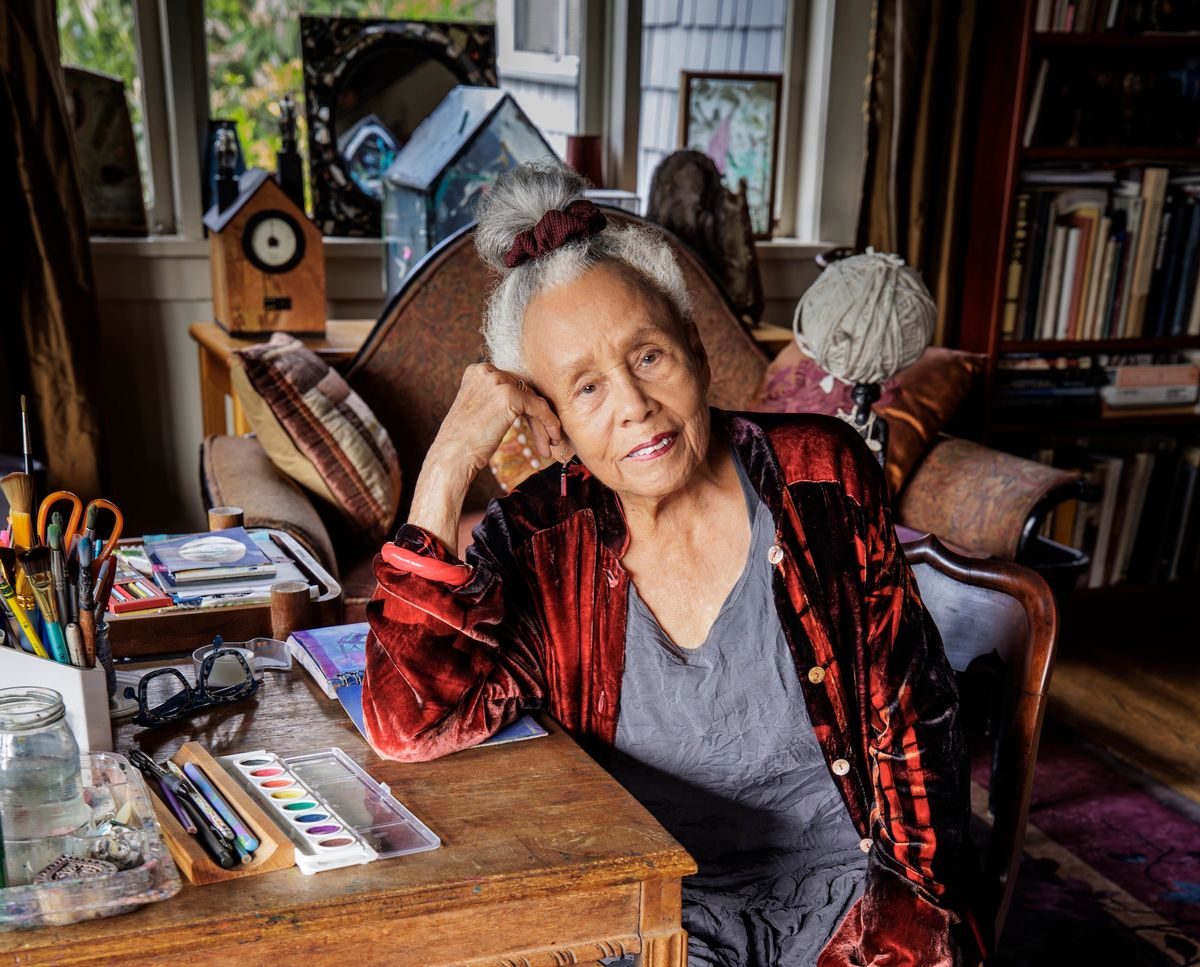
Betye Saar, the Los Angeles artist who transformed racist memorabilia into powerful critiques of American culture, has died at 99, closing a chapter on one of the most influential yet long-overlooked careers in contemporary art.
Betye Saar died on Sunday (26 July) at her home in Los Angeles, just days before her 100th birthday. Her family confirmed she passed peacefully of natural causes in her sleep. Over a seven-decade career, Saar built a formidable body of sculptural assemblages that forced the international art world to confront histories of racism, mysticism and the Black female experience.
For European and global institutions, Saar’s work represents a crucial bridge between American folk traditions and the broader conceptual art movement. Despite her talent, she spent much of her career operating outside the traditional New York-centred art establishment, a marginalisation that curators have directly attributed to her race and gender. It was not until recently that major museums fully embraced her, with the Los Angeles County Museum of Art staging a solo show in 2019 and the Getty acquiring her archive in 2018.
Born in 1926, Saar initially studied design at the University of California, Los Angeles, graduating in 1949. She began her career creating enamel paintings and prints, but a 1967 Joseph Cornell retrospective pushed her toward three-dimensional assemblage. She constructed pieces by combining found objects, old windows, fabrics, and archived family photographs, with political and occult symbolism.
Her breakout piece, Black Girl's Window (1969), now housed at the Museum of Modern Art in New York, merged personal turmoil with the political upheaval of the Watts Riots. “Even at the time, I knew it was autobiographical,” Saar said of the work. A 1970 trip to Chicago introduced her to historic African art, sparking a desire to make work that she described as “contemporary, powerful, ritualistic art,” such as Spirit Catcher (1977), held by the Hammer Museum.
Saar is perhaps best known for subverting derogatory American caricatures. In The Liberation of Aunt Jemima (1972), she armed the mammy figure with a rifle and a broom. “I felt myself as a recycler, not only of the material and the information, but of how to look at those images and not look at them in a derogatory way or a way to be ashamed,” Saar said in a UCLA oral history, adding that such figures could instead be viewed “as heroes and heroines.”
Saar also shaped the next generation through teaching positions at the Otis Art Institute and UCLA. Earlier this year, she established the Betye Saar Legacy Group to manage her estate in collaboration with her gallery, Roberts Projects. Her work remains on public view in several ongoing exhibitions, including shows at the New York Historical and the Huntington in Los Angeles, ensuring her influence on the contemporary art market will persist.