SpaceX secures $1.6bn US Space Force contract for 2027 sensing satellite launches
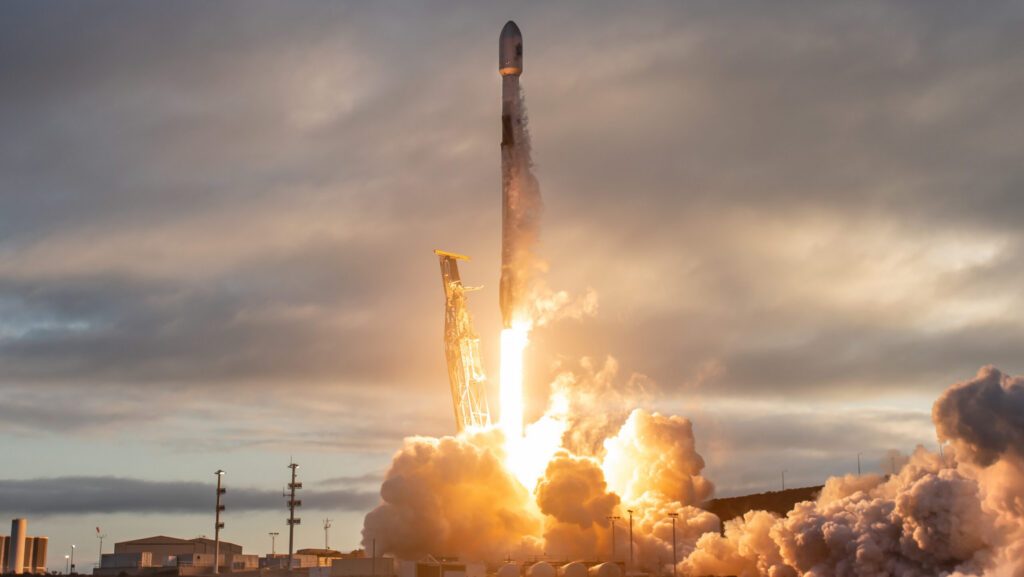
The US Space Force has awarded SpaceX two new launch contracts worth $1.6 billion, underscoring Washington’s deepening reliance on commercial providers for critical military space infrastructure and raising the bar for global defence markets.
The United States Space Force has selected SpaceX for two additional launch missions valued at $1.6 billion. These missions fall under the National Security Space Launch (NSSL) Phase 3 Lane 1 programme, which procures commercial-style launches for payloads heading to accessible orbits or supporting non-critical missions.
This marks the first task order awarded since the service announced an $11.4 billion increase to the programme’s ceiling on 17 July. The total contract value now stands at $17 billion, reflecting a strategic decision to expand planned Lane 1 launches from 60 to 170 between 2025 and 2034.
The newly funded task orders cover launches scheduled for 2027. They will carry an undisclosed number of satellites for the Space Based Sensing and Targeting (SBST) portfolio. Space Systems Command has not specified the exact types or quantities of satellites involved in these missions.
However, the SBST office manages the new Space-Based Airborne Moving Target Indicator (SB-AMTI) programme. These satellites are designed to complement the Air Force’s E-7 Wedgetail aircraft, which is replacing the aging E-3 Sentry Airborne Warning and Control System.
The Department of the Air Force views this shift to space-based assets as essential. It is a direct response to increasingly sophisticated anti-access and area-denial systems deployed by potential adversaries, which threaten traditional airborne surveillance.
Market implications
For European defence and space markets, this development highlights the widening scale of US commercial-military integration. Washington’s willingness to commit $17 billion to commercial launch providers sets a formidable benchmark for the global space economy.
This award follows a separate $4.16 billion task order announced on 29 May to accelerate the SB-AMTI programme. SpaceX is currently one of nine firms competing for these orders under an Other Transaction Authority contract, though the US military has declined to name the other participants or reveal the programme's total value.
As the US military increasingly treats commercial spaceflight as a standard utility rather than a bespoke service, European aerospace firms face mounting pressure. They must accelerate their own public-private partnerships or risk further marginalisation in the strategic launch sector.