Samsung and SK Hynix surge as US tech earnings revive Asian chip stocks
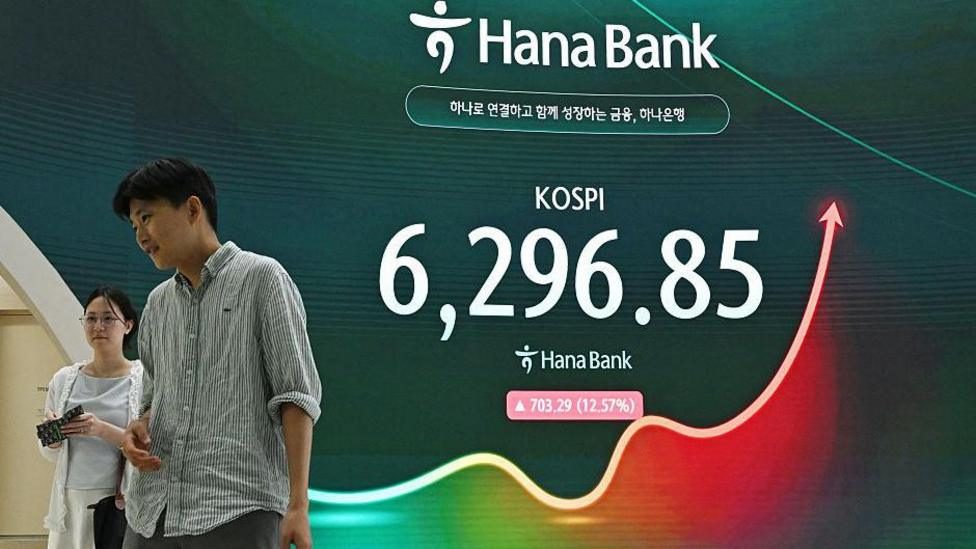
A massive rally in South Korean semiconductor stocks signals renewed global confidence in artificial intelligence spending after a week of severe market turbulence.
South Korea’s benchmark Kospi index climbed nearly 17 per cent in afternoon trading, driven by a massive rebound in domestic semiconductor manufacturers. Samsung Electronics and SK Hynix led the charge, with shares in the two tech giants jumping 23 per cent and 17 per cent respectively.
The sudden reversal followed strong earnings updates from American technology heavyweights Amazon and Microsoft. Amazon shares climbed over 9 per cent in New York following the closing bell on Thursday, alongside a 15 per cent gain for Microsoft, reassuring global investors about the massive capital being deployed into artificial intelligence infrastructure.
This optimism directly counteracts a severe sell-off that had plagued the sector earlier in the week. Market participants had grown increasingly anxious about the sheer scale of the hundreds of billions of dollars being poured into artificial intelligence projects by major technology firms. The sudden drop in valuations raised questions about whether the massive capital expenditure would yield adequate financial returns in the near term.
The rebound was also supported by intervention from South Korean regulators, who introduced new measures specifically designed to halt the week's downward spiral. The recovery in Seoul quickly transmitted across the region, lifting technology-heavy markets in both Japan and Taiwan as the broader Asian supply chain stabilized.
For European markets and industries, the extreme volatility in Asian semiconductor hubs highlights a critical structural reliance on East Asian manufacturing. Europe’s automotive, industrial automation, and consumer electronics sectors depend heavily on a steady flow of advanced memory and logic chips from companies like Samsung and SK Hynix. Consequently, any sudden disruption or panic selling in Seoul sends immediate ripple effects through European supply chains and corporate earnings forecasts.
The extreme fluctuations also underscore the changing dynamics of Asian equity markets, which have seen a massive influx of retail capital in recent months. This surge in individual trading has contributed to heightened volatility, forcing the Kospi to trigger its circuit breaker mechanism multiple times this year to prevent panic selling.
Despite the recent turbulence and a pullback from its record high in mid-June, the broader trajectory of the South Korean market remains overwhelmingly positive. The index has increased by more than double its previous worth over the current year and remains 50 per cent above its closing level at the end of 2025.