Carbon capture and storage is a costly white elephant, so why is the EU pushing it?
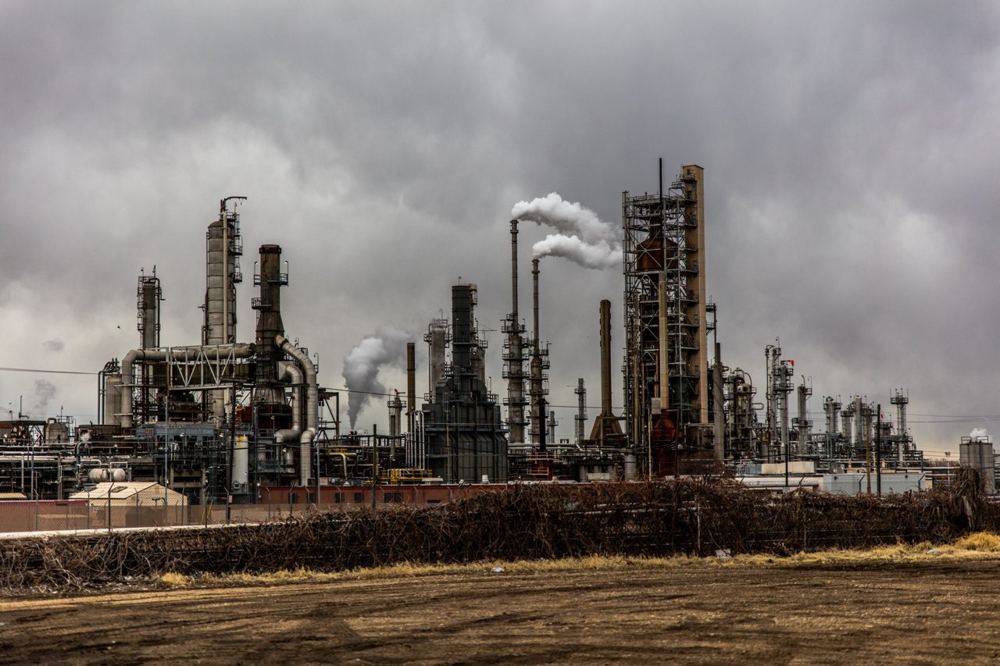
As the EU Commission prepares new rules for carbon dioxide transport infrastructure, Europe risks locking taxpayers into costly carbon capture projects - despite the technology’s track record of failure.
Europe’s plans to deploy carbon capture and storage (CCS) at scale are faltering.
In response, the European Commission is expected this autumn to propose legislation to accelerate and expand the bloc’s carbon dioxide (CO 2 ) transport infrastructure.
The emerging approach risks imposing substantial costs on taxpayers while weakening safeguards for people and nature.
As part of its plans to achieve climate neutrality by 2050, the EU envisages a vast industrial infrastructure network to capture, process, transport, and store CO 2, the greenhouse gas best known for its role in driving the climate crisis.
The EU has set a target of at least 50 million tonnes of annual CO 2 injection capacity by 2030. The associated transport network needed could span 19,000km by 2050, carrying risky, highly-pressurised CO 2 across the continent.
European CCS project announcements hit their peak in 2021 and have declined since, with the amount of carbon capacity cancelled in 2025 exceeding that reaching final investment decisions.
Signs of industry retreat are mounting: selling stakes in flagship projects , cutting budgets , and even legally disputing EU CCS requirements.
The commission is now preparing new legislation to make it easier, cheaper, and more appealing for the CCS industry to build this new infrastructure.
The law is expected to expand subsidies for polluting industries and establish a regulatory framework that limits scrutiny and risks reducing industry accountability for CO 2 leaks.
It is also expected to include measures to loosen permitting requirements through new exemptions and could use 'industrial acceleration areas' that may override protections for natural areas .
Slashing permitting safeguards for nature and communities for CCS infrastructure is hugely concerning, given that CCS at scale poses major technical challenges and real safety risks.
Carbon capture can increase air pollution . Transport and storage of CO 2 come with significant risks , including the release of dangerous levels of CO 2 , endangering nearby communities.
A CO 2 pipeline rupture in Mississippi, US in 2020 resulted in 45 people being hospitalised and 200 evacuees.
This prioritisation of industry interests over protective rules might be more defensible if CCS were at least an effective climate solution, but it's not.
The world’s top climate scientists labelled CCS as one of the most expensive and least effective ways to cut emissions, while the International Energy Agency has repeatedly downgraded expectations for its contribution.
CCS has consistently failed to deliver the promised emissions reductions: over the past half-century, 88 percent of planned CCS capacity never materialised , rising to over 90 percent in the power sector.
In practice, CCS can increase overall emissions when it is used to justify new or expanded fossil fuel projects, delaying emissions cuts at source and diverting resources from proven climate solutions.
Historically, around 85 percent of CCS capacity installed worldwide has been linked to fossil-fuel production, with most of the captured CO₂ used to extract more oil .
Weakening safeguards alone is unlikely to overcome the industry’s commercial reluctance to invest in CCS.
Recommendations from an industry-led working group on CCS infrastructure call for increased public funding and financial measures to make projects commercially viable.
The price tag for CCS is staggering , and the forthcoming carbon infrastructure law could leave EU taxpayers footing even more of the bill for projects that carry significant risks and may deliver little, if any, of the promised emissions reductions.
Instead of fast-tracking costly, risky, and ineffective carbon capture infrastructure, the EU should prioritise cutting emissions at source, phasing out fossil fuels, and accelerating renewable energy.
In 2025, wind and solar generated more EU electricity than fossil fuels, while homegrown renewables can strengthen energy security and protect consumers from volatile fossil fuel prices.
Weakening safeguards for people and nature to advance infrastructure that locks in fossil fuel dependence would be a grave error.
Europe’s taxpayers and communities near existing and proposed CO 2 pipelines and storage sites deserve better than another costly gamble on a technology that has repeatedly failed to deliver.
Rachel Kennerley is the senior international carbon capture campaigner at the Center for International Environmental Law (CIEL). She specialises in carbon capture and storage and carbon dioxide removal technologies, focusing on their role in European and international climate policy, including UN climate negotiations and the work of the Intergovernmental Panel on Climate Change (IPCC).