UK joins mainland Europe in launching plug-in balcony solar panel market
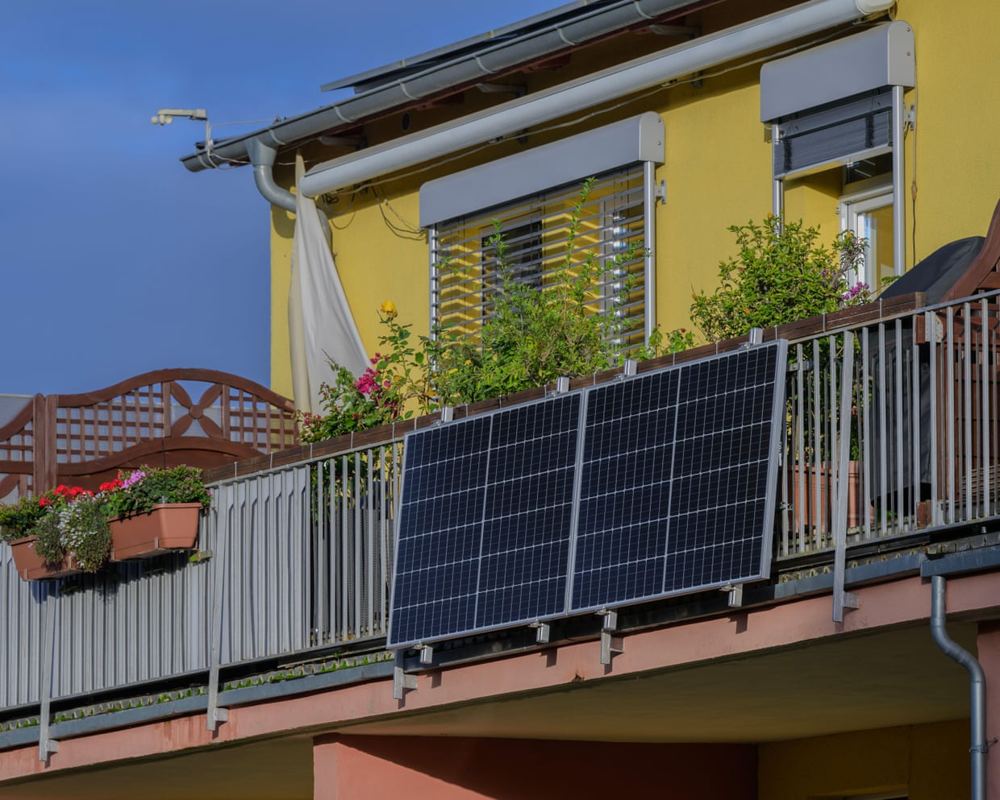
British households can now buy plug-in balcony solar panels from major retailers, marking the UK's entry into a consumer solar market already established across mainland Europe and offering a new mechanism for managing domestic energy demand.
Plug-in solar panels go on sale in the UK for the first time on Thursday, allowing renters and flat dwellers to generate their own electricity. Argos is the first major retailer to stock the DIY systems, with Amazon, Currys, B&Q and Screwfix expected to follow in the coming weeks.
The launch brings the UK in line with mainland Europe, where the technology is already popular in Spain and Germany. Known locally as Balkonkraftwerk, the 800-watt units plug into standard wall sockets to feed power directly into a property’s electrical circuit.
Priced between £400 and £500 depending on capacity, the systems are roughly a fifth of the size of standard residential rooftop installations. While they cannot power an entire property, the technology is projected to save the average household up to £110 annually on electricity bills.
Every installed unit must be registered with Great Britain’s National Energy System Operator to track the technology's spread. This data will help the grid operator measure how the cumulative deployment of these micro-systems reduces reliance on gas-fired generation and energy imports. The energy secretary, Miatta Fahnbulleh, characterized the initiative as an inexpensive and straightforward method for residents to manage their utility expenses and achieve immediate financial relief.
Argos managing director Graham Biggart argued that broadening availability empowers shoppers to investigate functional strategies for regulating domestic power consumption. He noted that the retail rollout effectively shifts control of household energy dynamics directly to the consumer.
Financial returns depend heavily on weather, panel orientation and whether consumers can run appliances during peak sunlight, as new legislation excludes plug-in batteries. Emily Seymour from the consumer advocacy group Which? cautioned that the reduced energy yield makes the units unsuitable for certain dwellings.
She advised prospective buyers to verify landlord approvals and planning rules, while highlighting hazards related to aging electrical infrastructure and improper installation. Joanna O’Loan, a manager at the Energy Saving Trust, observed that the hardware offers users enhanced authority over their power consumption and expenditures.
O’Loan emphasized the necessity of providing transparent guidance to help consumers select options that align with their specific financial and residential requirements. The widespread availability of these micro-generation units ultimately represents a structural shift in how domestic energy demand is managed across the national grid.