Missing persons in Nepal and China floods exceed 2,400 as EU pledges aid
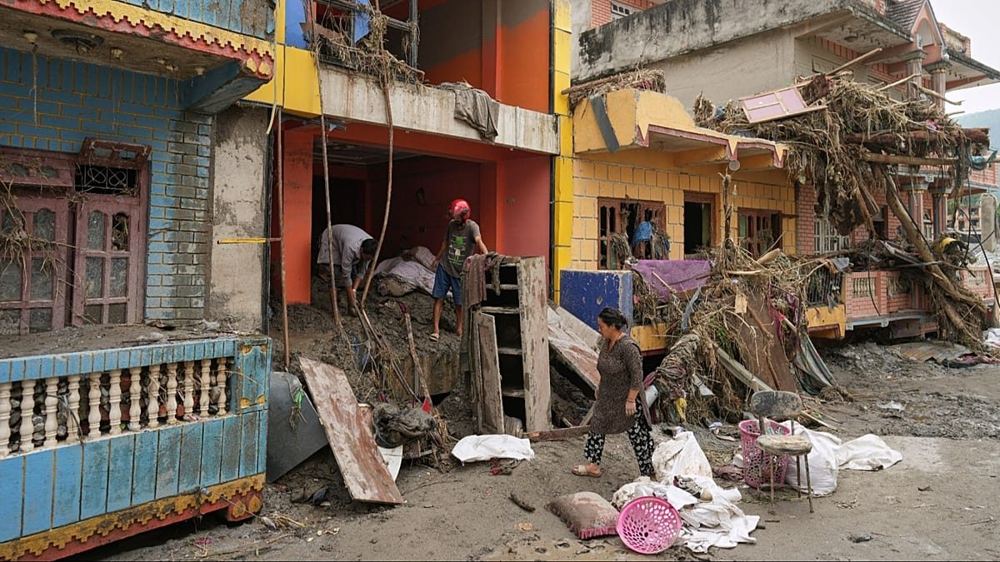
As the death toll from a catastrophic glacial collapse in the Himalayas rises, the European Union has mobilised emergency funding to support a growing humanitarian crisis affecting nearly 100,000 people.
The number of people missing in Nepal and China has surpassed 2,400, with emergency teams recovering 586 bodies so far. The disaster, triggered by a glacial collapse that sent a vast flow of icy debris through the region, is now the deadliest in Nepal since the 2015 earthquake.
Nepal’s disaster authority recently added 933 hydropower workers to the missing persons list, which already included trekkers and pilgrims near Mount Kailash. The destruction of critical infrastructure has trapped survivors, including more than 100 workers still stuck inside the Trishuli 3A hydropower project tunnel.
Army spokesman Raja Ram Basnet noted that while two helicopters were dispatched, locating tunnel entry points remains highly challenging. Some 350 workers and residents have been brought to safety from the site, but the operation is hampered by the ongoing threat of renewed flooding.
Nepali police recently urged rescuers to move to safe locations after receiving reports that a water dam had burst again on the Tibetan side. China temporarily suspended rescue operations in the hard-hit area of Gyirong due to overflowing debris lakes, though state broadcaster CCTV later confirmed the water level had dropped and operations were proceeding.
The human toll continues to mount as relatives crowd hospitals in Nepal’s capital, searching for loved ones. Samjhana Thing, 27, described the agonising wait for her brother, stating, "We lost everything. He is our everything."
The scale of the devastation has prompted international mobilisation, with the International Red Cross estimating that at least 93,000 people are in great need of assistance. UNICEF reported that 17,000 children require urgent humanitarian aid, while 18 schools have been destroyed and another 20 damaged.
In response to the crisis, the European Union has pledged €2 million in emergency funding. European Commission chief Ursula von der Leyen stated that this immediate humanitarian aid would help deliver life-saving assistance to the families and communities hit hardest by the disaster.