Brown predicts united Ireland and calls for European North Sea energy consortium
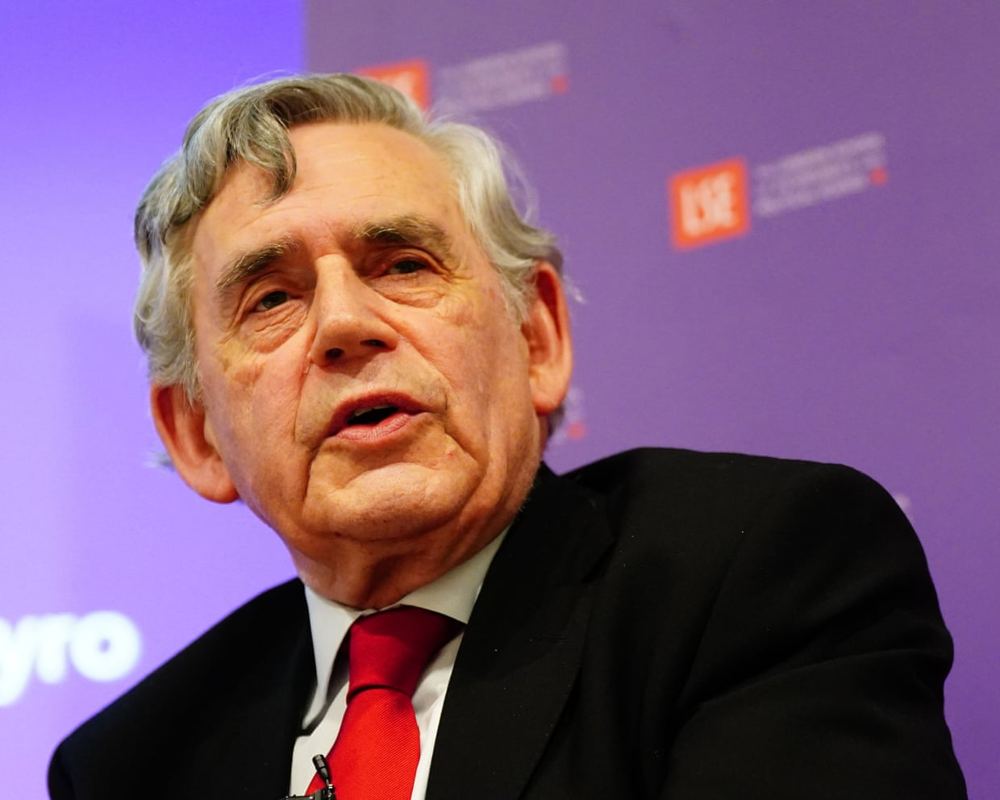
The former UK prime minister has declared a united Ireland inevitable while proposing a multinational consortium to manage the North Sea energy transition, signaling major future shifts for British constitutional and European energy markets.
Former UK prime minister Gordon Brown has declared that a united Ireland is inevitable, while simultaneously proposing a multinational consortium to manage the North Sea energy transition. The comments were made in an interview promoting his new book, The Future Starts With Us. Together, they outline a long-term constitutional shift for the UK and a highly integrated approach to European energy infrastructure.
Brown stated that Northern Ireland holds a fundamentally different position within the UK compared to Scotland, where he vehemently opposes independence. He argued that Scotland remains deeply linked to the rest of the UK, noting it is "geographically, economically, socially, culturally linked" to England, Wales, and parts of Ireland. Conversely, he confirmed that the geographic realities of the island mean a unified state will eventually emerge, provided populations can reach a mutual agreement.
This constitutional forecast carries significant long-term implications for European trade and market stability. Brown was chancellor when the 1998 Good Friday agreement was signed and prime minister during the 2010 devolution of justice and policing powers to Northern Ireland. A future unified Ireland would require complex economic integration between the UK and the European Union, fundamentally altering cross-border trade dynamics and regulatory frameworks.
On the economic front, Brown addressed the politically sensitive debate over continued North Sea oil and gas extraction, specifically referencing the Rosebank and Jackdaw fields. He cautioned against framing the issue as a binary choice, arguing that policymakers "can support renewables as the future for British energy and support the development of the North Sea". Instead, he maintained that keeping existing infrastructure is essential to facilitate a transition toward hydrogen, floating wind, and carbon capture.
To execute this transition, Brown proposed the creation of a European consortium involving Norway, Germany, the Netherlands, Belgium, and Denmark. Such a cross-border partnership would pool resources and expertise to repurpose North Sea assets for green energy production. This approach could stabilize regional energy markets and attract large-scale institutional investment into shared infrastructure projects across northern Europe.
Brown also pushed back against the narrative that environmental policies are purely a financial burden, insisting they "got to be seen as a benefit and not just a cost". He highlighted that renewable costs have fallen dramatically over the last two decades, making solar and wind power cheaper than fossil fuels. Framing the green transition as "potentially a money-saving thing" could encourage broader corporate and governmental spending on sustainable infrastructure.