Nature-led designs dominate World Architecture Festival shortlist
The 2026 World Architecture Festival shortlist highlights a global shift toward regenerative building techniques that offer practical blueprints for Europe’s low-carbon construction sector.
The 2026 World Architecture Festival shortlist, announced ahead of the November event, is defined by structures that treat nature as a collaborator rather than a backdrop. Entries range from a rainwater-harvesting market in Mexico to a Viking-era ruin shelter in Iceland, all prioritising minimal environmental footprints.
For European investors and construction firms facing stringent climate regulations, these projects illustrate viable alternatives to energy-intensive development. The emphasis on local materials and passive cooling directly aligns with the European Union’s push to decarbonise the built environment, a major source of the continent’s emissions.
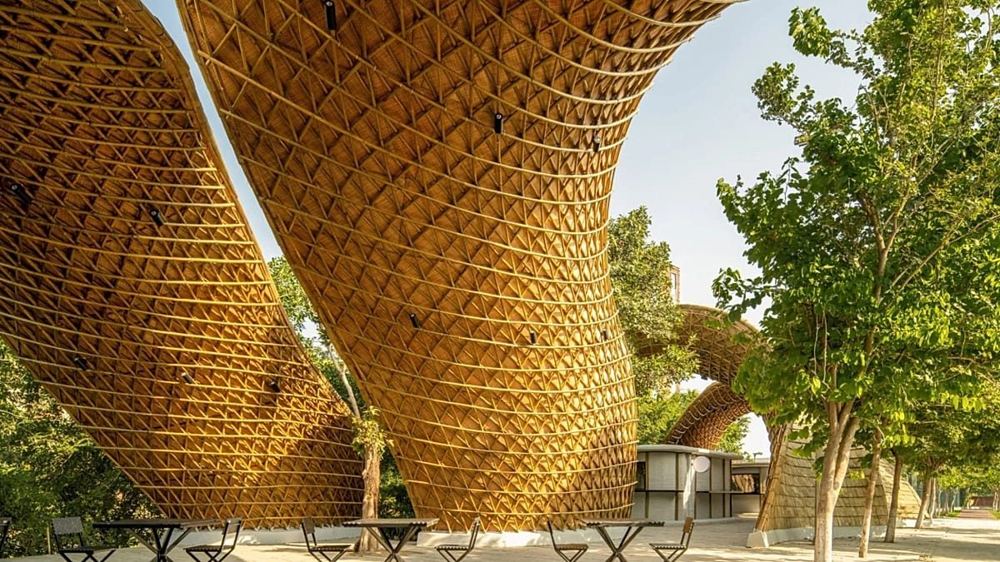
Innovative material use is a recurring theme across the shortlist. In Delhi, the Hungry Caterpillar food street combines swooping bamboo with 3D-printed modular walls to avoid the high energy use and waste of conventional construction. Similarly, a new shelter for 11th-century ruins in Iceland’s Þjórsárdalur valley uses chemical-free untreated larch wood and a recyclable polycarbonate roof.
The Icelandic structure is explicitly designed for complete disassembly, allowing future reuse with minimal impact. Water management is equally prominent, seen in the hyperbolic paraboloid roofing system at Mexico’s Mercado Nicolas Bravo, which collects rainwater for irrigation. In New York, the Chatham Residence directs roof runoff into native rain gardens to control erosion and support local pollinators.
Several shortlisted projects achieve thermal efficiency by embedding directly into the landscape. Ayalam, a boutique resort in Kerala, India, features a waterproofed living roof reclaimed by endemic vegetation, creating a thermal buffer that slashes cooling demand. Nearby, Terra House uses locally quarried laterite stone and permeable walls to let monsoon air and light move through the building for natural cooling.
Public infrastructure is also adapting to these principles. AIDIA Studio’s Parque Quintana Roo transforms a 10-hectare agricultural showground in Mexico into a public park using curved pathways and undulating wooden accents to integrate with the surrounding forest. Openings in the brick walls create natural ventilation, reducing reliance on mechanical systems.
As Europe scales its sustainable infrastructure investments, these global examples provide actionable models. They demonstrate that integrating architecture with local geology and climate is a measurable strategy for reducing long-term operational costs and regulatory risk in the built environment.