New Zealand Army Deepens Defence Integration With Australia to Maximise Capabilities
New Zealand’s largest military exercise of 2026 highlights a strategic push to align equipment and training with Australia, a move that streamlines defence spending and strengthens Indo-Pacific interoperability.
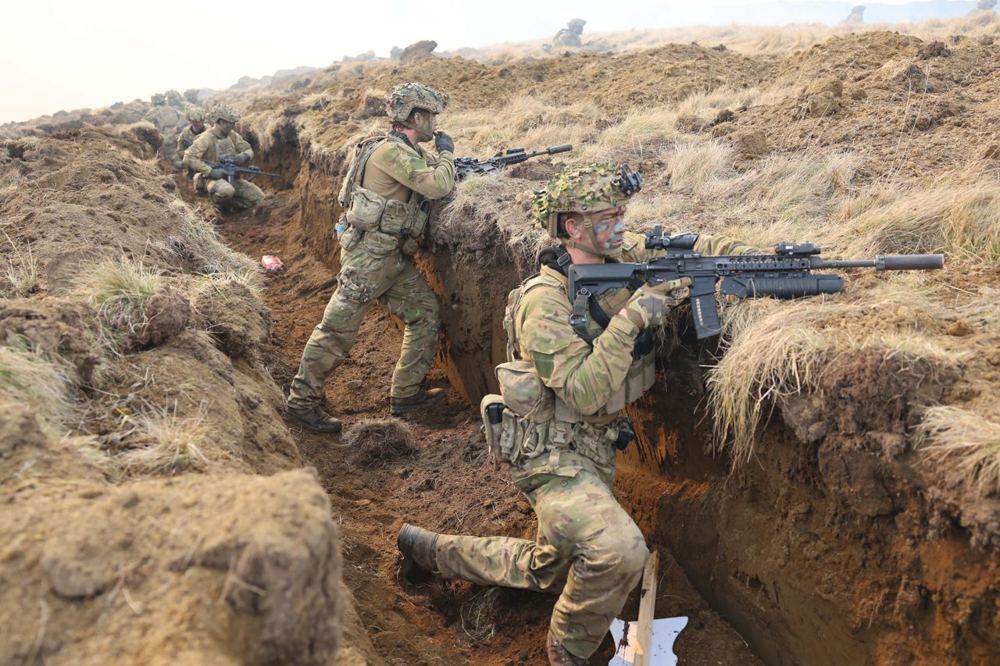
The New Zealand Army recently concluded its largest training event of 2026, a 16-day live-fire exercise known as Hill 60. The drills focused on deploying a Motorised Infantry Battle Group of approximately 1,000 soldiers, representing nearly a quarter of the country’s 4,358 active-duty personnel.
This exercise serves as a critical preparation for next year’s multilateral Exercise Talisman Sabre in Australia. It will mark the first overseas deployment of New Zealand’s battle group formation.
The manoeuvres underscore a deliberate strategy to align New Zealand’s military capabilities more closely with its Australian counterpart. This ambition is formalised in Plan ANZAC, a bilateral agreement renewed on July 10 by the two nations’ army chiefs.
Major General Rose King, New Zealand’s Chief of Army, stated that the bilateral relationship is "really important." She added that with every iteration of the plan, the forces are getting "stronger and more aligned" to ensure they can be interoperable and interchangeable.
For defence markets and investors, this alignment signals a predictable procurement trajectory for Wellington. The New Zealand Defence Force is actively seeking to procure the same assets as Australia where feasible, as outlined in its April 2025 Defence Capability Plan.
During the recent exercises, troops utilised NZLAV and newly acquired Bushmaster protected vehicles, the latter operated in the hundreds by the Australian Army. Looking ahead, New Zealand is evaluating long-range fire systems, such as HIMARS, to replace its ageing L119 105mm towed howitzers.
This equipment harmonisation is matched by operational integration. New Zealand’s battle group is closely associated with Australia’s Brisbane-based 7th Brigade, which focuses on the Pacific region east and north of Australia.
Brigadier Jason Dyhrberg, the army’s Land Component Commander, highlighted the strategic value of this contribution. He noted that a capable New Zealand battle group adds "considerable value" because Australia also faces staffing and equipment shortfalls within a large-scale divisional construct.
Training protocols are also converging to support this interoperability. New Zealand troops have recently attended mortar courses in Australia, while Australian instructors have helped run specialised courses on first-person-view drones for Kiwi soldiers.
While New Zealand cannot replicate the scale of larger military formations, it is focusing on producing highly trained officers capable of integrating into Australian or American headquarters. This approach allows smaller nations to maximise limited defence budgets while maintaining credible regional deterrence and offering tangible value to larger allies.