Las Vegas court hears closing arguments in trial for 1996 murder of Tupac Shakur
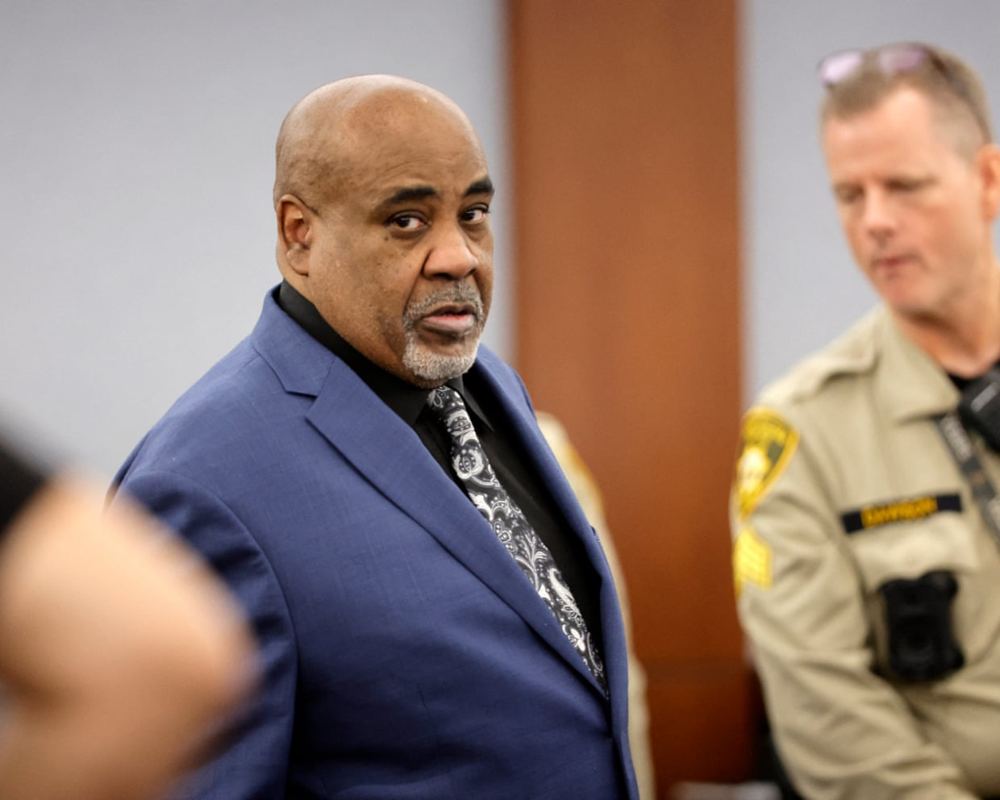
Closing arguments begin in Las Vegas for the murder trial of Duane Davis, a landmark case that relies on the defendant’s own memoirs and recordings to finally resolve a decades-old cold case in music history.
A Las Vegas court is preparing to hear closing arguments in the murder trial of Duane “Keffe D” Davis, the 63-year-old former gang leader accused of orchestrating the 1996 killing of hip-hop icon Tupac Shakur. Davis has pleaded not guilty to ordering the attack, though prosecutors do not allege he pulled the trigger himself.
The prosecution’s case rests unusually on the defendant’s own public admissions. Investigators lacked sufficient evidence to charge Davis for decades until he detailed his involvement in a 2019 memoir and various media appearances.
This dynamic carries broader implications for the media and publishing sectors. It demonstrates how decades-old public statements can be retroactively utilised as primary prosecutorial evidence, highlighting a legal vulnerability for those attempting to monetise notorious historical events.
Clark County district attorney Marc DiGiacomo and chief deputy Binu Palal have presented 25 witnesses over the weeks-long trial, including several reluctant individuals compelled by court orders. Prosecutors also played eight hours of secret recordings from four separate events where Davis recounted the events of 7 September 1996.
Under Nevada law, admitting to arranging a killing is sufficient for a murder charge. Prosecutors are expected to argue that Davis’s accounts remain generally consistent across these recordings and his written memoir, amounting to a de facto confession.
Davis’s attorney, Michael Sanft, has consistently challenged this narrative. The defence argues that Davis’s stories are exaggerated and embellished, crafted by a man seeking to profit from the enduring public fascination and unanswered questions surrounding the rapper’s death.
The fatal shooting occurred after Shakur and his label founder, Marion “Suge” Knight, attended a Mike Tyson boxing match at the MGM Grand. Following an altercation in the casino lobby involving Davis’s nephew, Orlando “Baby Lane” Anderson, Shakur’s vehicle was fired upon at a red light by occupants of a white Cadillac.
In his book, Davis claimed he was inside that vehicle armed with a .40-caliber Glock. He wrote that the assault on his nephew provided the justification for retaliation, stating, “Them jumping on my nephew gave us the green light to want to do something to their ass,” and adding, “Pac chose the wrong game to play.”
Prosecutors have not identified the actual shooter, and the three other men allegedly present in the Cadillac are now deceased. Anderson, a member of a rival Compton gang, was also killed in an unrelated shootout two years after the Las Vegas incident.
For the victim’s family, the trial represents a long-delayed resolution to a decades-old mystery. Shakur’s cousin, Zayd Akinyela, noted outside the courtroom that the family has been waiting thirty years to grieve properly, emphasising that understanding the truth is a necessary precursor to closure.