The war changes yet again: Ukrainians use domestic missile for first time as Russians launch assault on bridges (Ukraine Battlefield update, Day 1,681)
A defence analyst warned that Russia is mass-producing "thousands" of new drones “far more dangerous and faster" than jet-powered Shaheds which Ukraine cannot yet stop.
FP-7 ballistic missile made in Ukraine were deployed for the first time. This is progress, but one should not expect miracles.
“Ukrainian tactical ballistic missile. FP-7. First combat deployment. Thank you for the results. Next step: serial production. Glory to Ukraine!” With these words and a short video, Ukrainian president Volodymyr Zelensky announced a long-awaited milestone in Ukraine’s arms programme. The next step is expected to be the deployment of the larger and more dangerous FP-9 missile.
Ukrainian tactical ballistic missile. FP-7. First combat use. Thank you for the result. Next up: production. Glory to Ukraine! pic.twitter.com/IxdjVg51c1
For now, however, this was only its first deployment against an unknown target, with an unknown outcome. The Russian analytical channel Military Informant did not rule out the possibility of the footage being recorded at a training ground with the intention to deflect criticism of Fire Point, the Kyiv-based manufacturer whose production is behind schedule.
The FP-7 missile is an interesting technical achievement that could expand the Ukrainian army’s ability to strike important targets. Expectations should be kept low. This is because the missile has not yet entered serial production its specifications lag behind those of Russia’s short-range Iskander missiles.
The FP-7 is based on the Soviet-origin 48N6 surface-to-air missile, used in some versions of the S-300 system and still deployed by Russia in the more modern S-400. A Ukrainian outlet says that the FP-7 has an estimated range of only 200 km and a warhead weighing up to 150 kg.
Russia's Iskander missiles weighs more than twice as much, and Russia has already used a version with an extended range well beyond 500 km. The Ukrainian FP-7's use will therefore be limited to areas up to roughly 100 km from the front line. It is certainly not a means for strategic strikes against Russian industry deep inside enemy lines.
Ukraine could strike further with a FP-9 missile, and developing them remains a goal to work towards. The two types of missile differ significantly. They were analysed in August by the Russian Telegram channel Russian Engineer. The FP-7 is smaller and the FP-9 larger. Its maximum range is estimated at 855 km (far enough to reach Moscow,) its warhead is expected to weigh up to 800 kg.
The outlet focusing on the war's technical parameters compared the Iskander with the FP-9:
“The 9M723 Iskander-M missile has a diameter of 920 mm, while the FP-9's is 1,100 mm. The missiles are 7.2 and 9.5 metres long. The solid-fuel rocket motor is approximately 4.2 metres long in the 9M723 and 6.5 metres in the FP-9. Fuel mass is estimated at 2.6 and five tonnes. With a warhead weighing around 500 kg, calculations indicate ranges of up to 500 km and 1,000+ km. If the warhead weighs around 800 kg, the range will be approximately 800 km.”
The media's performance estimate therefore matches official Ukrainian data.
According to the Russian Engineer Telegram channel, the FP-9 is conceptually based on the Iskander and builds on the Ukrainian Sapsan project, which was never brought to the final stage.
The Ukrainians displayed both missiles at a trade fair in Denmark in August, where the following photographs were also taken:
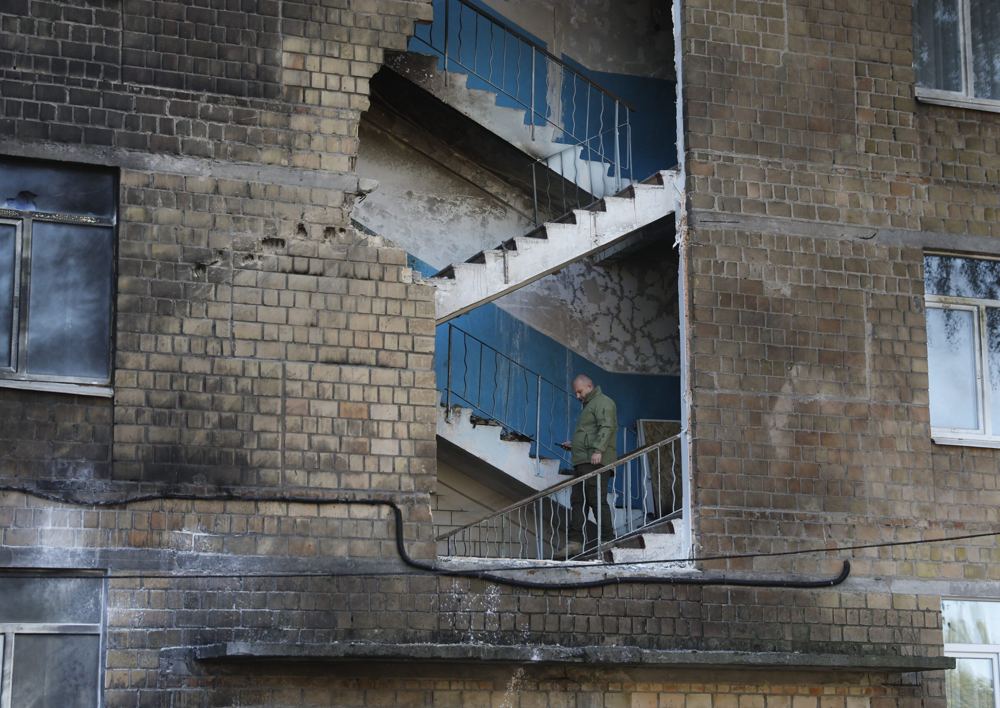
The Russians have started attacking Kyiv's bridges. This fulfils the wishes of Russian pro-war hawks, who for years have complained that bridges in the capital of the invaded country were still standing.
Roman Pataj is Head of the Opinion section at Denník N and, since 2022, the author of the Ukrainian Battlefield update. He graduated in political science and has worked as a journalist since 2002.