Tories promise to build 50,000 new prison places
The party says its proposals would stop prisoners being released early and cut crime.
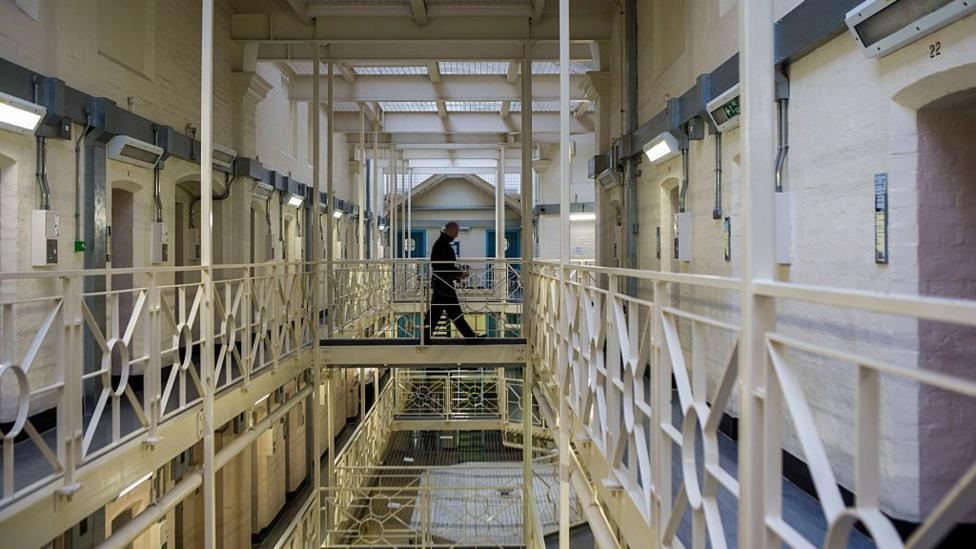
The Conservatives have promised to build 50,000 new prison places in England and Wales to stop criminals being released early.
The party said it would cost £2bn per year to build and run the new prisons, funded by spending cuts including to the foreign aid budget.
On Thursday hundreds of prisoners were released early , under new rules introduced to prevent jails reaching capacity, with around 4,500 due to be freed by next summer.
Labour blamed the previous Tory government for leaving "our criminal justice system at breaking point" and said the party's proposals were not "credible".
The announcement comes as Conservative members gather for the party's annual conference in Birmingham, which begins on Sunday.
Prisons in England and Wales have been running close to capacity for years, with the latest government figures showing they are 98% full.
Under the latest early release scheme, eligible prisoners can now be released on a community licence after serving one-third of their jail sentence.
Those excluded include prisoners convicted of murder, manslaughter, a sexual or grooming-related offence, or a driving offence that led to a death.
The government has also effectively scrapped one-year jail terms.
The Tories said they would use extra prison capacity to reverse these measures.
An early release programme introduced by the previous Conservative government saw more than 10,000 prisoners freed early between October 2023 and September 2024.
Conservative leader Kemi Badenoch said: "A violent criminal doesn't become less dangerous just because the government has run out of prison cells."
She added: "[Labour's] answer is to let dangerous offenders out even earlier instead of building the prison spaces we need."
Labour Party chairwoman Bridget Phillipson said: "The Tories are taking the public for fools. Across 14 years in government, they added just 500 prison places and closed 23 prisons.
"Now Kemi Badenoch expects the British people to believe they'll build 50,000."
Meanwhile, the Prison Governors' Association said "long-term investment" was needed and warned a "staffing crisis" would pose challenges to delivering new prisons.
If the party wins power, the Tories said they would introduce legislation early in the new Parliament to override planning and procurement barriers, allowing the process to be "fast-tracked".
It said the use of private finance would help speed up delivery and control costs.
There are currently around 89,000 useable prison places in England and Wales, according to the latest government figures.
The Tories said their proposals would increase this figure by more than 50%, with the vast majority of new places expected within the party's first Parliament in government - up to five years - and the full increase delivered within seven years.
The £2bn a year cost would be funded through savings in other areas, including cutting the aid budget by £1bn and reducing the budget of the Department for Culture Media and Sport by £1bn.
The Labour government has promised to add 14,000 extra prison space by 2031.
The Tories argued increasing prison places would cut crime and prevent reoffending by keeping serious criminals off the streets.
Shadow justice secretary Nick Timothy said: "Prison works. It works by punishing and deterring, but most importantly by incapacitating.
"Prison should keep violent and repeat offenders away from the law-abiding public."
The prison population has risen significantly in recent decades, partly as a result of longer sentences and more people being returned to prison for breaching the conditions of their release.
Successive governments have pledged to increase the number of prison places - but delivery has often fallen short of those promises.
New prisons take years to build, often facing local opposition and obstacles in the planning process.
The Prison Governors' Association said: "Building 50,000 cells is one thing; finding the thousands of experienced officers, governors and specialists needed to run them safely is quite another.
"Politicians have spent years announcing prison places while the service struggles with overcrowding, ageing infrastructure and staffing shortages. The real test is not how many places can be promised, but how many prisons can be operated safely, effectively, and sustainably."
How the new prison release scheme will work - and number of inmates to be freed