The changing face of The Warehouse Project: 20 years of WHP flyers
As the Manchester party series marks its 20th birthday this year, founders Sam Kandel and Richard McGinnis take a look back at some of the most iconic flyers and reflect on the shifting visual language of The Warehouse Project Continue reading...
Over the last 20 years, The Warehouse Project has undeniably shaped UK club culture. Beginning in 2006 as a new, seasonal party concept at Boddington's Brewery in Manchester, The Warehouse Project has grown into one of the world's best clubbing experiences, finding a new home at Store Street in 2007 and later Victoria Warehouse, and, as of 2019, Depot Mayfield.
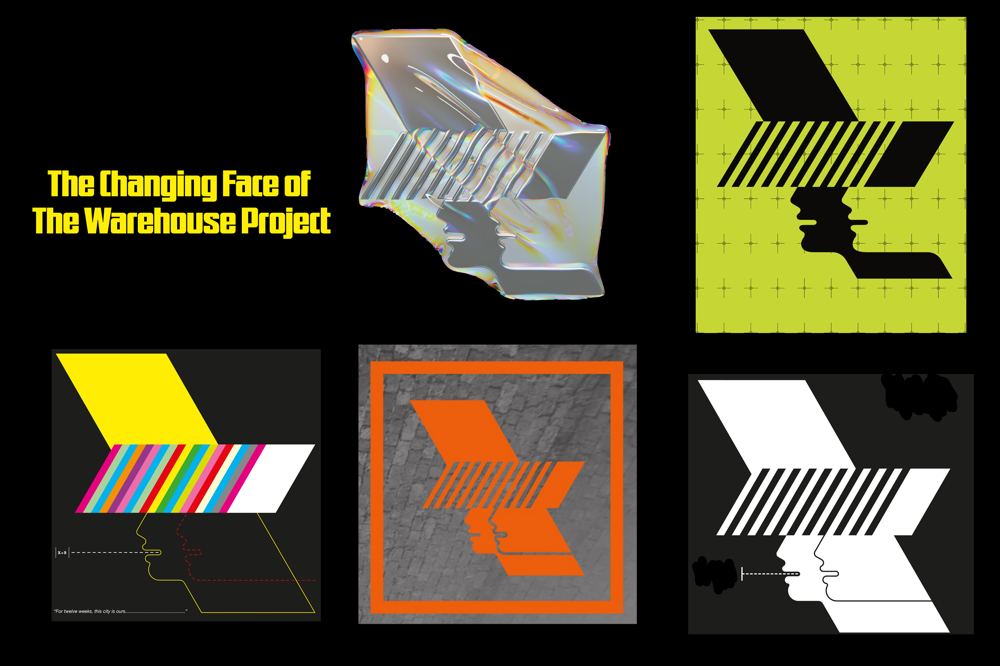
Though WHP's transience extends beyond location, its ever-swelling line-ups and visual language have also changed over time, which has helped to shape its identity over the decades. While a few things have remained the same - such as its logo, created by Paul Hemmingfield ahead of The Warehouse Project's debut with a special colour code dedicated to the event series - the party's history can be charted via the hundreds of posters it has created, from odes to tear-jerking films to prints designed for student house bedrooms.
Read this next: The Warehouse Project shares plans for 20th birthday celebrations
Sam Kandel: This was the first iteration of our season announcement, and I think the thing that it represents, rather than one particular moment in that season, was the moment when this completely new format started. Prior to that, there wasn't a “season” of events in Manchester where parties were disparate, but you were bringing them all together in a series.
Richard McGinnis: Everyone does this now. There's an 'Autumn/Winter' series in every city. If you look at Factory Town in Miami or what Club Darc are doing in San Francisco , it's this type of format. You had the superclubs, like Cream and Sankeys, doing weekly club nights, people didn't put large-scale events on like this.
SK: If you notice on that flyer, it's actually got my email address on it [laughs]. Which is mad, isn't it? Imagine putting your own email address on a flyer these days... It also has the first iteration of The Warehouse Project logo, designed by Paul Hemmingfield, which we spent a lot of time on. The stripes are a colour code that spells out "The Warehouse Project", which is really interesting.
SK: For me, that is the most iconic image of The Warehouse Project. It's timeless even now. A killer piece of artwork.
RM: I was on the periphery of this. Sam created it alongside Paul, but I remember them going back and forth on the colours and the detail, the light from underneath, etc. It took a long time. The number of versions there must have been of that...
SK: In a way, it was brilliant, but it also became a bit of a beast. We could never come up with another piece of artwork that could top it. There were quite a few versions of this afterwards. We just loved it so much that we kept reusing it again and again. You know, in the last 20 years, we've done a lot of events, a lot of good stuff, but that just seemed to capture everything that we were trying to say. When I'm even older and even greyer, that's going to be the picture on my wall.
I think that was also the first time we introduced the tagline: "For 12 weeks, the city is ours." That became our big thing. We got some criticism for it, because as The Warehouse Project grew, people thought we were claiming it belongs to us. But it was never that; it's saying that it belongs to the people, to the night.
SK: This was actually the second Aphex Twin show we did, the first was in 2007. He’s popped up at very important moments, for example, the first night at Mayfield. But in 2007, when we got out of Boddington's, I wasn't sure whether or not The Warehouse Project would happen again. But I remember saying to Rich: "Let's just try and get AFX". So, we called his agent, and obviously we'd been trying to book him forever, and at that point he'd not done a show for quite a few years. His agent said, "This is actually perfect. I've just gotten off the phone with him, and he's up for doing a couple of bits later this year". We gave him the date, and it was confirmed 48 hours later.
SK: For two people as obsessed with nightclubs and electronic music generally, booking Aphex Twin is the holy grail. We're very lucky we've had these moments with him, and I hope we have another one...
SK: So these were actually created by my friend Chris Cairns. He made all these light boxes with batteries in, and we carried them all over Manchester. It's so easy now with AI and stuff, but this whole campaign was shot with a camera, we stayed up all night, lugging these massive letters to the top of buildings. I've still got stop frames of it all, it's absolutely brilliant. But that was all part of it. The artwork is always an extension of the thing.
This was on the reverse of these photographs, and we used to always do calendars for people to put on their wall as a sort of “choose your weapons” type thing. You could circle ones you wanted to go to. It took us ages to find someone to print it with actual glow-in-the-dark ink. The heads logo, even though it looks white there, was printed with this green ink that would glow, the type of thing you make toys out of. I actually still have that flyer in a frame at home, in my toilet [laughs]. Whenever I come down, before the light comes on, I just have this WHP logo staring at me...
RM: There must have been quite a lot of students with that on their wall.
SK: It was all about The Warehouse Project coming to life at night. I really miss print. Flyers and that whole medium are so ingrained in club culture. Before I was old enough to go to nightclubs, I had flyers of nightclubs. People would hold these flyers in their hands and be like, I'm going to that. It would speak to people. It feels like that has been completely lost in the digital age, and it's a real shame.
SK: I remember the brief was that we wanted it to feel like a tombstone, especially the way the copy is laid out - some real finality. Chris Cairns did that too, he built a metal frame and set it on fire.
RM: There was definitely a secret sauce with Store Street. The artists used to come in the back stairwell, and it was this box in the middle of the car park near the hotel that used to feel a bit like a Tardis when you went into it, you'd be met with this bass on the way down.
SK: I remember actually, DJ Koze's agent, he played there one time and came down that stairwell, which, as Rich says, looked like a telephone box [laughs].
SK: And DJ Koze's agent said: "He will never play for you ever again. He's never been in such an unsafe venue... how could you possibly take the entire audience up and down that tiny staircase?"
RM: [Laughs]. He didn't realise he was coming in the back door. But also, the arches... any of these temporary venues, you can't really bend them how you need. You're faced with issues around sound, leakage, quality, etc. You can also have pinch points and flow points with the crowd. But with Store Street, because it was this underground bunker, when you turned the speakers on, there was just nowhere for the sound to go except through people. So the response to records, the way people would experience the dancefloor and connect, it was a complete game changer.
SK: It was a real club vibe. It wasn't a huge sprawling event, it was a nightclub. Rich is absolutely right, it was a very special place. I mean, to be honest, we did 10 seasons in total there, and by the last season... I was done with it.
RM: Well, he had one eye on a different building. Sam turned up after viewing what is now Depot Mayfield and I could see his mind was going over the line-up and the artwork of what he would do there. It was a tough last season [at Store Street]. We were having a lot of problems, there was a hotel being built on top of us and we were having to hire out the bottom two floors. We skidded out of there by the skin of our teeth, really.
SK: First year at Victoria Warehouse... we reintroduced the dove, and the idea was that we were scaling up and doubling our capacity, so you can see that in the mirror image. The whole campaign for that year was inspired by Jay-Z's 'Watch the Throne' artwork.
RM: Which was a big job as well, because at that time, people weren't really doing videos. It was a huge shift in club communications, it was very slick, very well edited, quite trippy.
SK: It felt like a music video, yeah. But Victoria Warehouse was great, but it was only for two years, and we had a lot of trouble there. In the potted history of The Warehouse Project, I'd say that was two of our hardest years, some great shows though.
SK: It was at Victoria where we really started getting carried away with these line-ups.
SK: Yeah, we had three rooms to programme. There were some absolute pearlers.
SK: Throughout our time at Victoria Warehouse, everyone seemed to be saying: "I preferred it at Store Street".
SK: We'd had quite a traumatic time from an operational point of view. You know when you hear stories from clubland, and the chaos is unpleasant? Those two years were like that. For us, it felt safe to go back to Store Street. It had been great, creatively, to curate these huge line-ups, but we were ready for a bit of comfort.
SK: This was our first experience at [the Depot Mayfield], and it was so bittersweet. A lot of issues from our time at Victoria Warehouse had arisen because we'd had our eyes on that building. It triggered all kinds of problems for us, and it was impossible for us to get into it that time. MIF (Manchester International Festival) was running the year after, and they'd said: "Do you want to come here?" I remember being stood at that event, being absolutely gutted, thinking this is what we could have had. This is what we wanted, and we couldn't get in there.
SK: Yeah, five years later. I remember, at that event, I couldn't stay. I was absolutely livid. The reason it was called 10 x 10 is that it was both 10 years of The Warehouse Project and 10 years of Manchester International Festival.
SK: The thing that stands out for me more than anything on that flyer is that Anton, who later co-founded Teletech, is opening up in Room Two. A great Manchester export.
SK: Yeah. All these people have come through The Warehouse Project, residents, promoters, and they've gone on to do great things.
SK: It kind of felt like 2006, like we were starting a new thing. A lot of these sensations around risk were similar to then... like, this might not work [laughs].
SK: I mean, in for a penny, in for a pound. What we realised is that people used to come from all over to visit The Warehouse Project at Store Street, but in order to pull off this new thing, we'd need to pull people over from everywhere consistently. We had to hammer down that there was this unique thing happening in Manchester again, and it was another reason to come to the city. After this, we did a campaign where we took over billboards across, say, Leeds, and we'd be like: "This is the distance where you're standing to The Warehouse Project... Destination Manchester." I guess we've adopted that as another one of our taglines.
RM: Obviously we couldn't see what was coming down the pipe in 2020.
SK: That was essentially the opening of The Warehouse Project season after COVID.
RM: We ended up doing Megan Thee Stallion at The Warehouse Project on the same day as Parklife that year.
SK: The reason it's called 'Repercussion' is because a friend of ours had an event in Manchester just after the IRA bombing in the '90s, called Depercussion. But it was us wanting to give that statement, this is the repercussion after lockdown.