Royal Ballet's adaptive class sells out, exposing untapped dance market
A sold-out adaptive ballet workshop at the Royal Ballet School highlights a vast, unmet demand for inclusive arts programming across Europe.
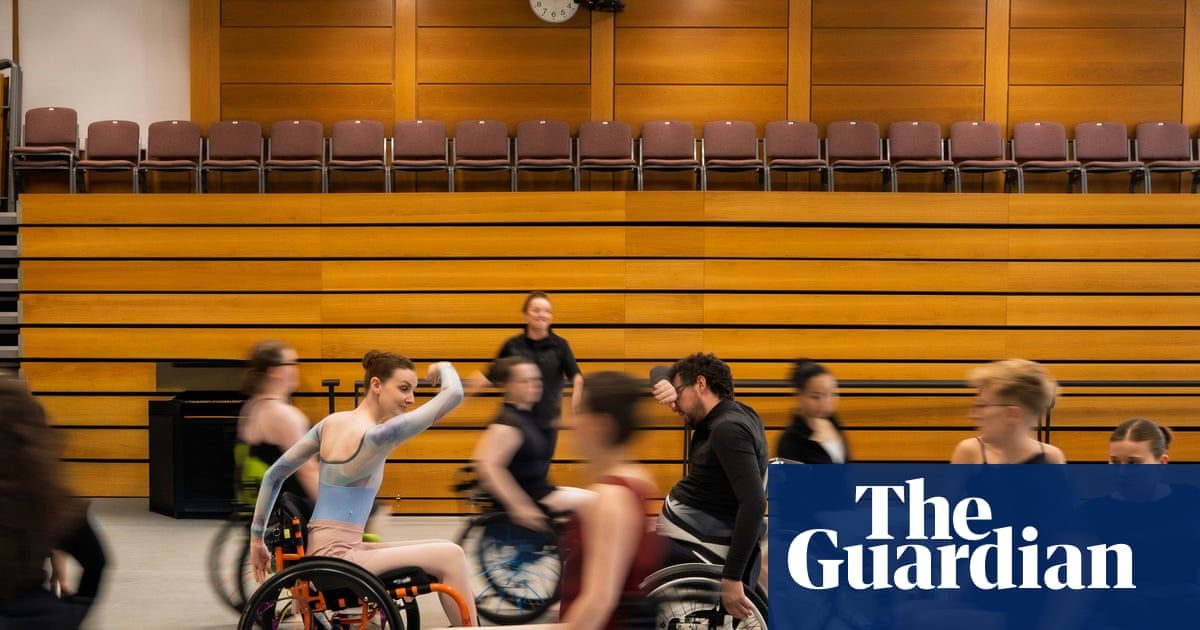
The Royal Ballet School recently hosted an adaptive ballet workshop in London that sold out within minutes, leaving hundreds of people on a waiting list. The session was led by Kate Stanforth, a professional wheelchair-using dancer, and Rachael Hunt, the school's international artistic manager. Supported by mobility company Allied Mobility, the event drew participants from across the UK, including one attendee who flew in from the Netherlands and another who travelled from Dublin.
Stanforth brings extensive classical training to her inclusive business model. She began ballet at age two and entered pre-professional training at eight, but was forced to stop at 14 as her health deteriorated. Diagnosed with myalgic encephalomyelitis and later Ehlers-Danlos syndrome, she channeled her expertise into founding the Kate Stanforth Academy of Arts, an award-winning accessible dance education provider.
During the London sessions, attendees worked on repertoire from Giselle, the classic 19th-century romantic ballet. Instructors adapted traditional choreography for wheelchair users, focusing on synchronised pushes and graceful arm extensions rather than strict classical technique. The curriculum explicitly prioritised physical safety, with instructors reminding participants to listen to their bodies and avoid pushing their limits.
The overwhelming response to the class underscores a fundamental shift in the European cultural economy. Major arts institutions have traditionally operated under rigid physical parameters that exclude disabled performers, but Stanforth’s academy has built a network of 500 disabled dancers globally. The immediate sell-out indicates that traditional institutions are severely underestimating the market for adaptive programming.
This demand spans a wide range of neuromuscular and chronic conditions, such as Friedreich’s ataxia, which causes progressive mobility loss. For individuals managing these conditions, traditional fitness or dance classes are often physically inaccessible or result in frustrated exhaustion. Adaptive models offer a sustainable alternative, creating a new target demographic for the leisure and cultural sectors.
“Ballet was never simply a hobby to me,” said Stanforth. “It has always been a passion. Even when I became unwell at the age of 14, that passion never disappeared.” “This community is not small or rare – it has simply not always been visible,” she added. “As that visibility grows, so does the possibility of a more open and inclusive future for ballet, where no dancer has to question whether they belong.”
For Europe’s arts institutions and corporate sponsors, the logistical and financial implications are clear. Integrating adaptive programmes is no longer merely an exercise in corporate social responsibility. It represents a tangible commercial opportunity to capture an engaged, international audience that is currently being turned away at the door.