Record June heatwave drains 400 cubic metres a second from Swiss glaciers
Switzerland's glaciers are shedding 400 cubic metres of water per second during a prolonged June heatwave, offering a stark warning for a continent warming at twice the global rate.
Switzerland’s glaciers are currently shedding 400 cubic metres of water per second as a prolonged June heatwave triggers unprecedented melting for this time of year. According to the Swiss Glacier Monitoring Network (GLAMOS), this sheer volume is equivalent to filling an Olympic-sized swimming pool every six seconds, sustained continuously day and night for at least two weeks.
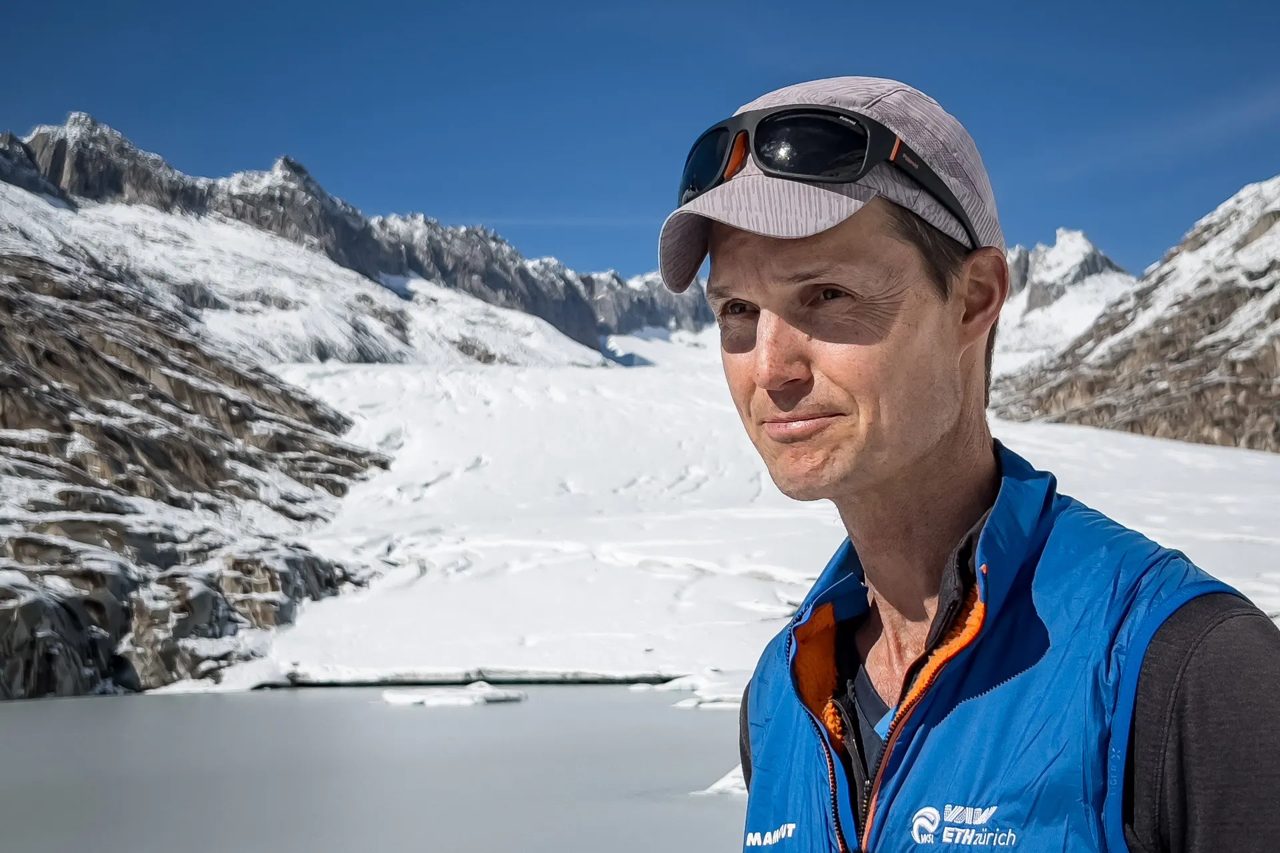
"Prolonged heatwaves are the worst-case scenario for glaciers," said Matthias Huss, head of GLAMOS. He noted that while a day or two of intense heat does not cause significant melt, a sustained heatwave spanning more than two weeks changes the equation entirely. "The melting is massive, even in the highest peak regions," Huss said, labelling the current scale of damage as "quite exceptional."
Historical data underscores the severity of the current situation. GLAMOS measurements indicate that such intense and prolonged melting has never before been recorded in June, even though the years 2019, 2022 and 2025 saw conditions that came close. The long-term trajectory is stark: since the early 1970s, more than 1,100 of Switzerland's glaciers have disappeared completely.
Twice the global rate
The rapid disintegration of Swiss glaciers holds outsized significance for the continent, acting as a frontline barometer for Europe's changing climate. A March 2026 report by the Swiss Academy of Science, compiled by 60 climate experts, confirms that Switzerland is warming faster than many other regions globally.
According to data from the Swiss Federal Office of Meteorology and Climatology, this warming is progressing at exactly twice the pace of the global average. Since systematic record-keeping began in 1864, the average temperature in Switzerland has risen by 1.8C.
This disproportionate impact is a product of the country's specific geography. Because Switzerland is landlocked, it does not benefit from the buffering effect of oceans, which naturally absorb vast amounts of heat. Additionally, the high altitude and unique morphology of the Alps play a critical role in accelerating regional warming.
This creates a self-reinforcing cycle of environmental change. As rising temperatures cause snow and ice to melt at faster rates, the exposed landscape loses its ability to reflect sunlight back into space. The loss of this albedo effect means the ground absorbs more heat, which in turn accelerates the melting of the remaining glaciers.